Polyaigos, the largest uninhabited Cycladic island of Greece, is one of the Aegean’s last remaining wild landscapes. Set between Kimolos and Milos, it is known for its turquoise waters, white-sand coves, sea caves, rare wildlife, and rugged coastline untouched by large-scale development.
Just over one nautical mile southeast of Kimolos and 3.8 nautical miles east of Milos, Polyaigos has become a popular day-trip stop in the western Cyclades. Yet even as thousands of summer visitors arrive by boat, the island remains free of permanent residents, hotels, beach bars, organized beaches, and roads.
Its name means “many goats,” a reference to the animals that still roam the island and to its long history as pastureland. Earlier names included Polyvos and Hypolyvos, but Polyaigos is the one that endured.
Polyaigos in Greece and the Cyclades

Although Polyaigos belongs administratively to Kimolos, it is closely connected to both Kimolos and Milos. Visitors from either island can reach it by boat, usually as part of a daily cruise. Milos Mayor Manolis Mikeli has described Polyaigos as a small Cycladic island with exceptional beauty and history. According to the mayor, the island had previously attracted interest from major investors, but the Municipality of Kimolos, with support from the Municipality of Milos, worked to keep it unchanged.
The reason, he said, is its rare natural beauty. Polyaigos has striking blue waters, beautiful beaches, and unusually vibrant colors both on land and at sea. According to Mikeli, thousands of visitors arrive every summer by boat to enjoy its coastline, but local authorities remain determined to protect it from development. Today, the island has no permanent population. Only traces of its former pastoral life remain, including small buildings once used by shepherds and residents.

A protected habitat for falcons and monk seals
Polyaigos is also one of the most important ecological habitats in the Aegean. The island is part of the European Union’s Natura 2000 network and has been declared a Special Protection Area for Eleonora’s falcon, or Falco eleonorae. Its remote coastline and sea caves also make it a critical birthing ground for the endangered Mediterranean monk seal, or Monachus monachus.
These protections underline the island’s environmental value and strengthen the case for preserving it from large-scale development. Polyaigos is not simply a scenic destination; it is a fragile ecosystem where wildlife, geology, and history coexist.
A lighthouse, a ruined monastery, and signs of the past
Although uninhabited today, Polyaigos still carries traces of its human history. In the northwestern part of the island stands the church of Panagia Polyviatissa, the only surviving remnant of an older monastery dedicated to the Dormition of the Virgin Mary. The monastery was founded in 1622 and now lies in ruins.
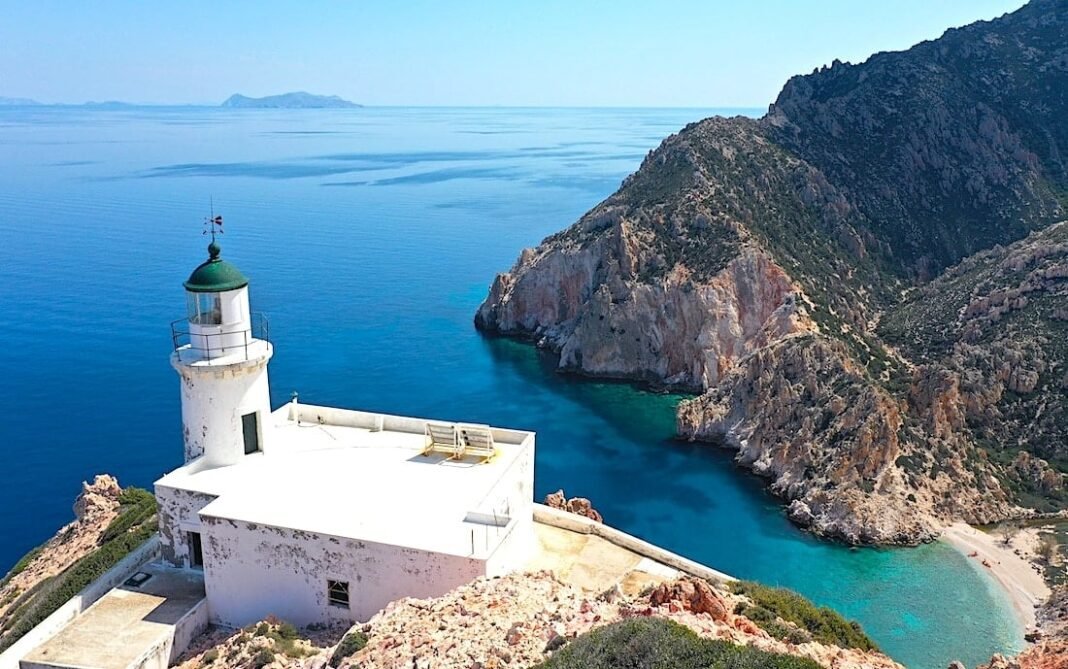
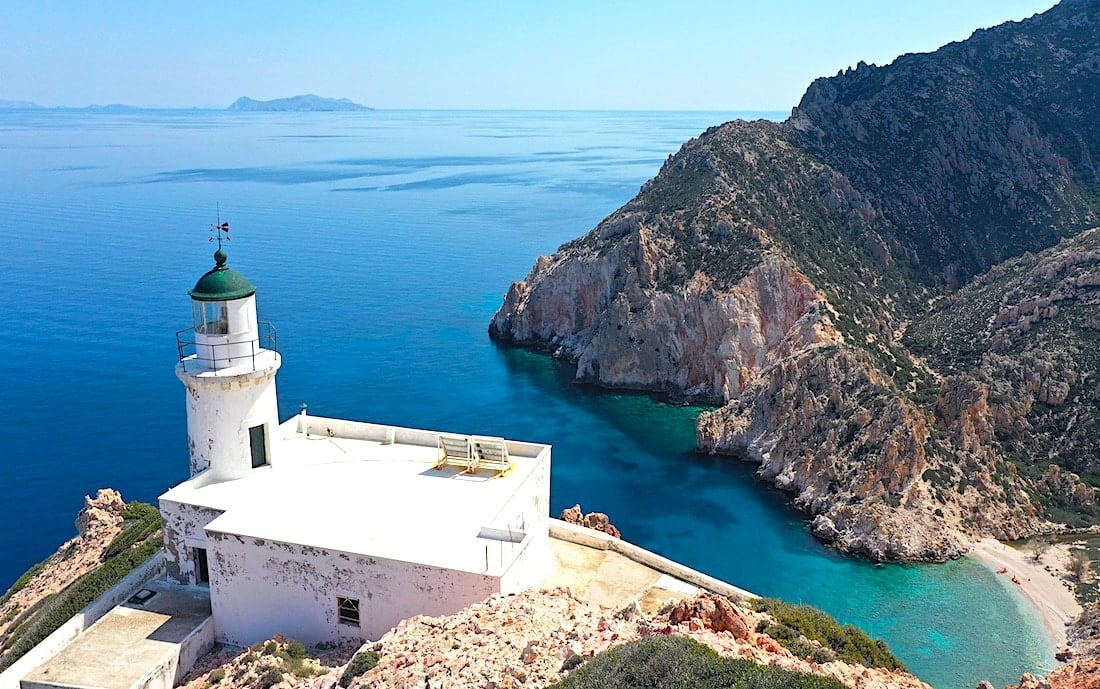
On the eastern side of the island at Cape Maskoula stands a lighthouse built in 1898. The height of the structure is almost thirty feet and is located on a hill about 426 feet high, overlooking the Aegean. Scattered remains of small buildings also point to the island’s former life as a place of shepherds, goats, and limited settlement prior to being abandoned.
Sea caves and wild coastline
Polyaigos has a coastline of about sixteen miles, marked by cliffs, coves, sea caves, and striking rock formations. Some descriptions cite a shorter shoreline of 10.5 miles, but the former figure is commonly used due to the island’s deeply indented coast.
One of its best-known natural landmarks is Fanara Cave on the northern side of the island. The cave is famous for the large openings in its roof, which allow sunlight to pour in and result in a striking effect over the water. Its size also allows boats to sail inside, making it one of the most photographed spots on Polyaigos. Further north is Diamantospilia, or Diamond Cave, named after the thin quartz crystals that sparkle on its rocks.
The beaches of Polyaigos, Greece
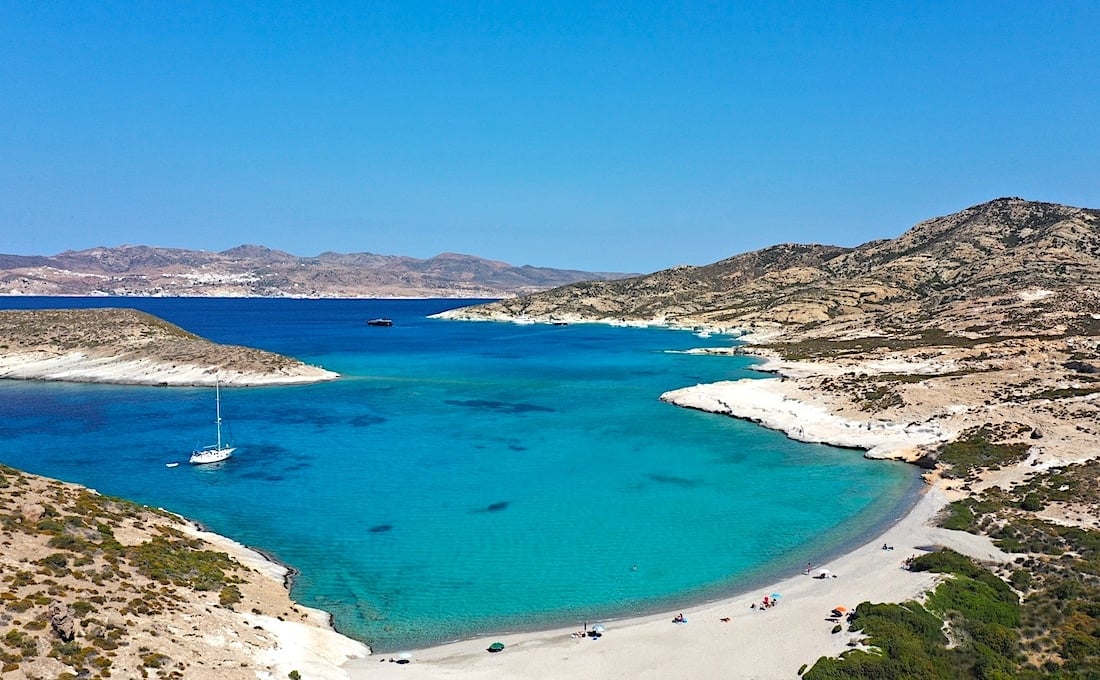
The beaches of Polyaigos are completely unorganized, which is part of their appeal. Visitors arrive by boat, swim in clear waters, and leave without the island losing its wild character. Because of its proximity to Kimolos, Pano Mersini, also known as Myrsini, is one of the island’s most popular beaches. It faces the rocky islet of Manolonisi and is known for its white sand, calm turquoise waters, and natural protection from strong Aegean winds.
A little farther south is Kato Mersini, another narrow strip of white sand with clear waters. Nearby, the beach known as Pisina, meaning “swimming pool,” gets its name from the blue-green waters of its enclosed bay. In the northeast, Ammoura Beach offers blue waters, shells, and white sand. Visitors may also see wild goats there, while a path leads toward the island’s lighthouse.
Preserving the wild character of Polyaigos in Greece
Polyaigos stands apart because it has avoided the large-scale development that has altered the character of many islands in the Aegean. Its beauty lies partly in what is missing: no resorts, organized beach facilities, permanent settlements, or a heavy tourism footprint.
Its growing popularity, however, makes protection even more critical. Thousands of visitors arrive by boat each summer to enjoy its clear waters and explore its caves and beaches, but the island’s fragile character depends on remaining unchanged. Officials from Kimolos and Milos have stressed the need to preserve Polyaigos as it is. Their position reflects the island’s rare balance of natural beauty, wildlife, and serenity.