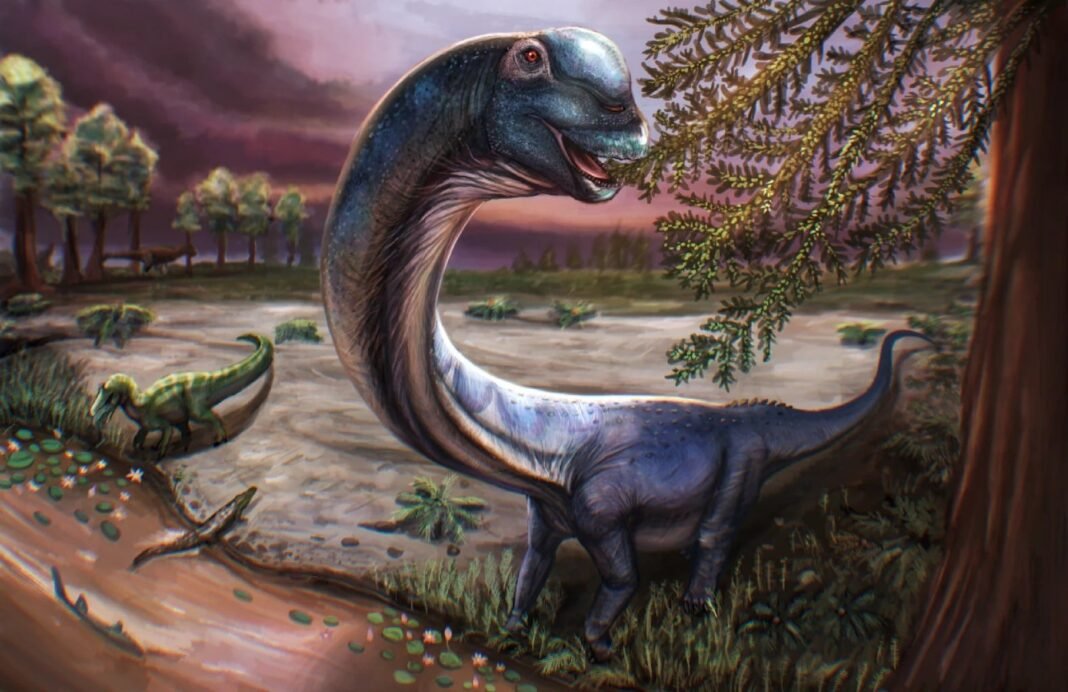
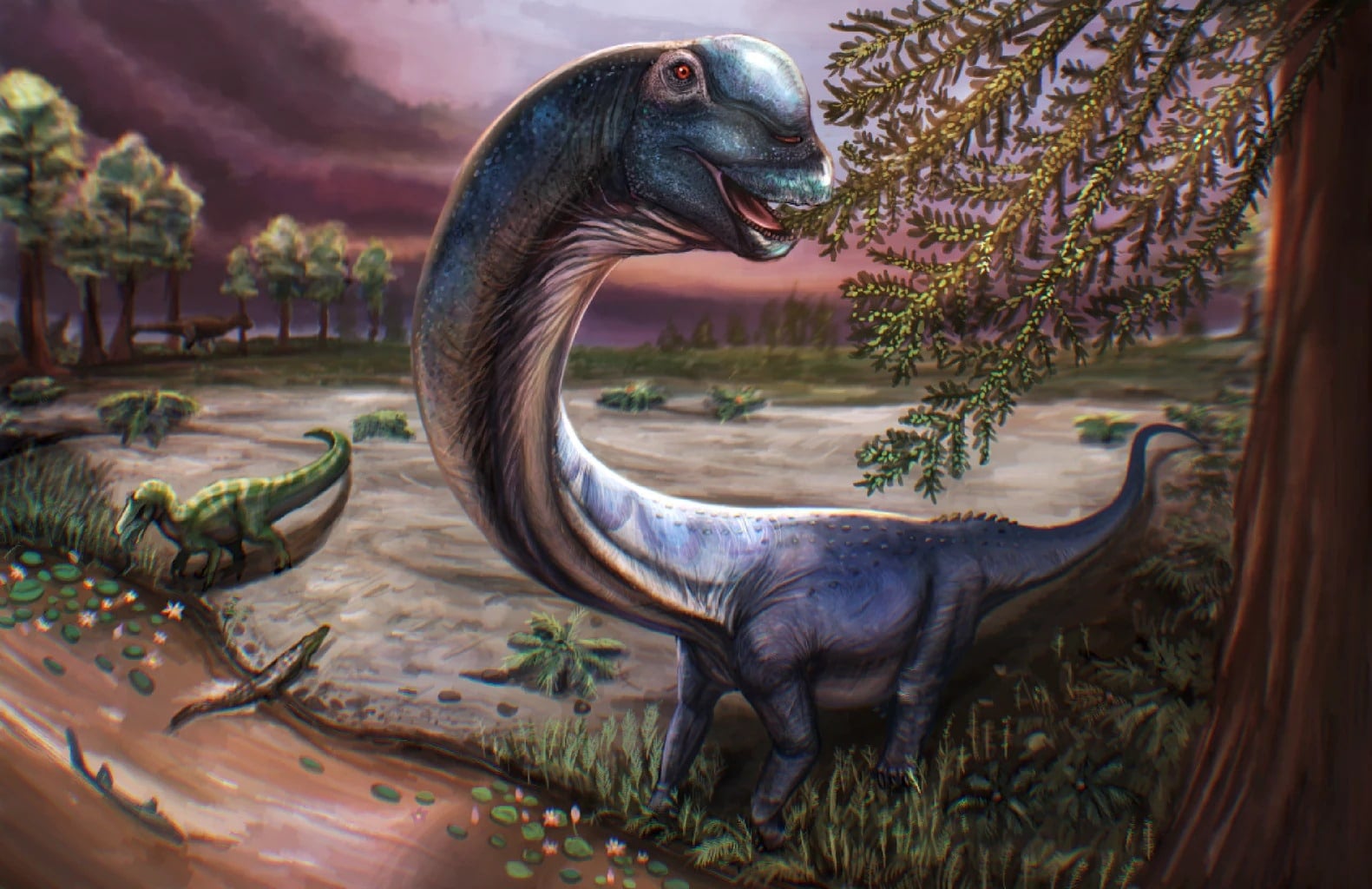
Gigantic fossils discovered in Thailand have revealed a new species of long-necked dinosaur that lived nearly 120 million years ago, according to a new study. Scientists said the dinosaur roamed a hot and semi-arid environment in what is now northeastern Thailand during the Early Cretaceous period.
Researchers named the species Nagatitan chaiyaphumensis. The dinosaur is now considered the largest sauropod, or long-necked plant-eating dinosaur, ever found in Southeast Asia. Sauropods were known for their towering necks, massive bodies, and long tails.
Details about the species
The newly identified species likely stretched about 90 feet (27 meters) in length and weighed around 30 tons (27 metric tons), researchers reported Thursday in the journal Scientific Reports. Study lead author Thitiwoot Sethapanichsakul said the dinosaur likely weighed at least 10 tons more than “Dippy,” the famous Diplodocus carnegii skeleton displayed in museums.
Despite its enormous size, the dinosaur was still smaller than some of the giant sauropods discovered in South America. Scientists said Patagotitan and Argentinosaurus were likely more than twice as heavy.
Fossils uncovered near a drying pond
The fossils were discovered in the Khok Kruat Formation in Chaiyaphum Province. The discovery began in 2016 after a resident noticed unusual bones exposed near a drying pond.
Researchers later excavated several important fossils from the site, including vertebrae, pelvic bones, and large leg bones. The team also recovered the dinosaur’s right femur, or thigh bone. Although the bone had broken into pieces, scientists estimated it originally measured about 6.5 feet (2 meters) long, roughly the height of a tall adult human.
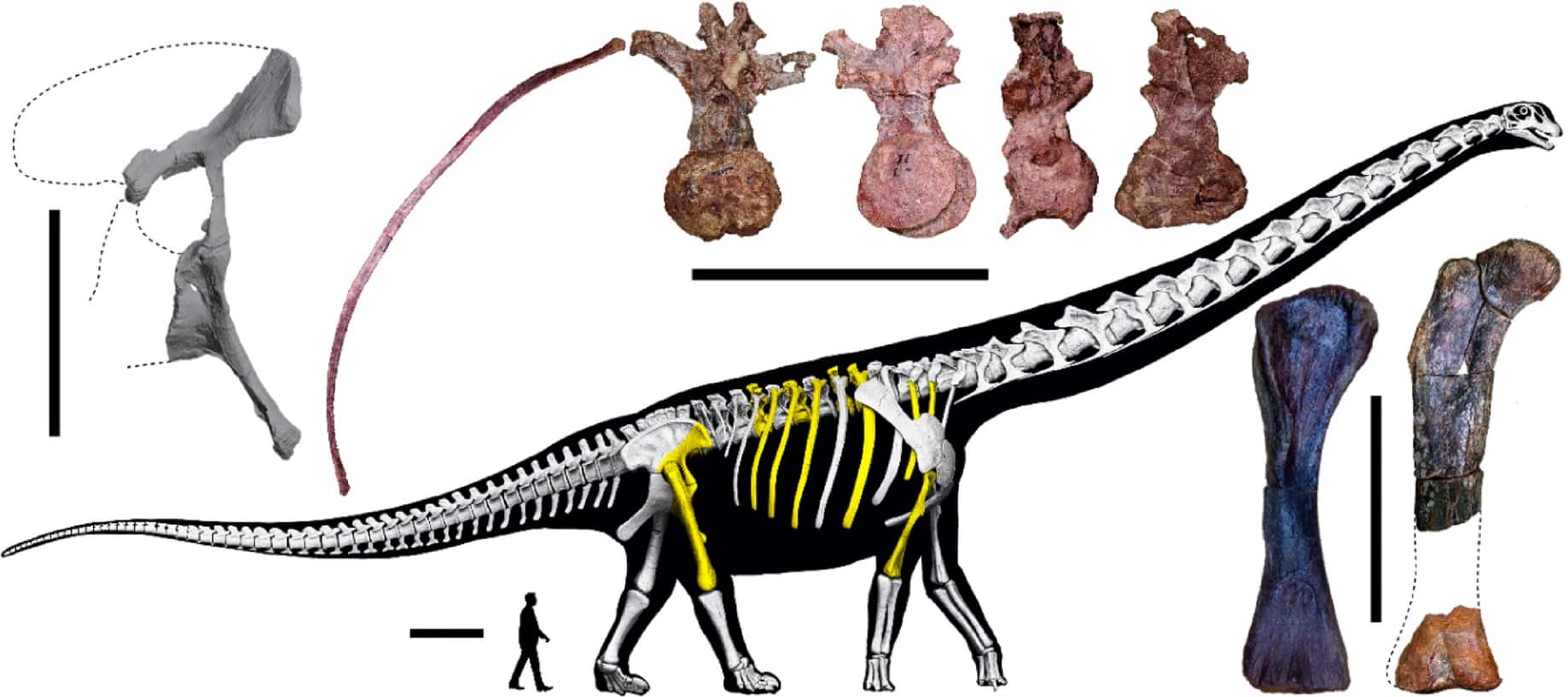
The dinosaur belonged to a subgroup of sauropods known as somphospondylans, which lived from the late Jurassic into the Cretaceous period. Fossils from this group have been found on every continent, showing how widely they spread across the prehistoric world.
Scientists identified the new species by examining the distinct shapes of its vertebrae and leg bones, which differed from those of previously known sauropods.
Name reflects mythology and local culture
The genus name Nagatitan combines cultural and mythological references. “Naga” refers to serpent-like mythical beings found in many Asian traditions, particularly in northeastern Thailand, where they are linked to water and Buddhism. “Titan” comes from the giants of Greek mythology. The species name honors Chaiyaphum Province, where the fossils were found.
Researchers said the giant dinosaur likely used its massive body and large surface area to release heat and stay cool in the region’s harsh climate. The area was once part of a river system, and the dinosaur probably lived alongside crocodiles, fish, and fish-eating pterosaurs.
The fossils were preserved in the youngest rock layers in Thailand, still known to contain dinosaur remains. Scientists said the region later became covered by a shallow sea near the end of the age of dinosaurs, conditions that likely prevented newer dinosaur fossils from forming. Researchers believe the discovery may represent one of the last giant sauropods to live in Southeast Asia.