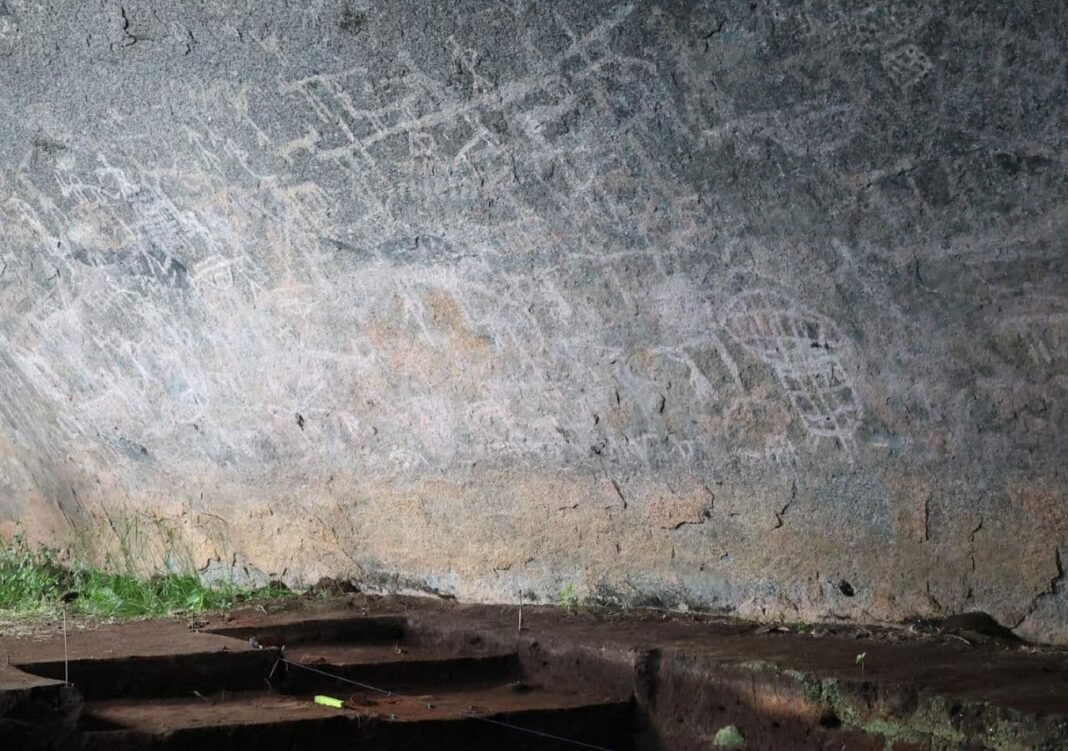

Archaeologists in Moldova have uncovered a 2,300-year-old Scythian tomb during a rescue excavation near the village of Gura Bîcului, a discovery that may shed new light on ancient burial customs in the Lower Dniester region.
The tomb dates to the 3rd century B.C. It was found in the Anenii Noi district, inside a kurgan-type necropolis. Kurgans are ancient burial mounds often linked to steppe cultures, including the Scythians.
The underground chamber has already produced several important finds. Archaeologists discovered human remains, ceramic vessels, arrowheads, beads, a rare ceramic incense burner, and a worked stone object that may have held ritual meaning.
Incense burner points to ritual practices
Among the most notable finds is the ceramic incense burner. Specialists said the object is typical of Scythian burial sites from the 3rd to 2nd centuries B.C. Such artifacts are considered rare in Moldova’s archaeological record.
Researchers said the incense burner may become one of the key exhibits at the National Museum of History after conservation and study.
Archaeologists in Moldova have uncovered a 2,300-year-old Scythian tomb near Gura Bîcului.
The burial revealed human remains, arrowheads, beads, ceramic vessels and a rare incense burner linked to ancient funerary rituals. The tomb may offer new clues about Scythian life. pic.twitter.com/IuoPLdOFwz
— Tom Marvolo Riddle (@tom_riddle2025) May 18, 2026
Incense burners are often linked to ritual activity in Scythian funerary contexts. Its presence suggests the Gura Bîcului tomb was more than a simple burial place. It may have been part of a planned ceremony shaped by belief, status, and community tradition.
The polished stone object found in the chamber has also drawn attention. Archaeologists said it may have served as a small altar. But they are treating that interpretation with caution until specialists complete further analysis.
Excavation work continues
The tomb has not yet been fully uncovered. Vlad Vornic, director of Moldova’s National Archaeological Agency, said rescue excavations are continuing at the site.
Researchers have already recorded important objects in the southeastern part of the chamber. These include a polished stone, a complete ceramic vessel, and other items linked to Scythian necropolises from the 3rd and 2nd centuries B.C.
Further work may reveal more artifacts. It may also help researchers identify the person buried there and understand how the chamber was built.
The arrowheads may point to warrior traditions often associated with Scythian groups. The beads and ceramic vessels may have been personal items or offerings placed with the dead.
Find adds to Scythian record
The discovery is significant because it adds new evidence of Scythian-related communities in what is now Moldova.
The Scythians were known across the Eurasian steppe for their horse culture, weapons, and distinctive burial customs. Their archaeological traces stretch from the Pontic steppe to parts of Eastern Europe.
In Moldova, finds of this kind are especially valuable. They help researchers understand how Late Iron Age communities used the Lower Dniester landscape. They also show how local traditions are connected with wider Scythian cultural practices.
As excavation work continues, archaeologists hope the tomb will offer a fuller picture of the person buried there, the cemetery around it, and the community that lived in the region more than two millennia ago.