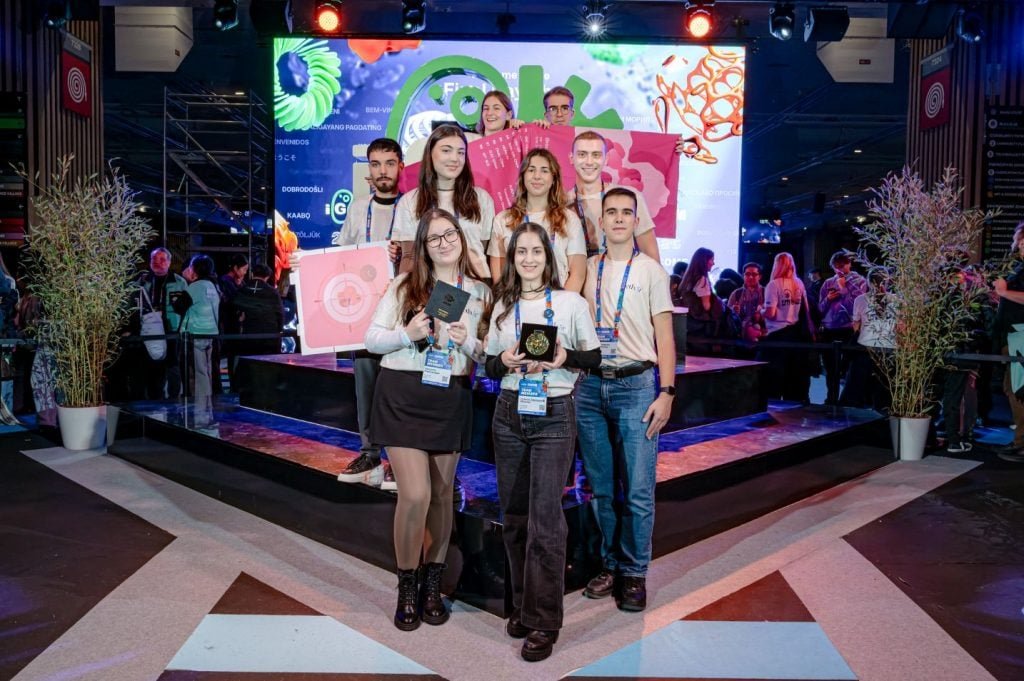
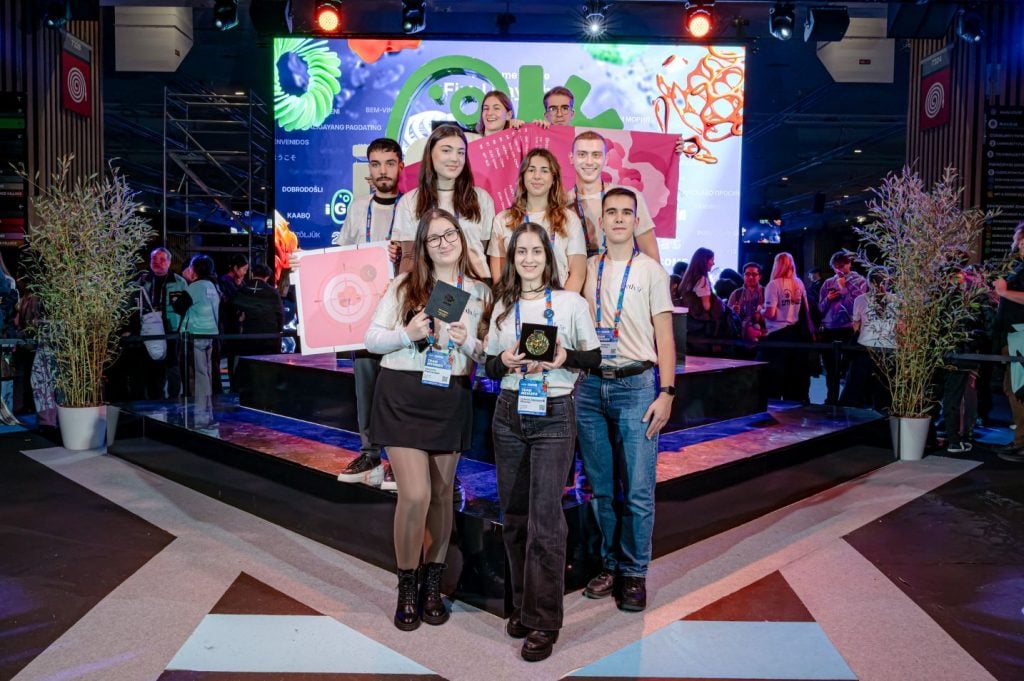
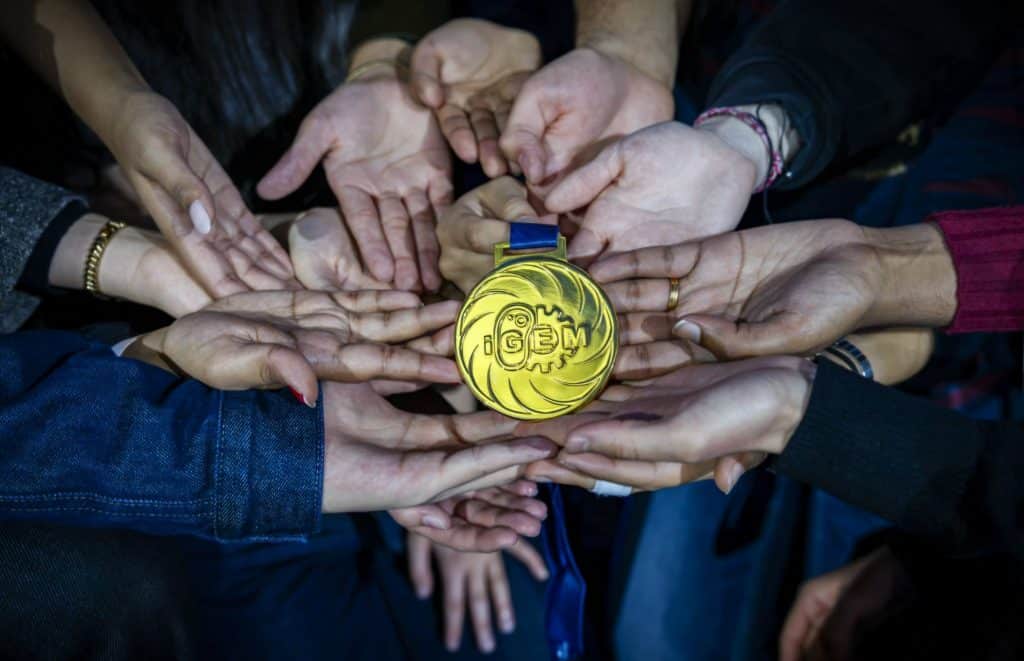
A student research team from Greece’s Aristotle University of Thessaloniki has won a gold medal at the 2026 iGEM Competition in Paris for a project exploring a new approach to lung cancer.
The interdisciplinary team, known as iGEM Thessaloniki, presented AETh3R, a synthetic biology project targeting two proteins linked to cancer growth. The competition took place from November 13 to 16, bringing together more than 400 research teams from around the world.
Rather than simply blocking the activity of cancer-related proteins, the students aim to trigger their selective destruction inside cells. The approach could offer a new direction for research into non-small cell lung cancer, the most common form of the disease.
How the AETh3R project works
The project focuses on two proteins, KRAS and MDM2, which play important roles in cancer development.
Certain KRAS mutations can keep growth signals switched on, encouraging cancer cells to multiply. MDM2, meanwhile, can suppress p53, a protein that helps protect the body by limiting the growth of damaged cells.
The team designed two molecules using a technology known as PROTAC, short for proteolysis-targeting chimera. These molecules are designed to recognize specific proteins and direct them toward the cell’s natural protein-degradation system.
The goal is to remove the targeted proteins rather than merely inhibit their activity. By targeting KRAS and MDM2, the researchers hope to disrupt signals that support cancer growth and restore some of the protective effects associated with p53.
The project also explores the delivery of these molecules into cancer cells using lipid nanoparticles. These tiny carriers could help protect the molecules and transport them toward their intended targets.
An early-stage proposal, not an established treatment
The distinction between a promising research concept and a proven cancer treatment is important.
The team has reported laboratory findings involving chemical compounds that target KRAS and MDM2 in a model cell line of human non-small cell lung cancer. The results suggested that both proteins could be useful targets for further investigation.
However, the AETh3R project remains at an early research stage. Its safety and effectiveness have not been established in patients. Further studies, including in vivo testing, would be necessary before researchers could assess its potential as a treatment.
The project therefore represents a research direction rather than a therapy currently available to people with lung cancer.
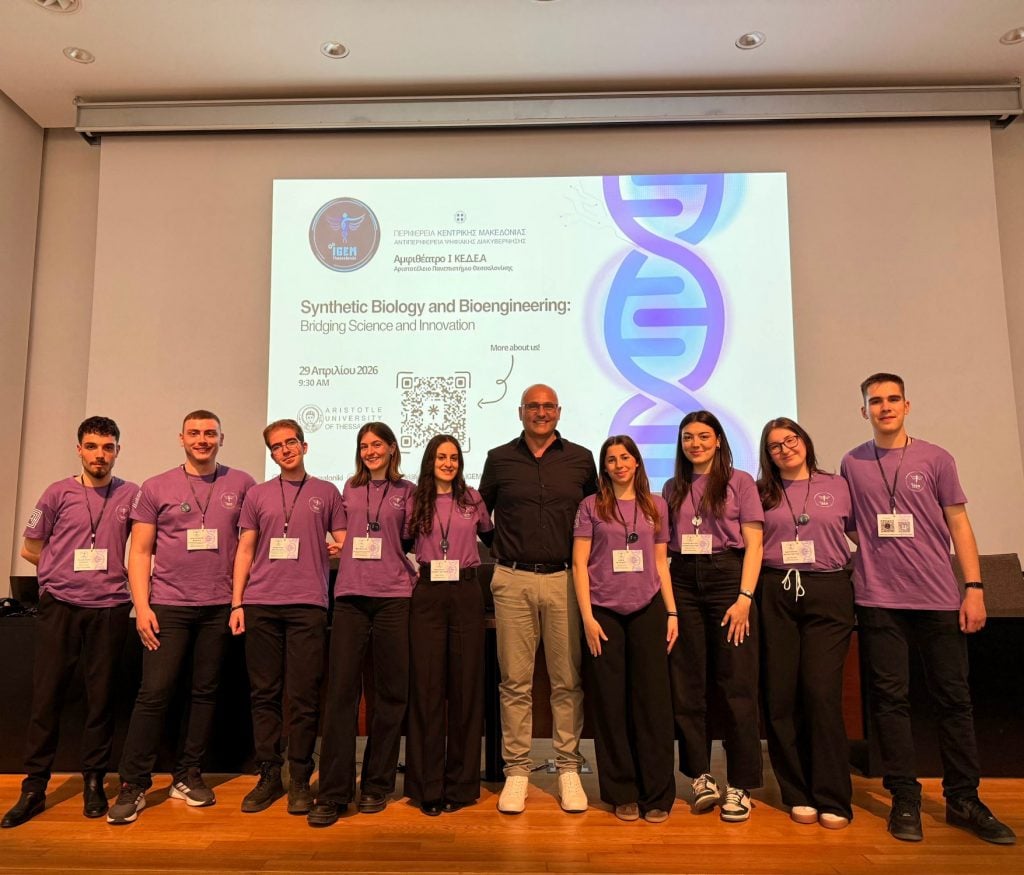
A multidisciplinary team from Thessaloniki
The iGEM Thessaloniki team brings together undergraduate students from four departments at Aristotle University, along with a postgraduate student in biomedical engineering.
The participating departments include Medicine, Biology, Electrical and Computer Engineering, and Agriculture. This mix of disciplines supports the project’s combination of biological research, molecular design and potential drug-delivery methods.
Professor Michail Aivaliotis, from Aristotle University’s School of Medicine, served as the team’s scientific supervisor for the sixth year. Doctors Konstantina Psatha and Stefania Maniatsi also guided the students.
The 2026 gold medal adds to the team’s record in the international synthetic biology competition. According to reports, iGEM Thessaloniki has won gold medals in 2017, 2019, 2025 and 2026, alongside several silver medals.
The project’s name, AETh3R, draws inspiration from Aether, the personification of the pure upper air in ancient Greek mythology. The name connects the team’s work on lung cancer with ideas of air, clarity and renewal.
While further research will determine whether the approach can progress toward a future treatment, the award highlights the work of young Greek researchers exploring new possibilities in cancer science.