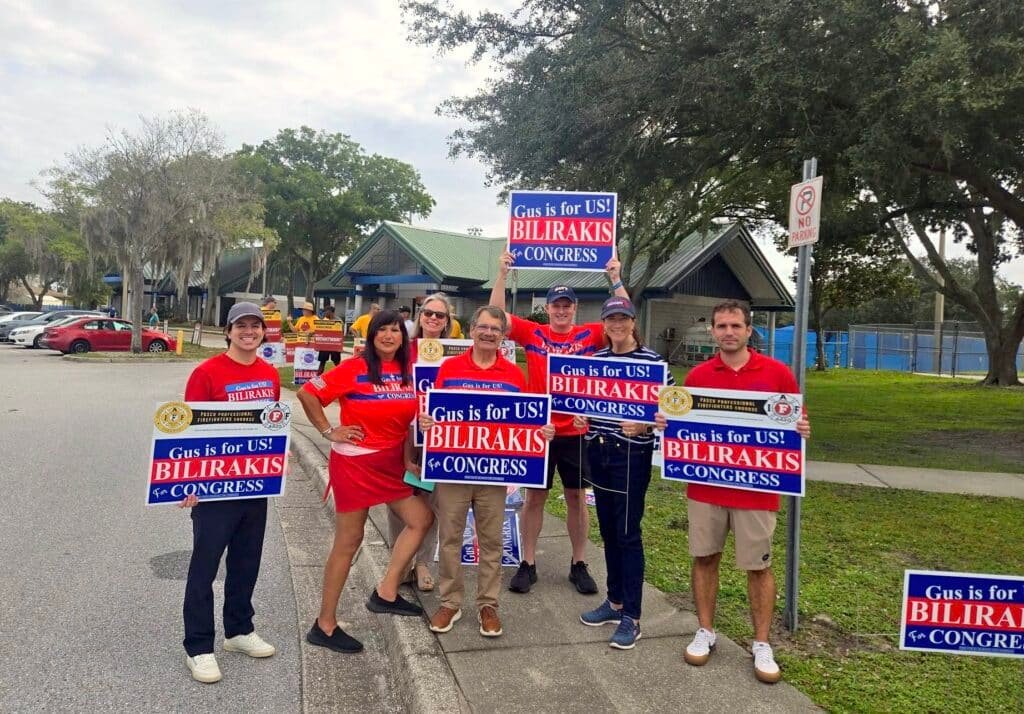
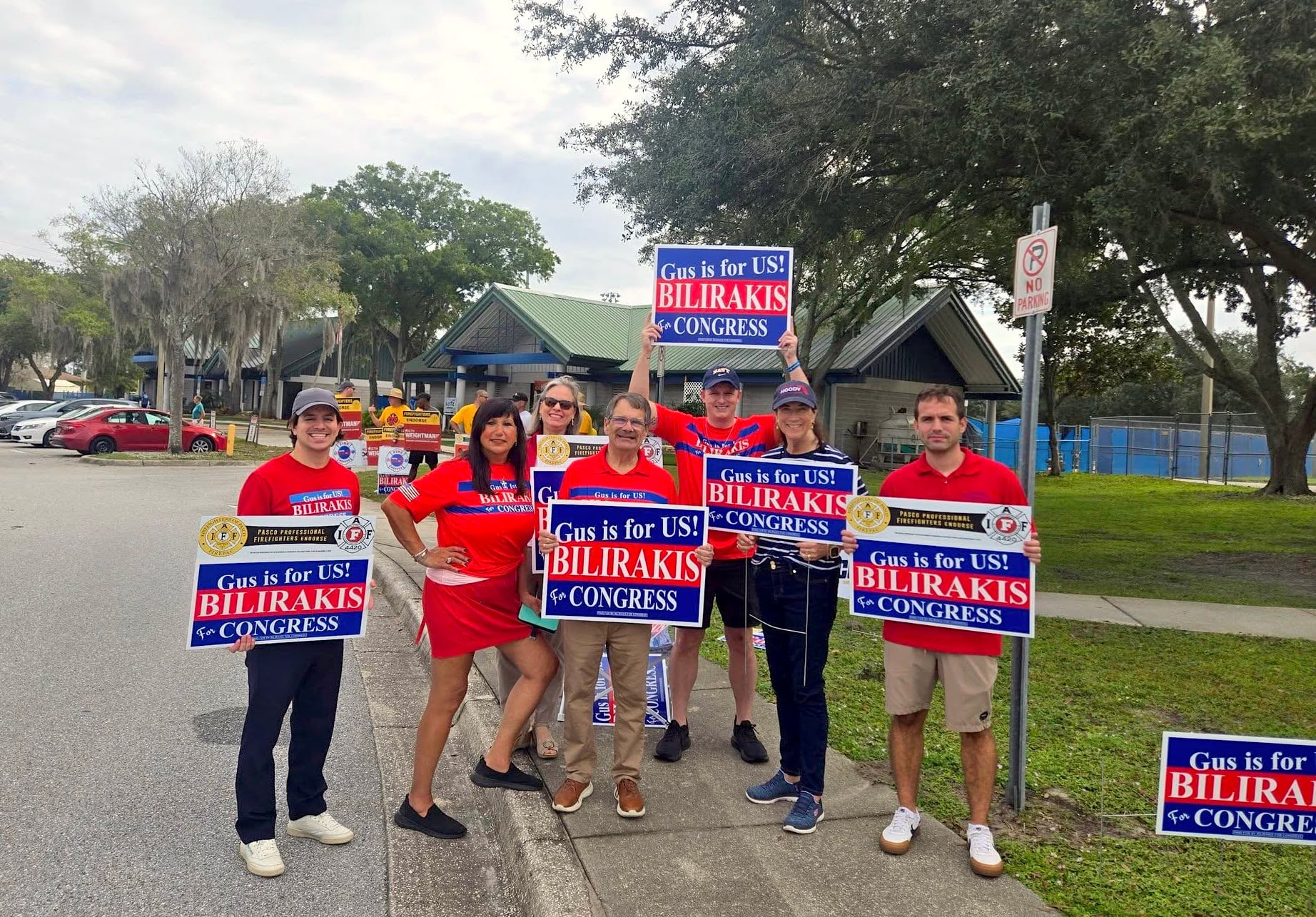
Florida voters returned Greek-American Rep. Gus Bilirakis to Congress on Tuesday, Nov. 3, giving the Republican an 11th term after a challenge from Democrat Kimberly Overman in a redrawn district.
Florida’s unofficial election returns showed Bilirakis receiving 149,740 votes, or 52.86%, in the 12th Congressional District. Overman had 129,774 votes, or 45.82%, while no-party candidate Branden Scrivener received 3,740 votes, or 1.32%. The totals remain subject to certification.
The result extends a congressional career that began in January 2007 and keeps the seat in Republican hands. Bilirakis was among the Greek-American candidates seeking office in this year’s midterm elections, with a record that includes leadership of the Congressional Hellenic Caucus and advocacy on Greece and Cyprus.
Bilirakis wins in a redrawn Florida district
This year’s contest took place under new boundaries that shifted the district southward. The revised map removed Citrus and Hernando counties and brought in part of Hillsborough County, leaving the seat covering parts of Pasco and Hillsborough. The changes reduced the district’s Republican advantage, although it remained Republican-leaning. Overman, a former Hillsborough County commissioner, moved into the 12th District race after initially seeking a different congressional seat.
Bilirakis, who had President Donald Trump’s endorsement, emphasized economic policy, veterans’ issues and constituent services. Overman campaigned on affordability, housing and health care, drawing on her experience in local government and financial planning.
Greek roots and a family history in Congress
Bilirakis, 63, was born in Gainesville and graduated from Tarpon Springs High School. He earned a bachelor’s degree from the University of Florida in 1986 and a law degree from Stetson University in 1989, practicing law before serving in the Florida House of Representatives from 1998 to 2006.
He was first elected to Congress in 2006, succeeding his father, Michael Bilirakis, who served in the House from 1983 to 2007. Gus Bilirakis initially represented Florida’s 9th District and has represented the 12th since 2013.
His family’s Greek background has shaped his approach to public service. In a 2025 interview with the Center for Effective Lawmaking, Bilirakis said all four of his grandparents immigrated to the United States from Greece. He recalled his grandmother’s work with the Philoptochos Society and her efforts to help immigrant families obtain assistance.
Work on Greece, Cyprus and the Eastern Mediterranean
Bilirakis serves as a co-chair of the Congressional Hellenic Caucus and a founding co-chair of the Congressional Hellenic Israel Alliance, working with lawmakers from both parties on Eastern Mediterranean issues.
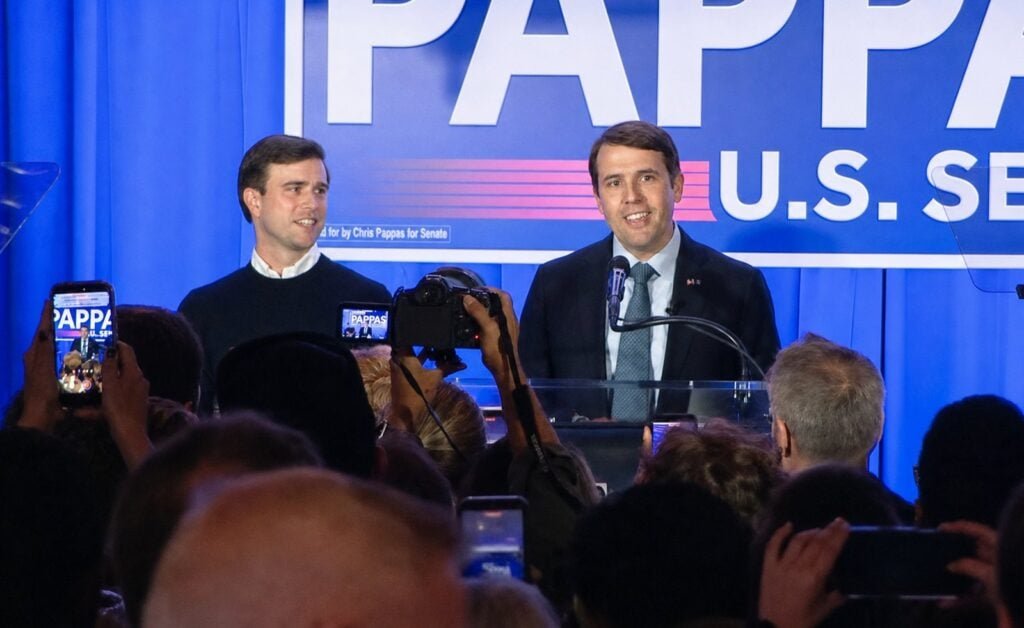
In May, the House Foreign Affairs Committee advanced legislation to strengthen U.S.-Greece defense cooperation. Bilirakis introduced the measure with Reps. Chris Pappas — who was just elected to U.S. Sentate, Dina Titus and Nicole Malliotakis. It proposed extending military education and training assistance to Greece for five years.
In August, he and Democratic Rep. Brad Schneider led a congressional push for the Trump administration to prioritize the Great Sea Interconnector, the planned electricity connection linking Greece, Cyprus and eventually Israel.
Bilirakis also joined other Greek-American lawmakers opposing a proposed military sale to Turkey in June. Their statement raised concerns about Ankara’s policies in the Eastern Mediterranean and its potential return to the F-35 fighter jet program.
Congressional priorities beyond foreign policy
In the current Congress, Bilirakis chairs the Commerce, Manufacturing and Trade Subcommittee of the House Energy and Commerce Committee. He also serves on its Health and Communications and Technology subcommittees.
“I have a very conservative record – but my reputation is working with the other side,” he said in the 2025 Center for Effective Lawmaking interview, describing his approach to advancing legislation.
During the reelection campaign, he also called for a ban on stock trading by members of Congress, arguing that lawmakers’ access to information creates conflicts of interest and that giving up trading should be part of serving in public office.