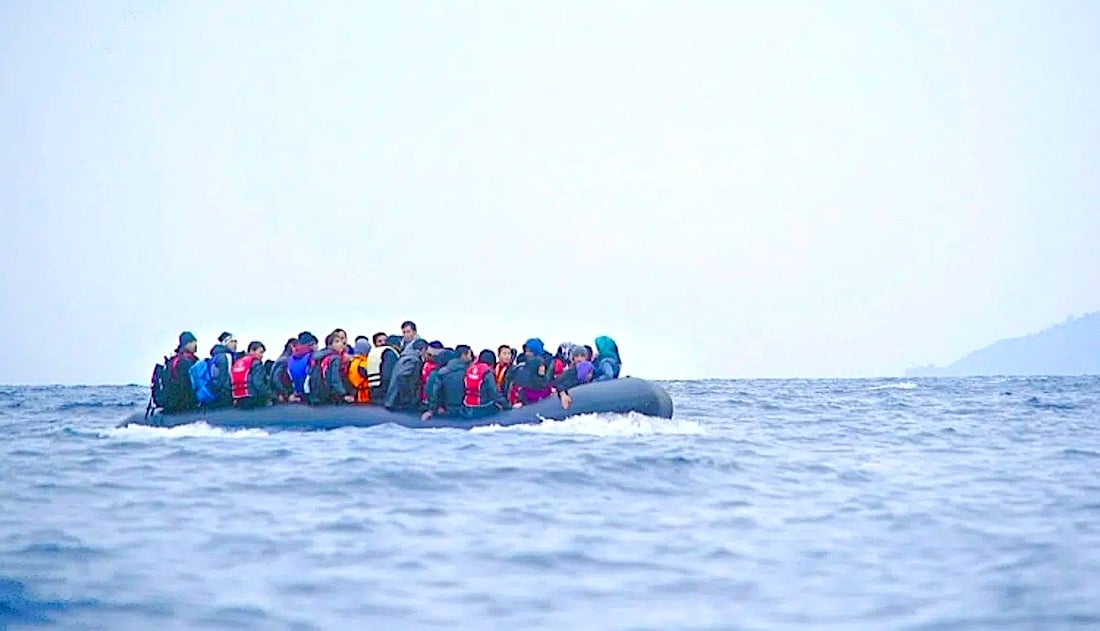
Between March 1 and April 9, 2026, Greece revoked the refugee status of 1,203 Syrian nationals. These figures, released Tuesday, highlight an intensified monitoring and re-examination of international protection cases.
The revocations were executed by the Returns Directorate of the Asylum Service, following a systematic review of files to ensure compliance with the current legal framework.
Voluntary returns to Syria
Alongside these revocations, the Ministry reported a surge in “voluntary returns” to Syria, claiming Greece now holds the highest performance rate in the European Union for this category.
Greece announced that in the same period, there were 89 voluntary returns to Syria, while the EU total is 178. Greece accounts for 50% of all voluntary returns to Syria within the EU.
These procedures mark the end of a 10-year hiatus in returns to Syria. The Migration and Asylum Ministry emphasized that while the program is in its early stages, it is a cornerstone of a “comprehensive policy” intended to bolster the credibility of the national asylum system.
The recent data reflect a broader trend of Greece adopting what it calls a “strict but fair” migration doctrine. This shift is driven by both domestic political pressure and Greece’s role as a frontline state for the EU.
Is Syria safe for the return of refugees from Greece?
Greece has increasingly utilized the legal designation of “Safe Third Countries” (notably Turkey). Under this framework, asylum seekers from countries like Syria or Afghanistan can have their applications deemed inadmissible if it is determined they could have found protection in a transit country before reaching Greece.
The revocation of status (as seen with the 1,203 Syrians) often relies on Article 11 of the 1951 Refugee Convention. Authorities are now more frequently arguing that “circumstances have ceased to exist” in certain regions of Syria, allowing them to re-evaluate whether protection is still required.
Greece has heavily incentivized the Assisted Voluntary Return and Reintegration (AVRR) programs, co-funded by the EU and the International Organization for Migration (IOM). By providing small financial grants and reintegration assistance, Greece has managed to process returns that would otherwise be legally or logistically impossible as forced deportations.
By restarting returns to Syria after a decade, Greece is effectively testing the diplomatic waters for the rest of Europe. While the UN and human rights organizations often maintain that Syria remains unsafe, Greece’s “measurable results” are being used to argue for a pan-European reclassification of certain Syrian provinces as safe for return.
Related: Migrant Surge in Greece: South Crete and Gavdos Under Pressure