

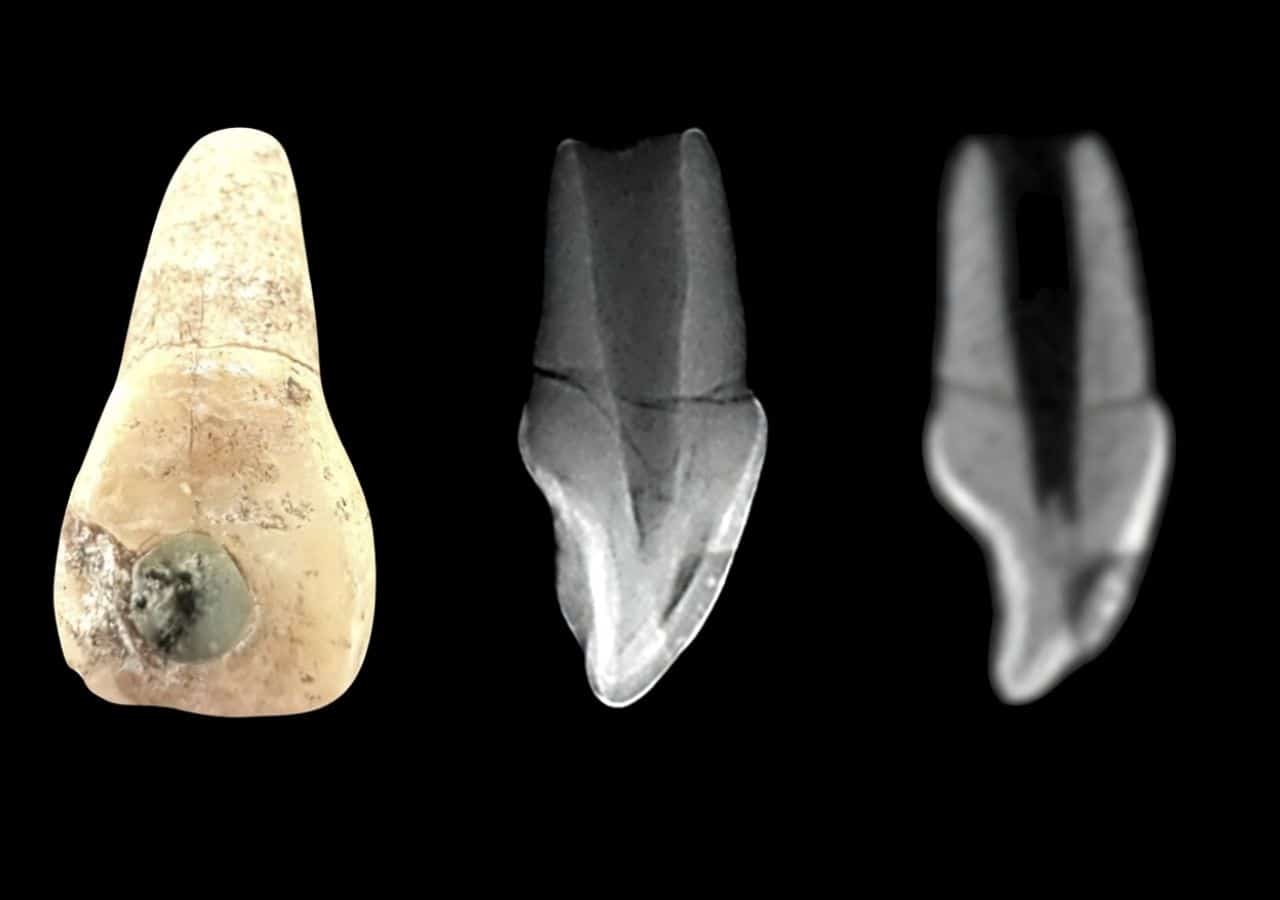
Ancient Maya dentists drilled into a back molar and filled it with a precious gemstone, making it the earliest known case of a stone used as a dental filling. Researchers say this discovery reshapes what we know about Maya medical knowledge and their approach to using gemstones to treat dental problems.
Estuardo Mata-Castillo of Francisco Marroquin University in Guatemala led the study, published in the Journal of Archaeological Science: Reports.
The tooth, a mandibular left first molar, belongs to the decontextualized osteological collection at the Popol Vuh Museum at Francisco Marroquin University in Guatemala, a collection that has been assembled since the 1970s to preserve archaeological specimens from destruction.
Jadeite stone found firmly fixed in a back molar
The inlay is made of jadeite, a green gemstone, placed at the center of the tooth’s biting surface and held firmly by a cementing material. Its location is what makes this discovery stand out. Every previously known Maya dental inlay was placed in front teeth purely for decoration and social identity. A back molar served no aesthetic purpose.
To confirm whether the stone was placed during the person’s lifetime or after death, researchers used cone beam computed tomography, an advanced imaging technique. The scans revealed dystrophic calcification inside the pulp chamber, a biological response the body produces when reacting to prolonged irritation.
A jadeite gemstone found in a Maya dental filling confirms ancient dentists treated tooth decay long before modern medicine, a study reveals. pic.twitter.com/BfbrrE5UxD
— Tom Marvolo Riddle (@tom_riddle2025) April 14, 2026
This confirmed the tooth was alive when the procedure was performed. The internal structures also pointed to the patient being a young adult at the time.
Maya gemstone dental filling suggests advanced ancient pain relief
The Maya already had remarkable dental skills. Historical records show that fewer than 4% of their known drilling procedures accidentally reached the sensitive pulp. Their work was precise. But those earlier interventions were cosmetic, always on visible front teeth.
This case suggests something different was happening. The ancient Maya had very high rates of tooth decay, largely because their diet relied heavily on maize. Despite this, evidence of any therapeutic or palliative dental treatment among the Maya has been extremely rare.
Researchers have previously documented only a handful of cases from Guatemala and Belize showing possible interventions on cavities through drilling, chipping, or bitumen filling. Tooth extraction was also known to be practiced.
Purpose remains uncertain but points beyond the cosmetic
Mata-Castillo and his team believe the molar may have had a cavity or another painful condition, and the jadeite inlay was placed either to treat it or to relieve the pain. Whether the motivation was therapeutic, palliative, or tied to some unusual symbolic practice remains unclear.
Evidence of prehistoric dental work exists worldwide, from Stone Age Italy to Neolithic Pakistan to pre-Columbian North America, but none of those cases involved a stone inlay placed in a back molar. This finding adds a more complex and practical dimension to Maya dental history than previously known.


