

Greece’s Ministry of Environment and Energy has launched a public consultation for a new Special Spatial Framework for Renewable Energy Sources (RES-Spatial Framework).
Aiming to balance rapid green transition with environmental protection and local community interests, the new policy introduces a unified and significantly stricter set of rules for hosting large-scale green energy investments.
The framework covers all major renewable and energy storage technologies. Crucially, projects already in operation or at an advanced licensing stage, as well as rooftop solar and large-scale pumped-storage hydro plants, are exempt from these new restrictions.
Key restrictions for solar (PV) parks
Horizontal Bans: New solar installations are completely prohibited in Natura 2000 protected areas, forests, wetlands, national parks, landscapes of outstanding natural beauty, historical monuments (UNESCO sites/Zone A archaeological zones), undegraded agricultural terraces, roadless areas, and swimming beaches.
Land-Use Cap: To prevent overconcentration and safeguard productive agricultural land, new solar projects cannot exceed 1.5% of the total land area per Regional Unit.
Visual & Proximity Rules: Minimum buffer distances from residential areas are mandated, alongside mandatory visibility studies for projects sited near major cultural heritage sites.
Key restrictions for wind farms
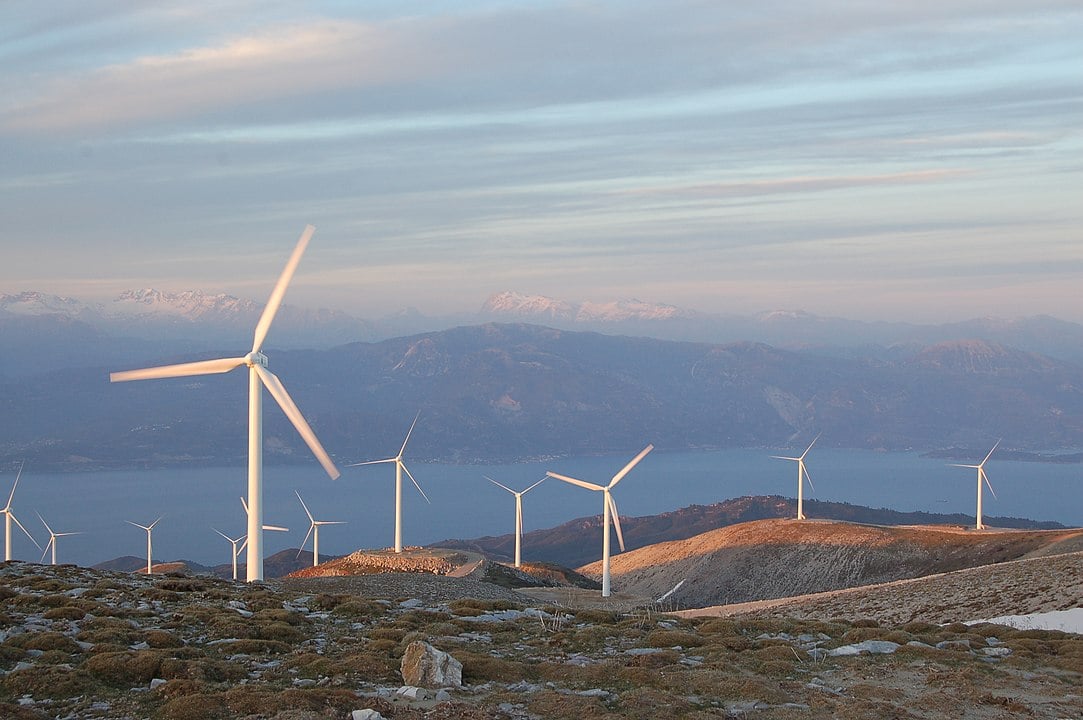
Altitude & Location Bans: Wind turbines are barred from areas with an altitude above 1.200 meters to protect high-value mountain ecosystems. They are also banned in Attica, the Thessaloniki Metropolitan Area, and on small islands under 300 square kilometers (unless serving public interest, like desalination plants).
Natura 2000 Exception: Siting inside Special Protection Areas (SPAs for birds) within the Natura 2000 network is permitted only if explicitly backed by an approved Special Environmental Study and if the wind potential exceeds 27 km/h (kilometers per hour)
Island Capacity: On eligible islands, total land coverage for wind farms is strictly capped at 4% per Municipal Unit.
Related: Greece to Build Largest Public Cooperative Solar Park

