


China has announced its top 10 archaeological discoveries for 2025, highlighting major finds that offer new insight into the country’s long and complex past.
The National Cultural Heritage Administration released the list. It is widely regarded as one of the country’s most authoritative recognitions in archaeology. Each year, it highlights discoveries that help answer key historical questions.
The selected sites span a wide geographic range. They stretch from the forests of the Changbai Mountains in the northeast to the foothills of the Helan Mountains in the northwest. Together, they reflect the depth and diversity of China’s archaeological record.
The discoveries cover multiple periods. They range from early human activity to the rise of complex societies and imperial systems. Archaeologists say the findings provide clearer timelines and stronger evidence of how communities developed, interacted, and organized power over thousands of years.
Paleolithic sites trace early human adaptation
A breakthrough comes from a cluster of Paleolithic sites in the Changbai Mountains in Jilin Province. The project covers more than 100,000 square kilometers and includes over 1,000 newly identified locations. Many contain stone tool remains, offering direct evidence of early human presence.
A distinctive obsidian tool industry stands out. The materials show clear technological change over time and reflect how early humans adapted to shifting environments. The sites date from about 220,000 to 13,000 years ago, providing a long record of development.
The evidence suggests that prehistoric communities in Northeast Asia were more connected than once believed, with signs of movement and exchange across regions.
Nanzuo site shows early urban planning and authority
The Nanzuo Site in Gansu Province represents one of the most advanced settlements of the late Yangshao Culture.
Dating to about 5,100 to 4,700 years ago, the site spans roughly 6 million square meters. At its center is a large palace-style structure connected to a carefully planned, multi-layered settlement.
2025年度全国十大考古新发现揭晓
.#China’s top 10 list of #archaeological discoveries of 2025, one of the highest honors for the country’s archaeological projects, was released on Apr. 29.
Here is the list:
1. Changbai Mountain Paleolithic site group in east Jilin Province
2. The… pic.twitter.com/IuwIo9kEKh— Beijing Daily (@DailyBeijing) April 29, 2026
The layout forms one of the earliest known examples of a central axis system in Chinese urban design. This approach later became a defining feature of historic capitals.
Findings include early use of bricks, adobe construction, and lime plaster. These materials point to organized labor and technical skill. Artifacts such as painted pottery and turquoise also indicate social hierarchy and long-distance exchange.
The scale and structure of the site suggest the emergence of regional political authority on the Loess Plateau.
Imperial coastal site confirms Qin rule strategies
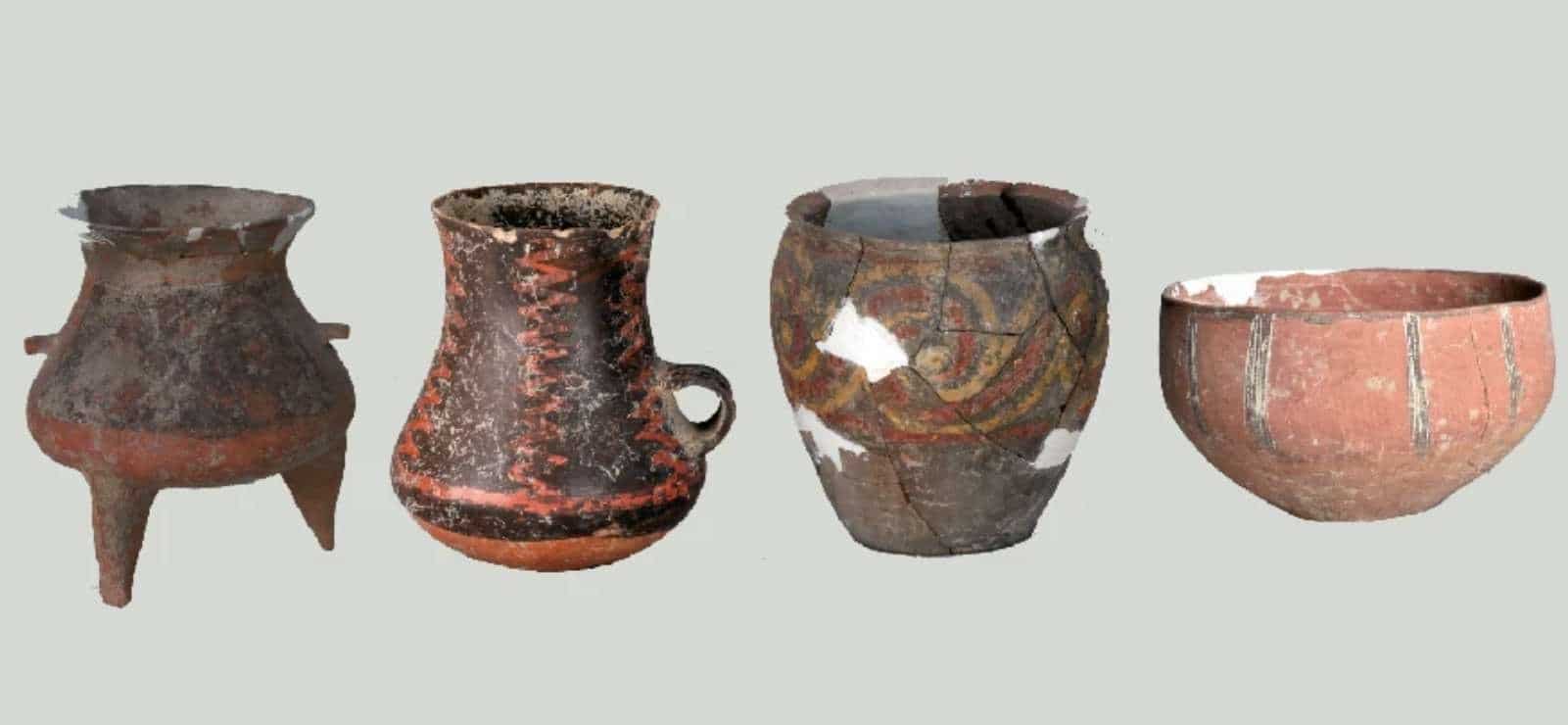
Excavations at the Langyatai site in Shandong Province provide strong evidence for historical accounts of eastern tours by Qin Shi Huang.
The site is considered the earliest and largest imperial construction project from the Qin Dynasty discovered in eastern China. Positioned along the coast and surrounded by sea on three sides, it held strategic importance.
Archaeological remains confirm that large-scale construction and royal visits were used to assert authority over distant regions. The site continued to serve as a political landmark during the Han Dynasty.
The findings show how early empires combined infrastructure and symbolic presence to strengthen control and expand their reach.
Western Xia kiln reveals state-controlled production

In Ningxia, the Suyukou Kiln Site near the Helan Mountains has been identified as an official kiln serving the Western Xia royal family.
The site is the largest and best-preserved fine white porcelain kiln complex in the region. The ceramics closely match items found in royal tombs and palaces.
The kiln operated from around 1080 until shortly before the dynasty’s fall in 1227. It provides rare physical evidence of centralized production under an ethnic minority-led regime.
The findings also reflect a broader transition from nomadic traditions to a more complex society based on agriculture and specialized crafts.
The Peiligang site links prehistoric phases
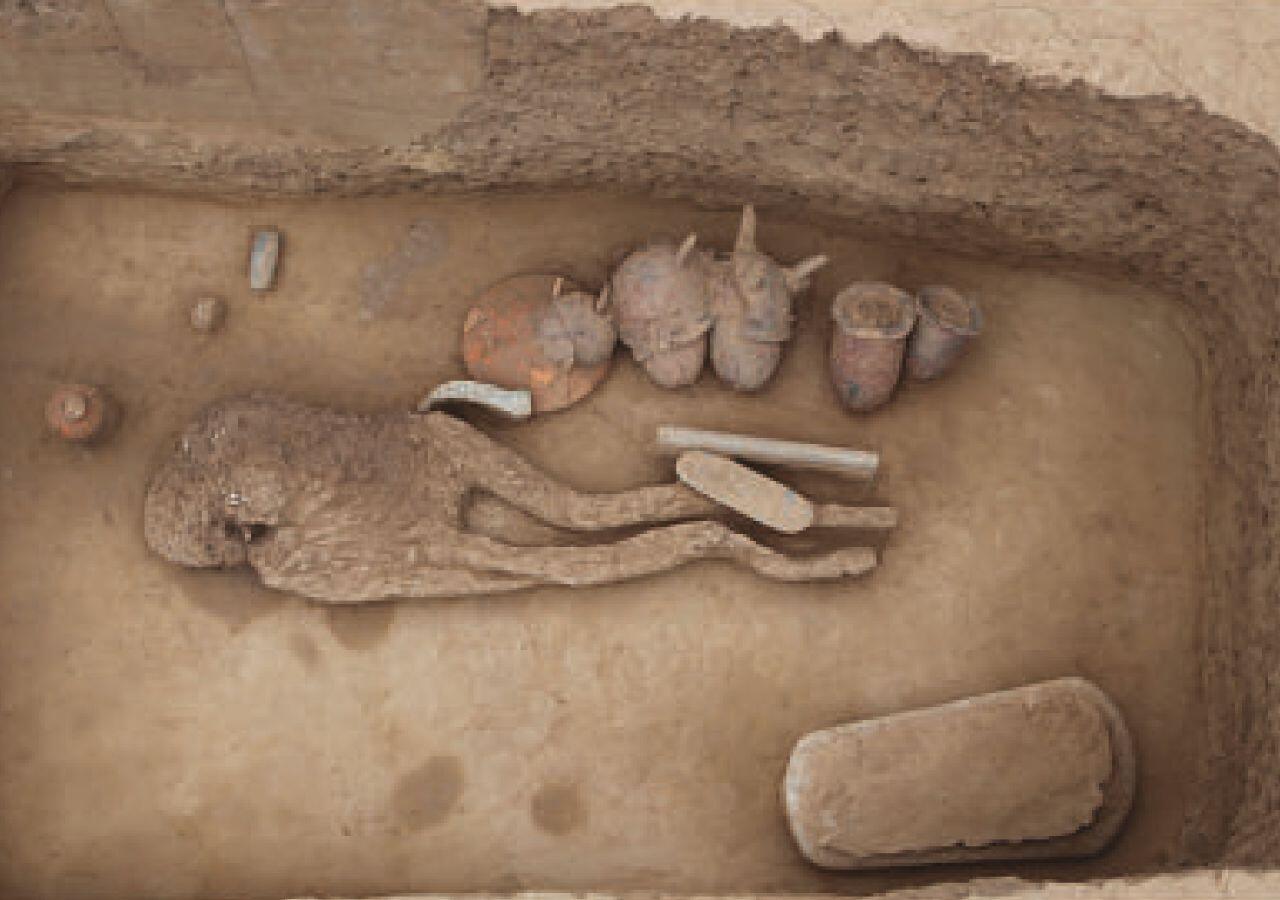
At the Peiligang site in Henan Province, ongoing excavations have uncovered tombs, house foundations, kilns, and ash pits, along with plant and animal remains.
Lower layers of the site contain evidence from the late Paleolithic period. These remains help establish a clearer sequence of technological change during early human history.
The discoveries provide a link between prehistoric phases and later cultural developments in the region.
The Zhengjiagou site expands the Hongshan culture range

The Zhengjiagou site in Hebei Province has been identified as a key site of the late Hongshan culture.
Dating to about 5,300 to 4,800 years ago, it shows that Hongshan communities extended further southwest than previously known.
The findings reveal a shift in settlement patterns and suggest increased mobility. They also provide evidence of early steps toward more complex social organization.
Zhongcun cemetery highlights elite networks
The Zhongcun site in Shanxi Province has revealed a high-status cemetery from the late Xia Dynasty.
Six tombs dating from about 1880 to 1450 BC contain luxury items such as turquoise, cinnabar, and lacquerware.
These materials point to long-distance exchange, including links with the Erlitou culture. The burials show clear social hierarchy and growing regional connections.
Zhengzhou Shang city reveals early urban systems
The Zhengzhou Shang City Site provides new evidence about the early Shang Dynasty capital. Excavations uncovered large storage facilities, a connected water network, and industrial zones for bronze casting and bone working.
High-status burials and sacrificial remains were also found. These features show a complex urban system where governance, production, and ritual were closely linked.
Changchun site maps Western Zhou structure
The Changchun site in Shaanxi Province represents a major settlement within the Western Zhou royal domain.
More than 3,150 tombs and chariot pits have been identified, along with a residential area divided into a structured grid.
Workshops for pottery, bronze, and bone tools show organized production. The site provides a clear example of how political authority and economic activity were managed within regional centers.
Shaoxing site documents 2,500 years of urban development
In Zhejiang Province, excavations in Shaoxing have revealed the capital of the Yue State from the Eastern Zhou Dynasty.
The site includes city walls, palace platforms, and sacrificial remains. Later layers contain official buildings from the Han and Six Dynasties periods.
More than 1,200 administrative documents on wooden slips were also found, along with workshops for armor, coins, and mirrors.
The site offers a rare continuous record of urban life, showing how a political center evolved into a structured administrative hub over centuries.

