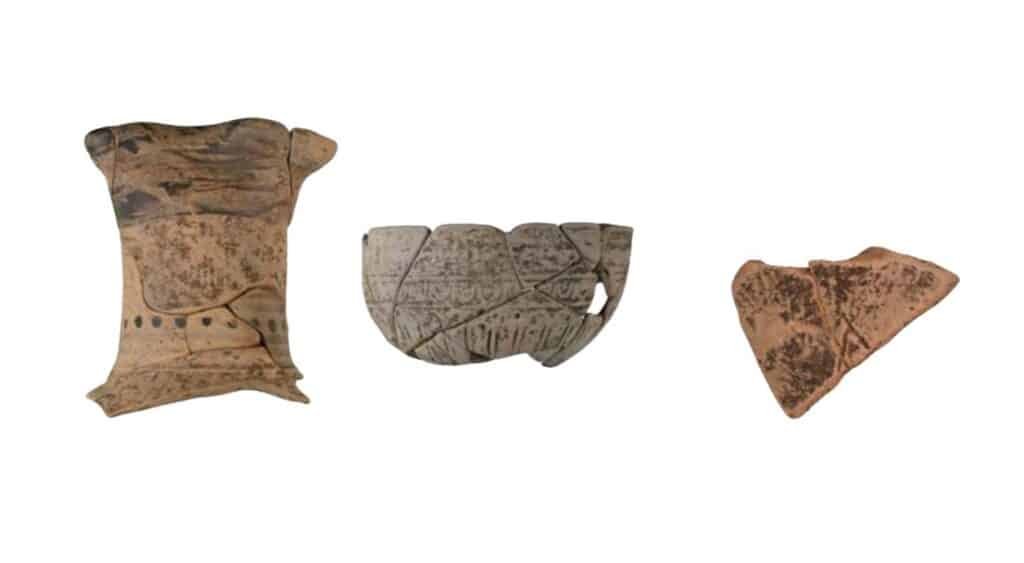
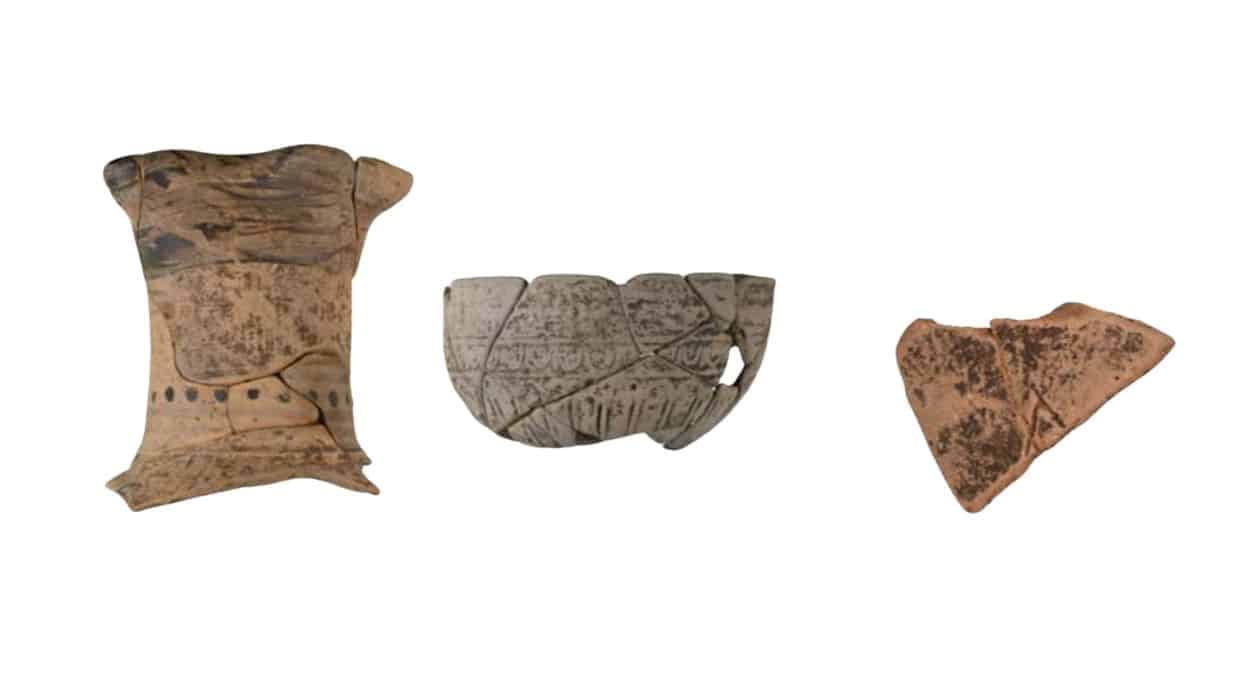
Archaeologists have discovered a 2,900-year-old sanctuary on a Greek mountaintop on the island of Euboea (Evia), revealing new evidence of ancient religious practices. Hundreds of pottery fragments, burned animal bones, and engraved inscriptions suggest worshippers climbed the mountain for centuries to make offerings and hold religious ceremonies.
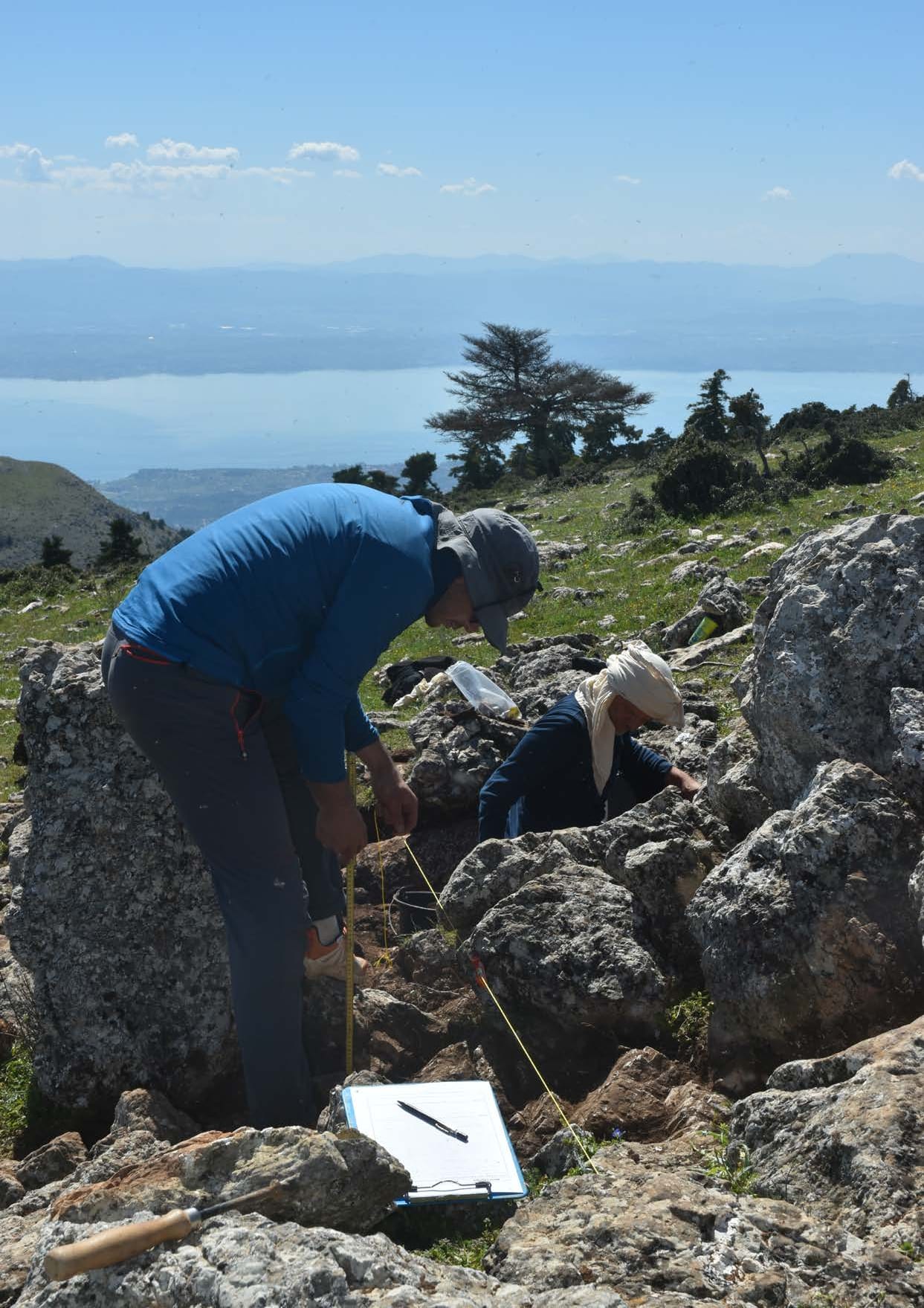
The discovery came during excavations conducted from June 5 to 9, 2026, near the summit of Elatias on Euboea’s Mount Olympus. Standing at 3,734 feet (1,138 meters), the peak overlooks the plain between Eretria and Amarynthos. Researchers from the Swiss School of Archaeology in Greece (ESAG), working with the Ephorate of Antiquities of Euboea, first identified traces of the sanctuary during an archaeological survey in 2025. The team, which included archaeologist Chloé Chezeaux, detailed its findings in the school’s 2026 annual report.
Hundreds of ancient pottery fragments uncovered
Excavations initially focused on a rocky formation about 98 feet (30 meters) below the summit. However, erosion had displaced much of the archaeological material, mixing pottery from the Archaic, Classical, and Hellenistic periods. Researchers then shifted their attention to the summit, where they made one of the excavation’s most significant discoveries.
Beneath a pile of limestone rocks, natural crevices held a thick layer of dark, organic-rich sediment. Excavations reached a depth of nearly 6.6 feet (2 meters), revealing hundreds of pottery fragments and numerous animal bones. Chezeaux told Live Science that the earliest pottery dates to at least the ninth century B.C. Evidence suggests religious activity continued into the Roman Imperial period, possibly spanning more than a thousand years.
Inscriptions offer clues to ancient Greek deity
Archaeologists have yet to uncover an altar or determine which deity worshippers honored at the sanctuary. However, two pottery fragments bear engraved letters that could provide clues. Researchers believe the surviving markings may represent the Greek letter alpha or delta, potentially referring to Artemis or Zeus. A separate Hellenistic inscription from the nearby ancient city of Eretria mentions “Artemis Olympia,” a title associated with the Greek goddess of hunting and wild nature.
Euboea was also home to the ancient sanctuary of Artemis at Amarynthos. However, researchers stressed that the available evidence remains insufficient to identify the deity worshipped on Elatias. Animal remains recovered from the mountaintop included sheep, goats, hares, and birds. Several bones showed signs of intense burning, with some completely calcined. The findings suggest practices involving animal sacrifices and ritual meals.
Sacred mountains and possible religious processions
In ancient Greek mythology, the gods lived on Mount Olympus in northern mainland Greece. However, several mountains across Greece bear the same name. Reaching the sanctuary on Euboea remains physically demanding. The final stretch covers about 1.8 miles (3 kilometers), with an elevation gain of 2,130 feet (650 meters). The difficult terrain forced archaeologists to camp near the summit throughout the excavation.
Researchers also noted that a cave on the southern side of Euboea’s Mount Olympus previously served as a place of worship. Its proximity to the newly discovered sanctuary raises the possibility that ancient religious processions connected the two sites. Further analysis of the archaeological material could help establish the sanctuary’s precise chronology and reveal why generations of ancient Greeks undertook the demanding journey to worship on the remote mountaintop.