


Scientists have discovered a new species of bush tomato in Australia’s outback region that features a rare, visible biological defense system involving “nectar glands” and protector ants.
The new species, named Solanum nectarifolium (Tanami bush tomato), was identified by a research team led by Professor Chris Martine of Bucknell University.
The discovery, published in the journal PhytoKeys, marks the first time a species in the Solanum genus, which includes potatoes, eggplants, and common tomatoes, has been found with extrafloral nectaries (EFNs) visible to the naked eye.
The new tomato attracts ants for protection
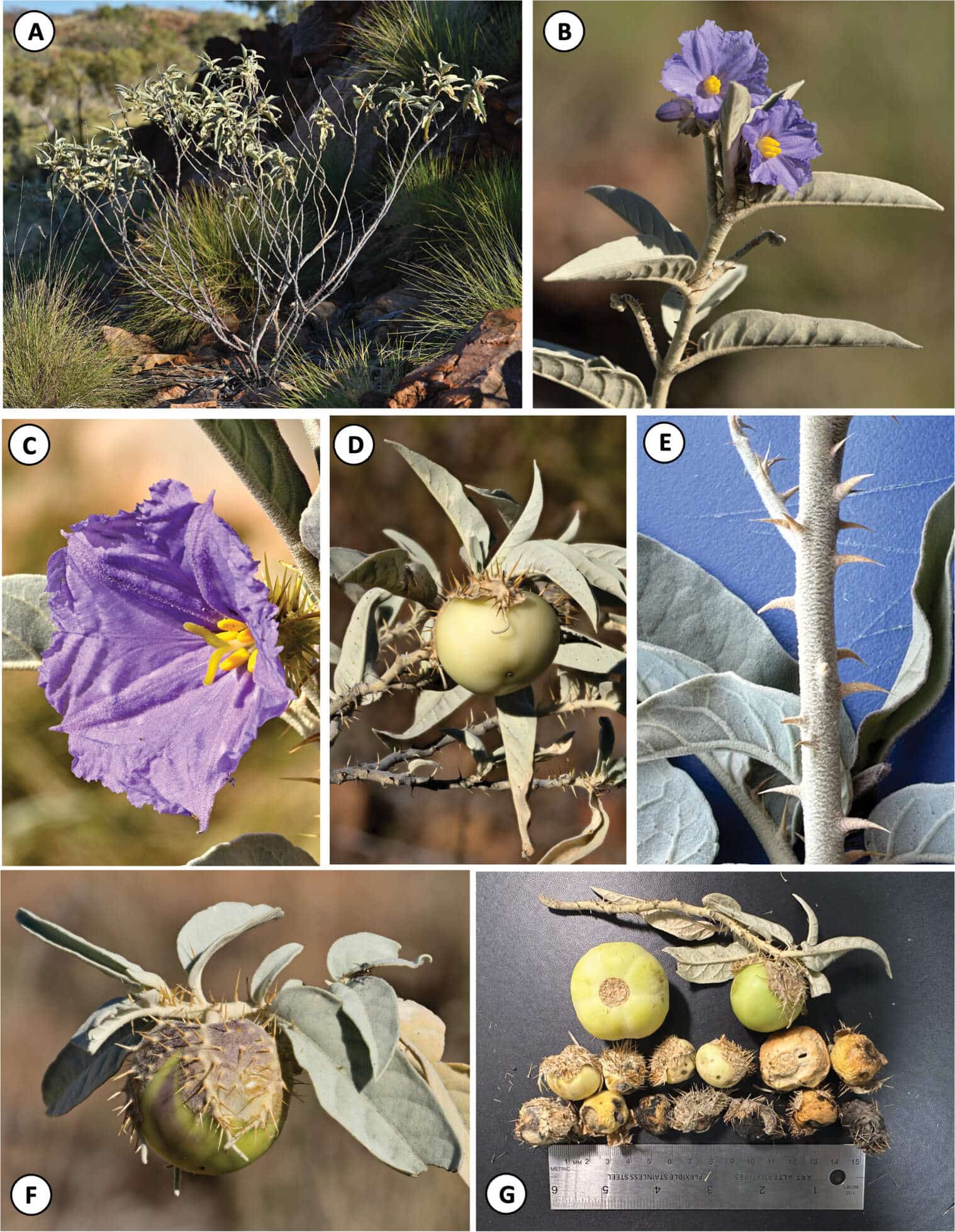
The Tanami bush tomato is distinguished by conspicuous, round disks on the undersides of its leaves. These organs exude a sweet liquid that attracts ants, which in turn act as a “bodyguard” detail, protecting the plant from herbivores.
While microscopic nectaries have been observed in a handful of related Australian species, the disks on S. nectarifolium are approximately half a millimeter wide and produce large, shiny droplets of nectar easily seen without magnification.
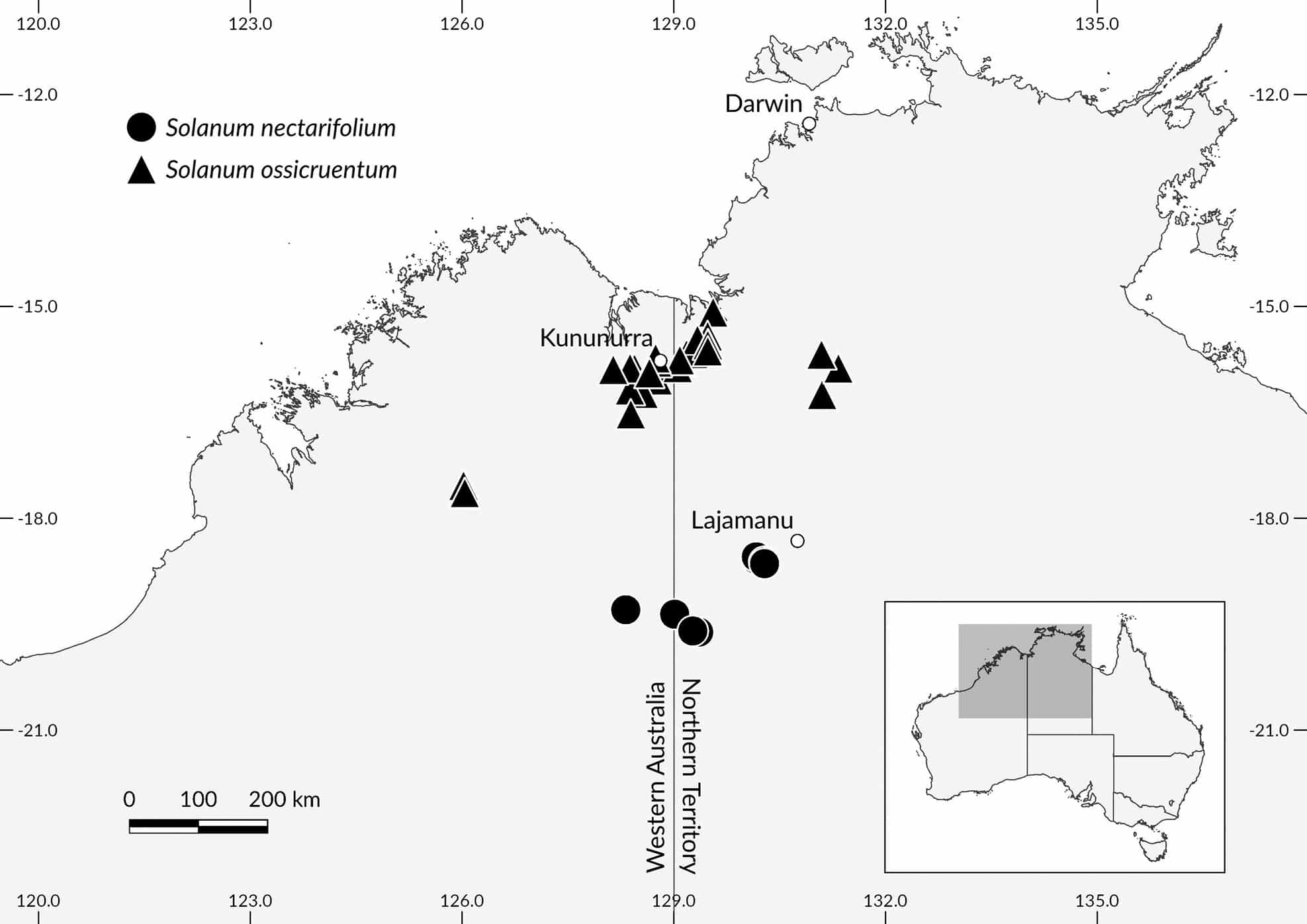
“We found ants all over the leaf undersides, avidly moving from disk to disk and probing them for nectar,” Martine said, describing the fieldwork conducted in May 2025 near the community of Lajamanu.
The Discovery was made thanks to an anomaly in DNA
The discovery of new tomato species in Australia was sparked by an anomaly in a 2016 DNA analysis. Researchers realized that specimens previously thought to be the “blood bone tomato” (Solanum ossicruentum) were appearing in different branches of the evolutionary tree.
To solve the mystery, Martine utilized the Australasian Virtual Herbarium, a database of every plant specimen held in Australia. He tracked records dating back to 1971 that had been sitting in collections for over 50 years.
“It all started with the examination of specimens that have been waiting in herbaria for as long as a half-century for someone to come along and take a closer look,” Martine noted.
Australia’s Tanami Desert, the home of the new tomato species
After examining specimens in Perth and Palmerston, the team traveled over 1,000 kilometers into the northwestern Tanami Desert. They located the plants along the unpaved Lajamanu Road, confirming that the species thrives in harsh, fire-dependent environments. The team chose the name nectarifolium, which translates to “nectar leaf,” to highlight the plant’s unique morphology.
The discovery underscores the critical importance of natural history collections. Martine expressed concern over the recent trend of university herbarium closures, such as the one at Duke University, noting that these “snapshots of biodiversity” are essential for future scientific breakthroughs.
Martine, a leading expert in his field, was recently elected president of the Botanical Society of America and will begin his term in August 2026.


