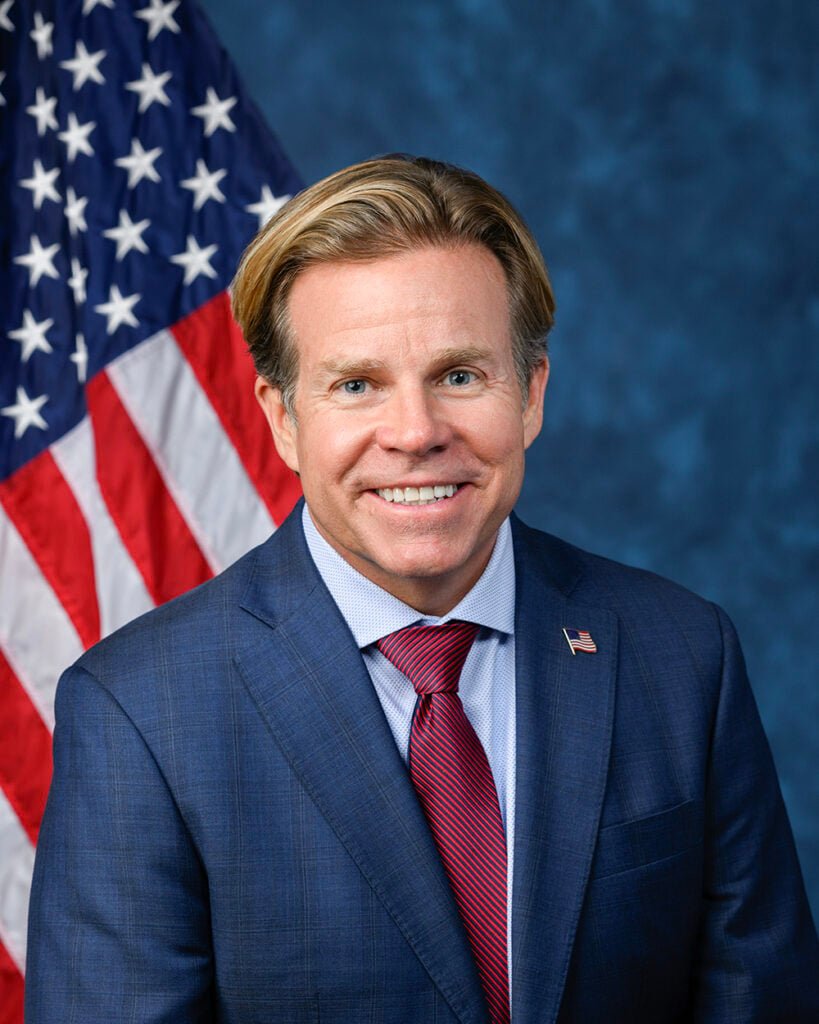
From the western Panhandle to the Space Coast and the Tampa Bay area, Florida voters returned three Greek Americans to Congress on Tuesday, Nov. 3: Republicans Gus Bilirakis, Mike Haridopolos and Jimmy Patronis.
Their victories preserve a Greek-American presence in the state’s House delegation that reached three members when Patronis entered Congress in 2025. Greek Americans in Florida have built communities from the sponge docks of Tarpon Springs to Miami’s churches and restaurants, with roots reaching back to colonial Florida.
Three Greek Americans, three Florida districts
Bilirakis, the longest-serving of the three, won an 11th term in the 12th Congressional District, defeating Democrat Kimberly Overman. No-party candidate Branden Scrivener also contested the seat, which now covers parts of Pasco and Hillsborough counties.
He first entered Congress in January 2007, succeeding his father, Michael Bilirakis. A graduate of Tarpon Springs High School, Gus Bilirakis has described all four of his grandparents as immigrants from Greece. He co-chairs the Congressional Hellenic Caucus and has worked on legislation involving Greece, Cyprus and the Eastern Mediterranean.
Haridopolos secured a second term in the 8th District, defeating Democrat Jennifer Jenkins. His district is anchored in Brevard County and the Space Coast, with part of Orange County also included. A former Florida Senate president, Haridopolos first won election to Congress in 2024. He chairs the House Space and Aeronautics Subcommittee in the current Congress, a role closely connected to the interests of a district that includes Kennedy Space Center.
Patronis defeated Democrat Gay Valimont and no-party candidate Tyler L. Davis in the 1st District, securing his first full term. The former Florida chief financial officer joined Congress through the April 2025 special election to replace Matt Gaetz.
The three have also worked together on issues involving their ancestral homeland. In June, they joined New York Rep. Nicole Malliotakis in objecting to a proposed U.S. military sale to Turkey, raising concerns about Ankara’s policies in the Eastern Mediterranean.
Tarpon Springs and Florida’s enduring Greek identity
Few places make Florida’s Greek connections as visible as Tarpon Springs, the Gulf Coast city in Pinellas County whose working waterfront was transformed by Greek sponge divers in the early 20th century.
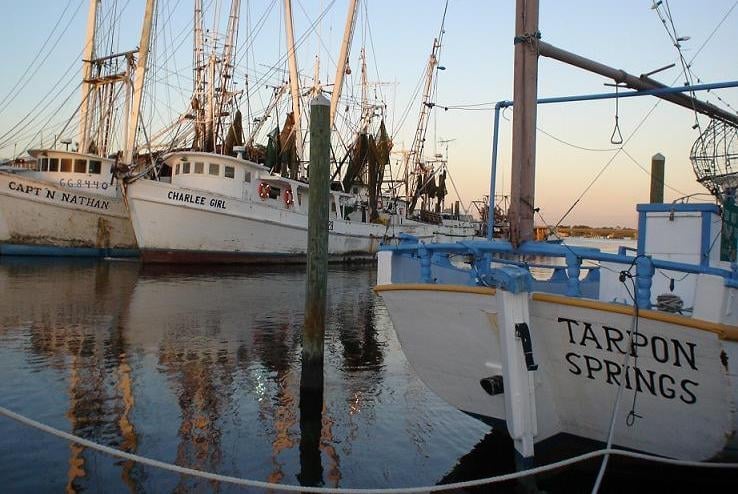
In 1905, John Cocoris helped introduce Greek diving methods and recruit divers from Greece. Arrivals from islands including Kalymnos, Symi and Halki brought skills that helped expand the sponge industry, followed by businesses and institutions serving their families. That history remains visible around Dodecanese Boulevard, where boats, bakeries, restaurants and shops connect the city’s commercial life with its Greek heritage.
St. Nicholas Greek Orthodox Cathedral is central to the community’s religious life. Each January, the Epiphany celebration brings worshippers to Spring Bayou for the blessing of the waters and the traditional dive to retrieve a cross. In January 2026, the city held its 120th annual celebration.
Tarpon Springs has also attracted Greek Americans from elsewhere in the United States. In a previous Greek Reporter short doc, sponge diver Anastasios Karistinos described families moving to the city for retirement and a different way of life.
Miami’s Greek community reaches beyond the restaurant table
On Florida’s Atlantic coast, Miami has its own long-established Greek community, alongside entrepreneurs who arrived more recently from Greece.
The history of Saint Sophia Greek Orthodox Cathedral traces the community’s formal organization to the 1920s. A founding meeting took place in 1925, and the parish adopted its constitution and elected its first council in 1927. A Greek school and the Ladies Philoptochos charitable organization followed in the 1930s.
As families settled farther from the cathedral, additional parishes developed. Annunciation serves North Miami, while St. Andrew in the Kendall area grew from the South Dade Hellenic Community Center, established in 1971. Farther north, St. Demetrios in Fort Lauderdale is another center of Greek Orthodox life.
Greek Reporter’s short doc on Miami’s Greek hospitality businesses documented a more recent chapter. Attorney Aleco Haralambides described entrepreneurs arriving from Greece during the country’s financial crisis, some with no earlier connections to Miami, to establish restaurants and other businesses.
Chef Demetrios Pyliotis told Greek Reporter that he initially visited his brother in Miami and ended up staying and opening a restaurant. Miami Beach reminded him of Greece, he said.
Greek roots that predate the United States
Florida’s Greek history reaches much farther back than either its modern congressional delegation or the arrival of sponge divers.
The St. Photios Greek Orthodox National Shrine in St. Augustine commemorates the experience of Greeks among the Mediterranean colonists brought to the New Smyrna settlement in 1768.
Survivors left the settlement in 1777 and sought refuge in St. Augustine. The Avero House became a meeting place for members of that displaced community. Today, it houses the national shrine, dedicated in 1982, preserving a chapter of Greek-American history that began before the American Revolution.