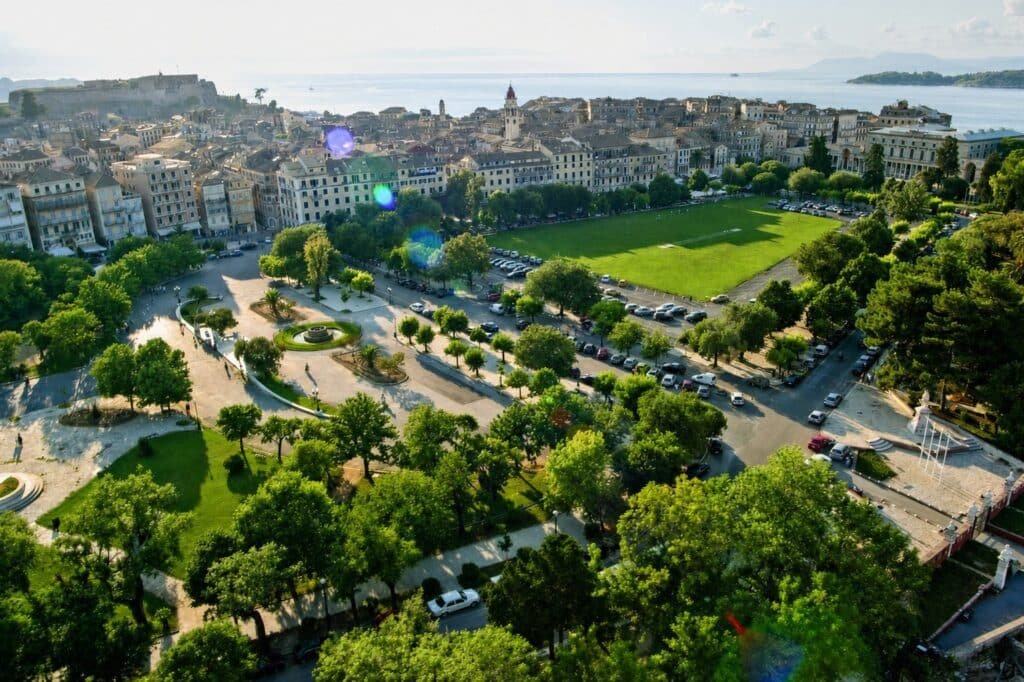
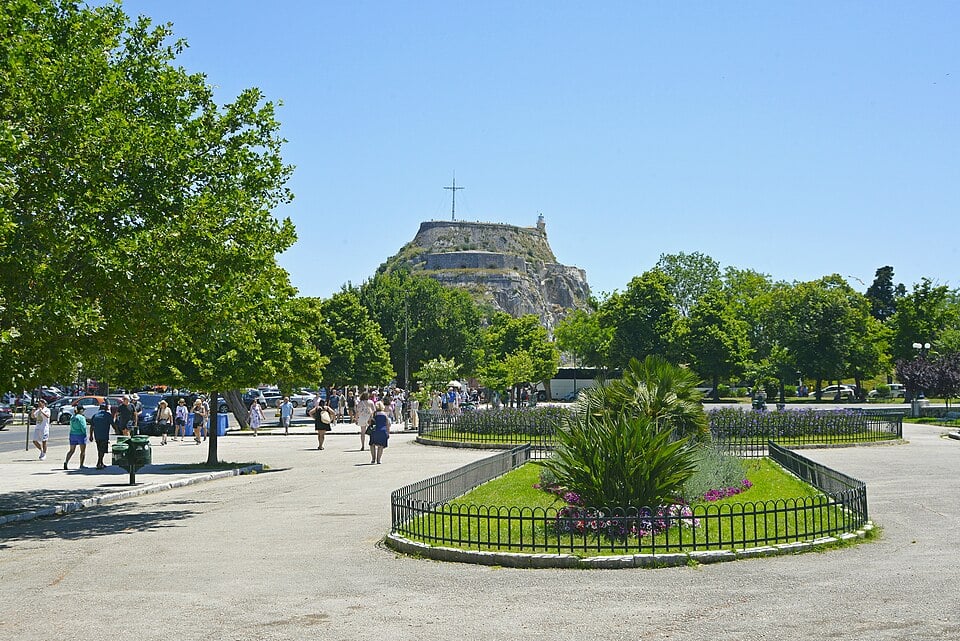
In the heart of Corfu’s Old Town, a vast green square tells a story of military strategy, European influence and changing urban life. Spianada, widely described as the largest square in the Balkans, began as an open space designed to protect one of the Mediterranean’s most important fortified towns.
Today, locals and visitors gather there for walks, public events and cultural performances. Yet the square’s distinctive character reflects centuries of foreign rule and the strategic importance of Corfu.
A square shaped by Venetian military strategy
Venice ruled Corfu for centuries and invested heavily in its defenses. The island occupied a strategic position near the entrance to the Adriatic Sea, making its fortifications essential to the Venetian maritime empire.
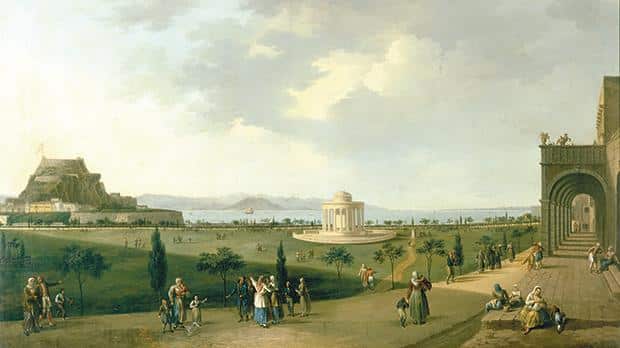
Following Ottoman attacks in the 16th century, Venetian authorities strengthened the town’s defenses. In 1576, they began demolishing houses in front of the Old Fortress to create a wider open area. The cleared ground gave defenders a better field of fire and reduced the cover available to attackers. The project formed part of a wider program to modernize Corfu’s fortifications. Over time, the open area expanded to its present scale, separating the Old Fortress from the historic town.
The name Spianada is linked to the Italian verb spianare, meaning “to level” or “to flatten.” It reflects the transformation of a built-up area into an open defensive space.
French and British influences transformed the square
Spianada did not remain a purely military landscape. Later rulers reshaped the area and gave it many of the features visitors recognize today.
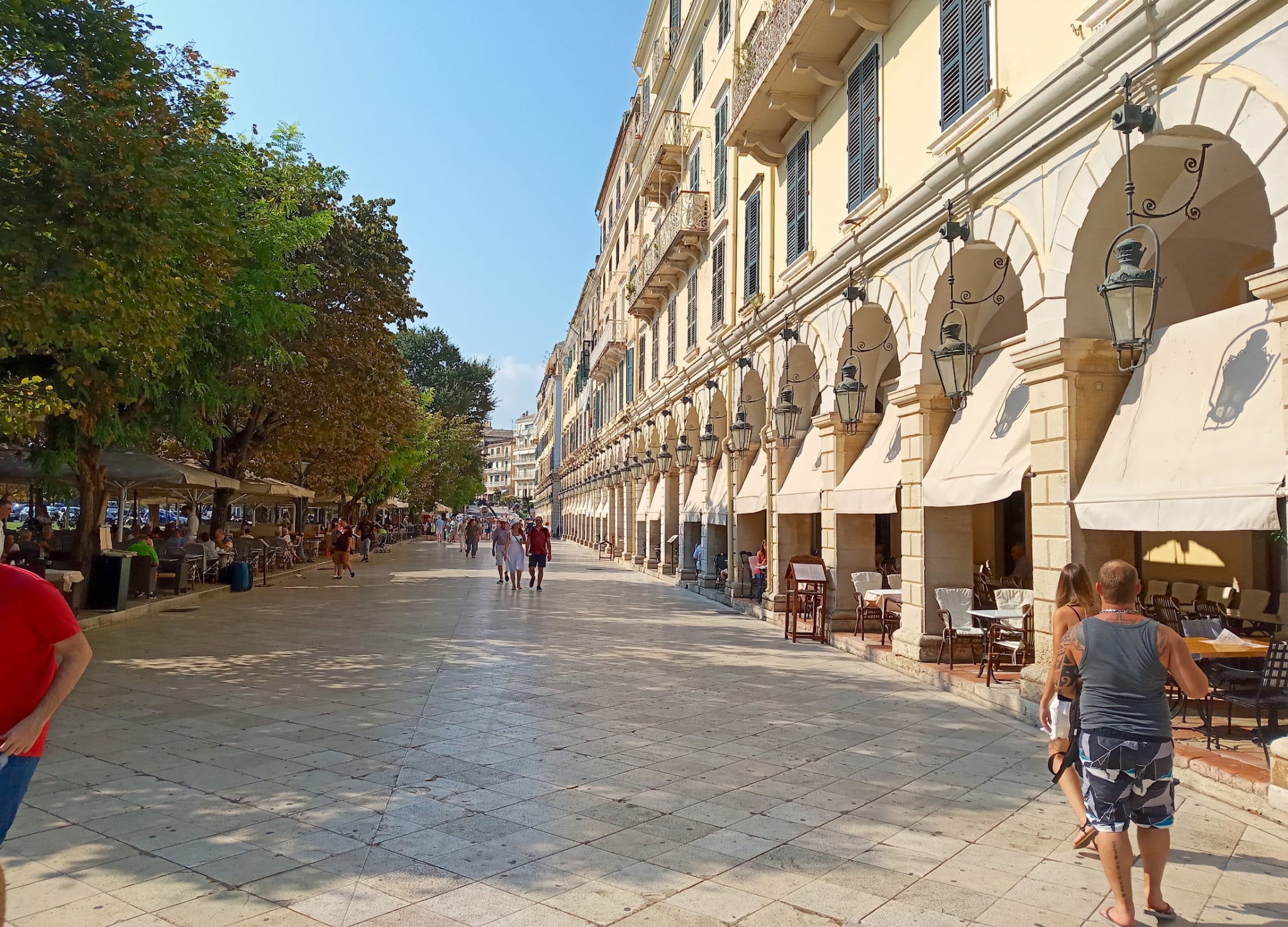
During the French period in the early 19th century, work began on the Liston, the elegant arcade-lined building that borders one side of the square. Its design recalls the arcades of Paris’s Rue de Rivoli and reflects the urban ideals of the Napoleonic era.
The Corfiot engineer Ioannis Parmesan contributed to the Liston’s design and construction. Its cafés and covered walkways later became central to the city’s social life.
British rule brought further changes. The authorities developed landscaped areas and established a cricket ground on the square. Cricket remains one of Corfu’s distinctive cultural traditions, reflecting the island’s British past.
Other landmarks also shape the surrounding landscape. The Maitland Rotunda, the Palace of St. Michael and St. George, and the nearby Old Fortress reveal different chapters of the island’s architectural history.
A living space in a UNESCO-listed town
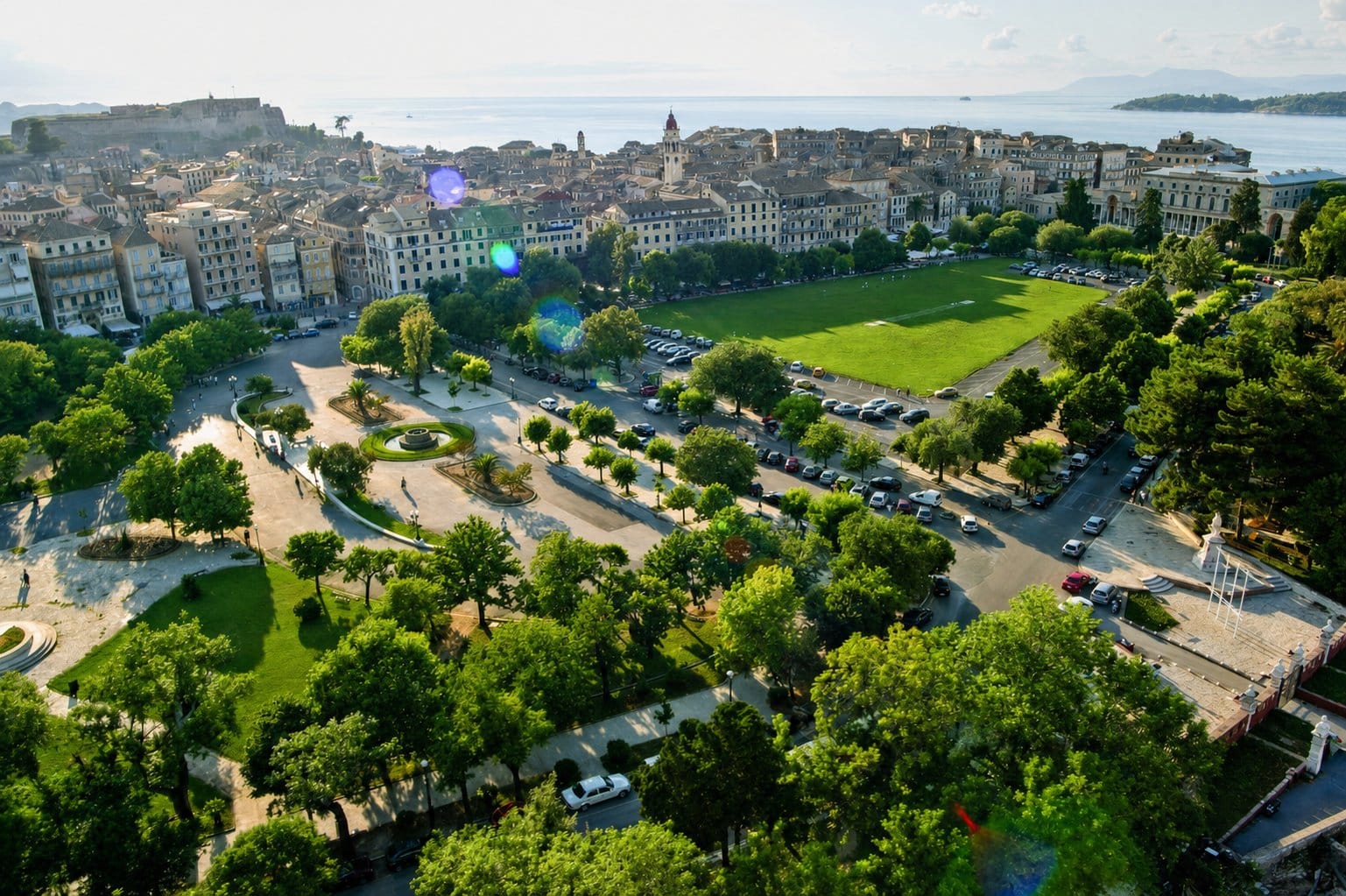
Corfu’s Old Town joined the UNESCO World Heritage List in 2007. UNESCO recognizes the town’s fortified architecture as an outstanding example of a Mediterranean port shaped by Venetian military engineering and later European influences.
Spianada forms a major part of this historic urban landscape. Unlike a monument that visitors simply observe, it remains an active public space where everyday life unfolds alongside the island’s architectural heritage. Local cultural groups also use the square for performances and celebrations. Its open layout also offers views toward the Old Fortress and the historic buildings bordering the area.
The largest square in the Balkans
Spianada is often described as the largest square in the Balkans. Comparisons between major urban squares can depend on how their boundaries are defined, so the description is best understood as a widely used designation rather than a universally verified ranking.
While Spianada Square in Corfu, Greece, remains the largest square in the region by overall footprint, Skanderbeg Square in Tirana, Albania, is widely considered the largest purely pedestrianized public square in the Balkans.
The Greek square’s historical significance, however, rests on firmer ground. Spianada shows how a space created for defense gradually became a place for recreation, culture and public life.
The square’s story mirrors Corfu itself: a strategic island shaped by successive powers, yet marked by a distinctive blend of European traditions that continues to define its identity.