

Pompeii’s household rituals carried scents from far beyond the Roman world. A new study of residues inside two ancient incense burners from household altars suggests that people in and around Pompeii burned local plants along with imported aromatic resin, offering rare evidence that daily worship in the city was tied to long-distance trade.
The study, published in Antiquity, was led by Johannes Eber of the Department of Archaeology at the University of Zurich in Switzerland.
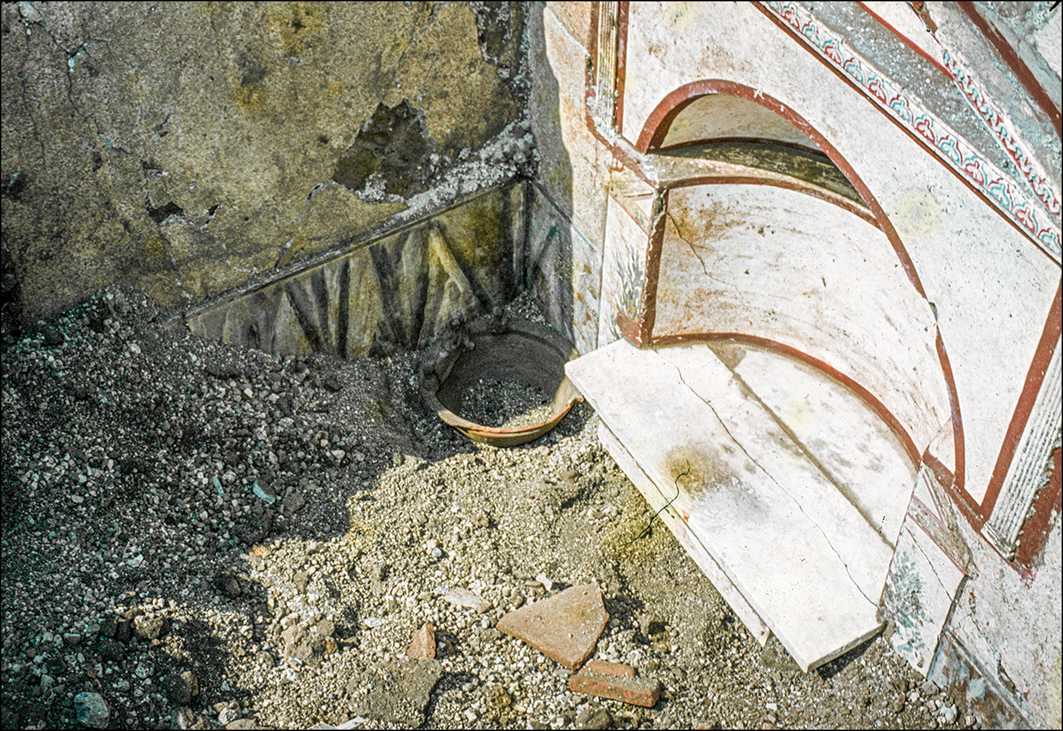
Researchers examined burnt remains preserved inside two terracotta incense burners, one from Pompeii and the other from a nearby villa at Boscoreale. Both vessels came from domestic settings linked to household worship.
Pompeii incense burners preserve the aromas of ritual and trade
The findings help answer a basic question that has long remained open: what, exactly, people burned in these objects.
Using microscopy and chemical analysis, researchers found signs that woody plants were burned in both incense burners. Those remains may reflect fuel, offerings, or both. The study also identified traces linked to stone fruit plants or laurel, and possibly grape products such as wine or grapes in one of the vessels.
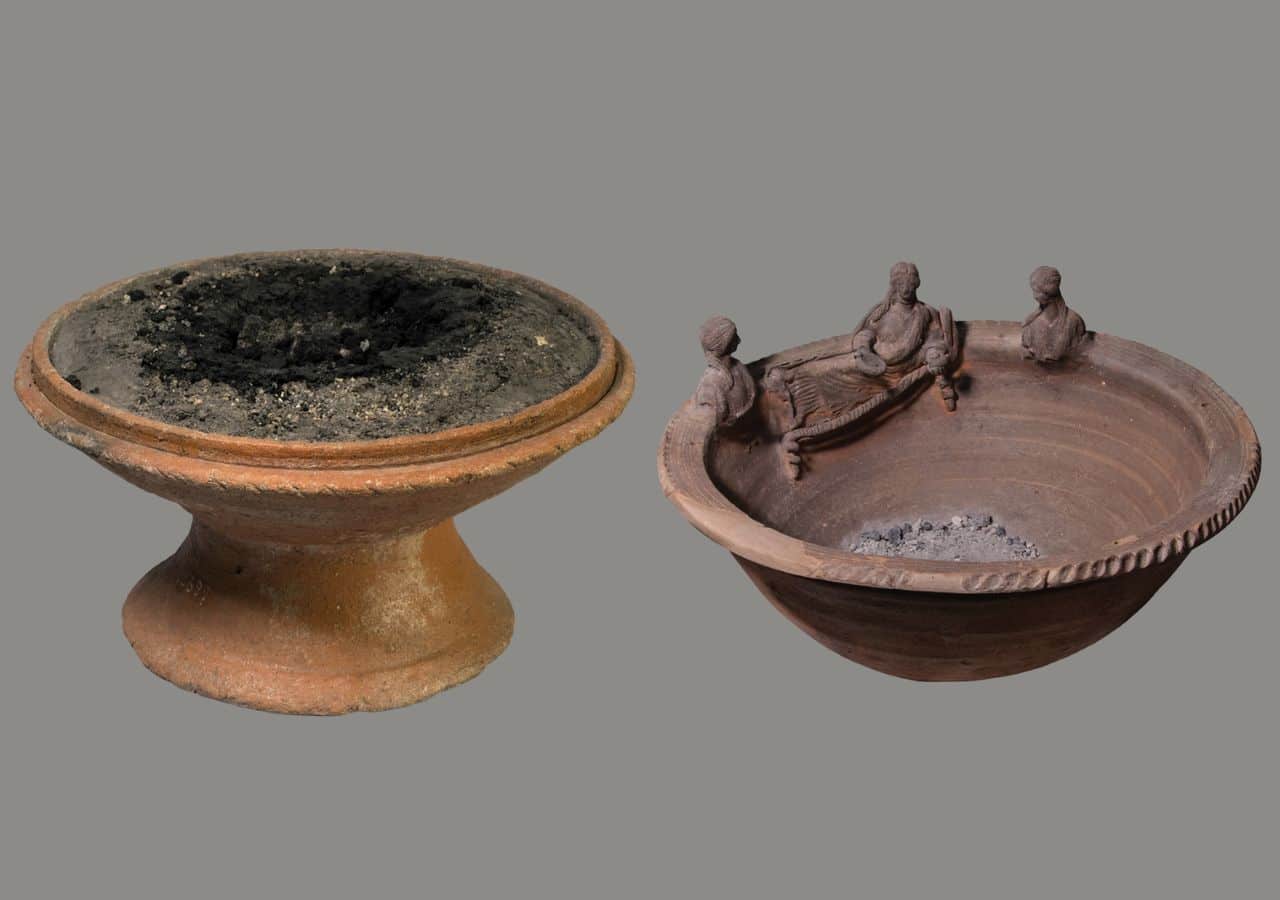
The strongest result came from the Boscoreale burner. There, researchers detected markers of a resin from the Burseraceae family, a group of aromatic trees not native to the Pompeii area.
The resin likely came from Canarium, sometimes called “elemi,” though the study said a Boswellia resin such as frankincense cannot be ruled out completely. That matters because it offers the first archaeological evidence of imported incense being burned in the Pompeian domestic cult.
Imported resin gives Pompeii’s home worship a wider world
Written sources have long described incense offerings in Roman ritual, but physical proof from Pompeii had been missing.
The study also points to a mix of local and imported materials in household religion. Most of the plant remains appear to come from species that could have been grown locally. But the resin likely traveled from Asia or sub-Saharan Africa through trade routes that connected the Roman world to distant regions.
That gives the small vessels a wider meaning. They were not only ritual tools. They also reflect how global trade reached into private homes and family shrines.
Two vessels show how ritual and trade met at home
One burner was found in a building in Pompeii that had been turned from a home into an inn. The other was discovered in place inside a fully furnished household shrine at a villa in Boscoreale. That second find makes its ritual use especially clear.
Researchers were careful not to overstate the results. Because the vessels were excavated decades ago, control samples from the surrounding soil were not available. That means some traces, especially those linked to grape products and fats, cannot be confirmed with full certainty.
Even so, the study offers one of the clearest looks yet at what people may have burned during domestic rites before Mount Vesuvius destroyed Pompeii in AD 79. In these quiet acts of worship, researchers found evidence of both local tradition and far-reaching exchange.


