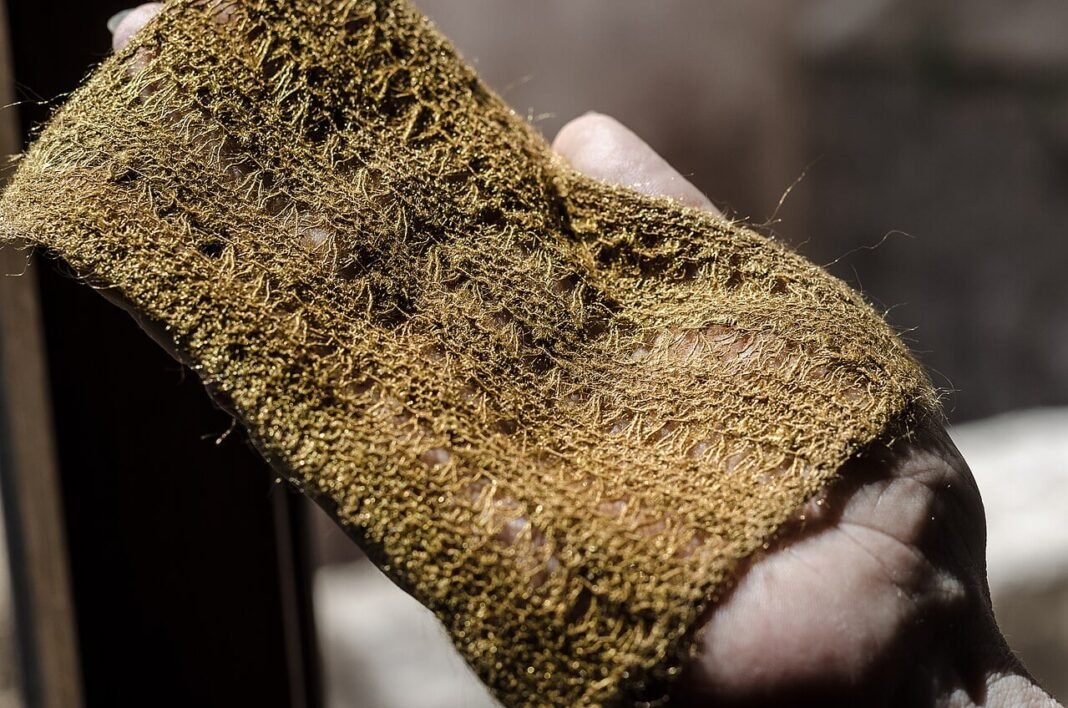
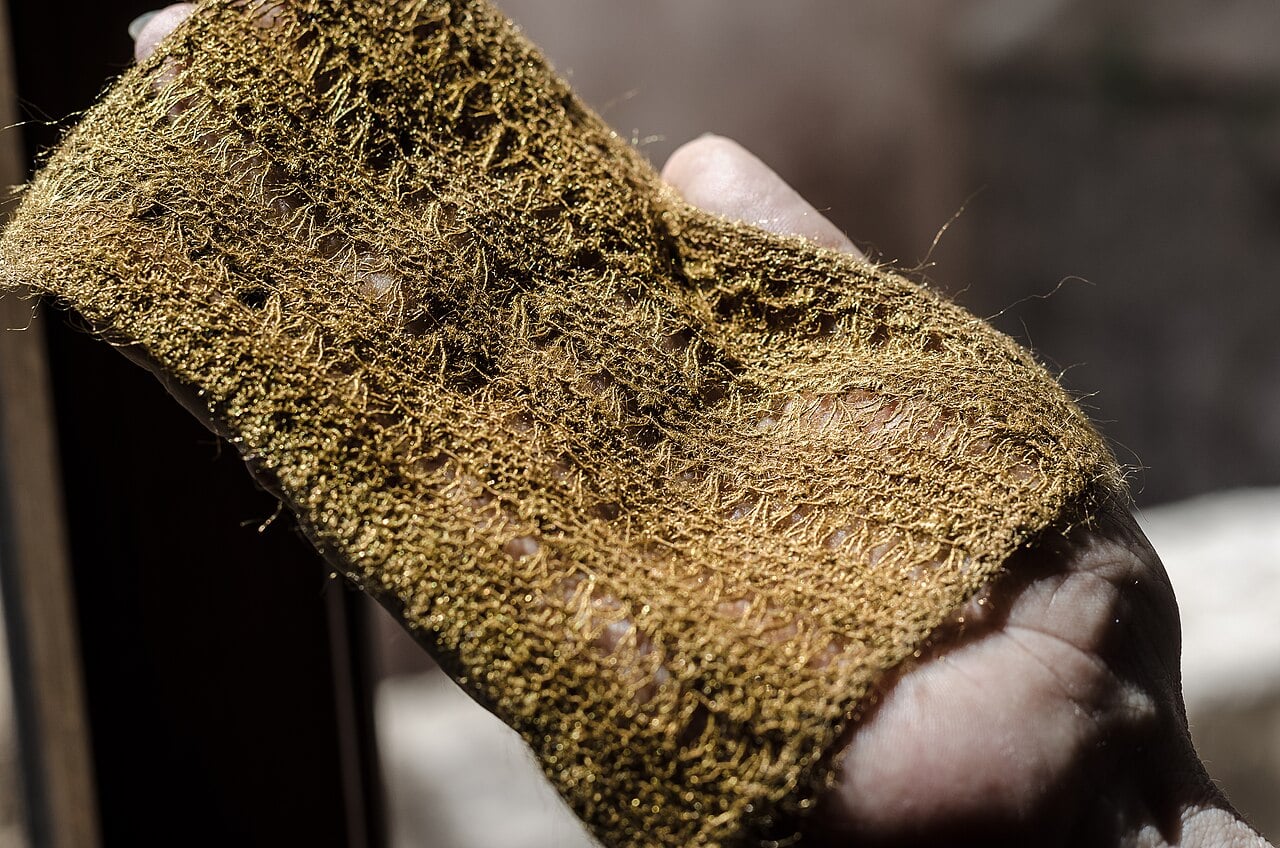
South Korean scientists have revived a legendary golden fabric once reserved for emperors, producing a shimmering material that mirrors the appearance and durability of sea silk crafted more than two millennia ago.
The research team, led by POSTECH professor Dong Soo Hwang and Environmental Research Institute professor Jimin Choi, recreated the rare fiber by using byssus threads from a pen shell commonly harvested along Korea’s coastline.
Their work also clarifies the science behind the material’s long-lasting golden tone, providing new insight into the history and technology of this ancient textile.
Sea silk was one of the most coveted materials of the Roman era. Only the most influential figures, including emperors and popes, were allowed to wear clothing made from the golden fiber. It originated from the byssus threads of Pinna nobilis, a large Mediterranean clam that anchored itself to rocks.
The fabric became revered for its glowing appearance, featherlight feel, and remarkable strength, which helped it earn a reputation as a legendary silk. One of the best-known examples is the Holy Face of Manoppello, a religious relic in Italy believed by many to be made of this rare cloth.
Revival of a tradition once lost with the legendary golden fabric
The once-thriving Pinna nobilis population has collapsed due to marine pollution and ecological damage. The species is now critically endangered, and the European Union has banned any form of harvesting.
Golden sea silk, a rare luxury material once worn only by emperors in ancient times has been successfully recreated by scientists in South Korea. pic.twitter.com/L7GVHW25iR
— Tom Marvolo Riddle (@tom_riddle2025) February 13, 2026
The decline has reduced sea silk production to a near halt, leaving only a few artisans capable of producing small amounts and turning the practice into a historical tradition rather than an active craft.
To overcome this limitation, the POSTECH team studied Atrina pectinata, a pen shell widely raised for food in Korea. The researchers found that its byssus shares key physical and chemical traits with the original Mediterranean fibers.
Using those similarities, they developed a method to process the threads and successfully reproduce the ancient fabric.
Scientific insight behind sea silk’s enduring color
Their work went further by identifying why the material’s golden shine survives for centuries. The researchers discovered that the color does not come from dyes but from structural coloration, created when light interacts with nanoscale features.
A spherical protein called photonin forms layered arrangements that reflect light much like soap bubbles or butterfly wings. Because the color comes from structure instead of pigment, it resists fading.
Hwang said the study shows how structurally colored textiles can maintain their appearance over long periods and noted that the team’s method offers a way to create lasting color without relying on dyes or metals.
He emphasized that turning discarded pen shell byssus into a valuable textile also supports sustainable material development while honoring a tradition rooted in cultural history.