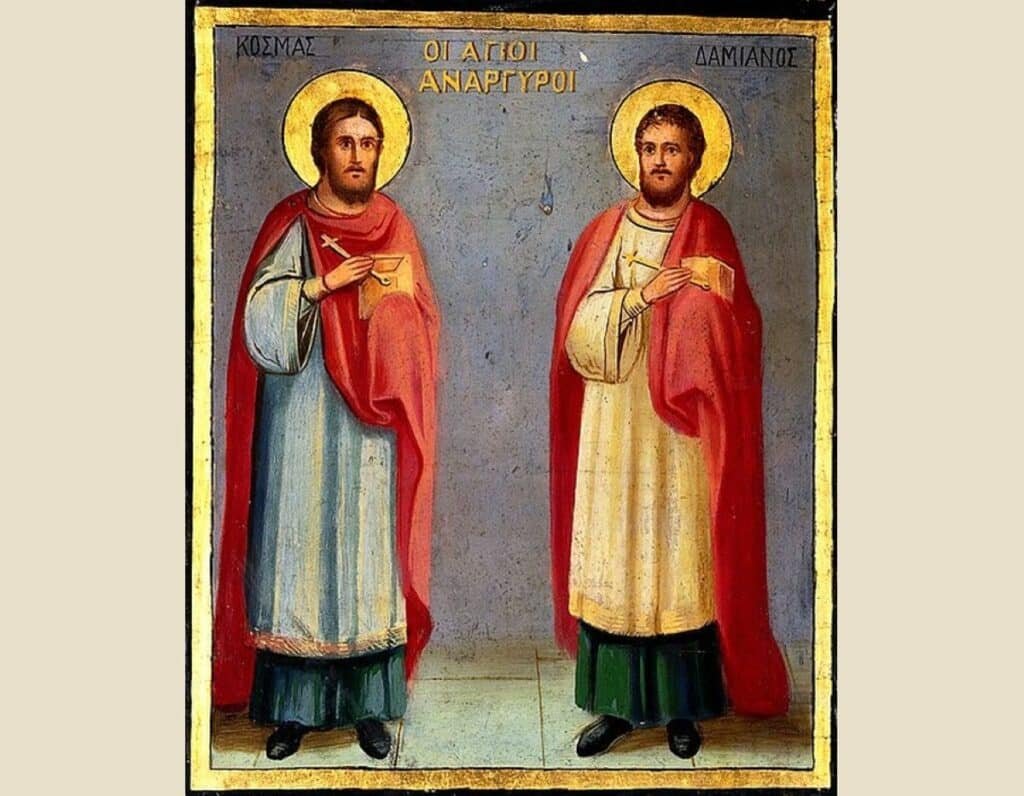
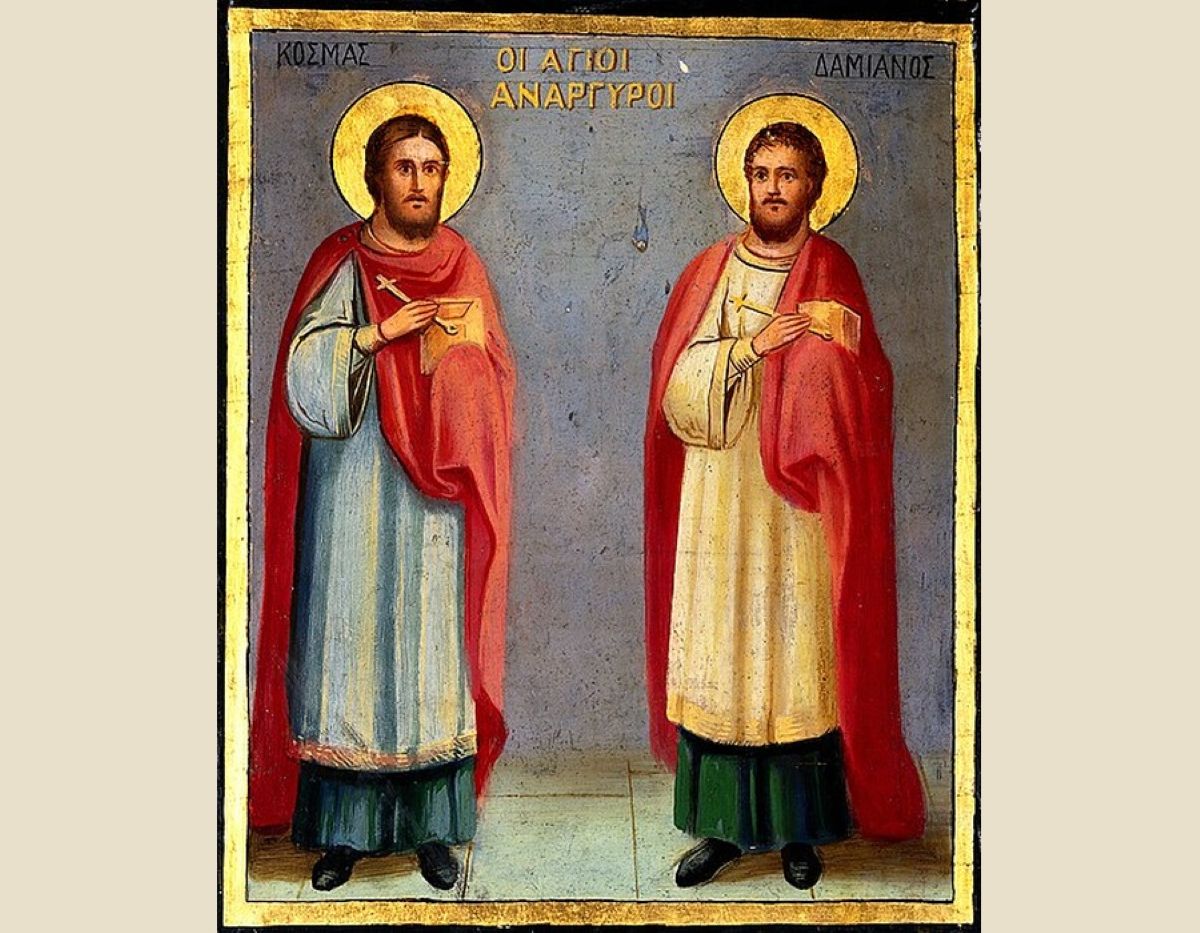
According to Orthodox tradition, Saints Cosmas and Damian treated the sick without asking for payment. Yet one small gift nearly separated the two brothers after death: three eggs offered by a grateful woman.
Their story, remembered on November 1, offers a glimpse into the meaning of their name, the Holy Unmercenaries, and the principles that shaped their reputation as healers.
The brothers who treated people and animals for free
Cosmas and Damian came from Asia Minor, according to their traditional lives. Their mother, Theodota, raised them in Christian faith and virtue. They trained as physicians and became known for treating illnesses without accepting payment. Their care extended to animals as well as people.
This generosity earned them the name Anargyroi, meaning “without silver” or “without payment.” Their tradition reflects a conviction that healing should be offered freely, rather than treated as a source of personal profit.
The woman who offered three eggs
The Orthodox account tells of a woman named Palladia who suffered from a grave illness. Other physicians had refused to treat her because they considered her condition hopeless. After the brothers prayed for her, she recovered, according to the hagiographical narrative.
Grateful for her healing, Palladia wanted to offer the brothers a small gift. She approached Damian privately and gave him three eggs, invoking the Holy Trinity as she presented them. Damian had never intended to accept payment for his work. But he hesitated to refuse a gift offered in the name of the Father, the Son, and the Holy Spirit. He accepted the eggs out of reverence for the sacred name, the account explains.
When Cosmas learned what had happened, he was deeply troubled. He believed his brother had broken their strict commitment to treat the sick without receiving anything in return. The disagreement became so serious that, according to the story, Cosmas asked that Damian not be buried beside him after their deaths.
Damian died soon afterward. The community then faced a difficult question: should the brothers be buried together, despite Cosmas’s final instruction?
The camel that settled the dispute
At that moment, the hagiographical account describes an extraordinary event. The brothers had once treated a camel known for its wild behavior. Now, the animal spoke with a human voice.
The camel urged those present not to separate the brothers. It explained that Damian had not accepted the eggs as payment for his medical services. He had received them out of respect for the name of God, spoken by Palladia when she offered them. The explanation resolved the dispute. The brothers were buried together at Thereman, identified in the account with Mesopotamia.
Why the Holy Unmercenaries are remembered
The Orthodox Church commemorates these Saints Cosmas and Damian on November 1, together with their mother, Theodota. They should not be confused with other pairs bearing the same names, whose feast days fall on different dates.
For generations of Orthodox Christians, the Holy Unmercenaries have embodied a form of service in which compassion comes before reward. In their story, even three simple eggs become a test of that principle.