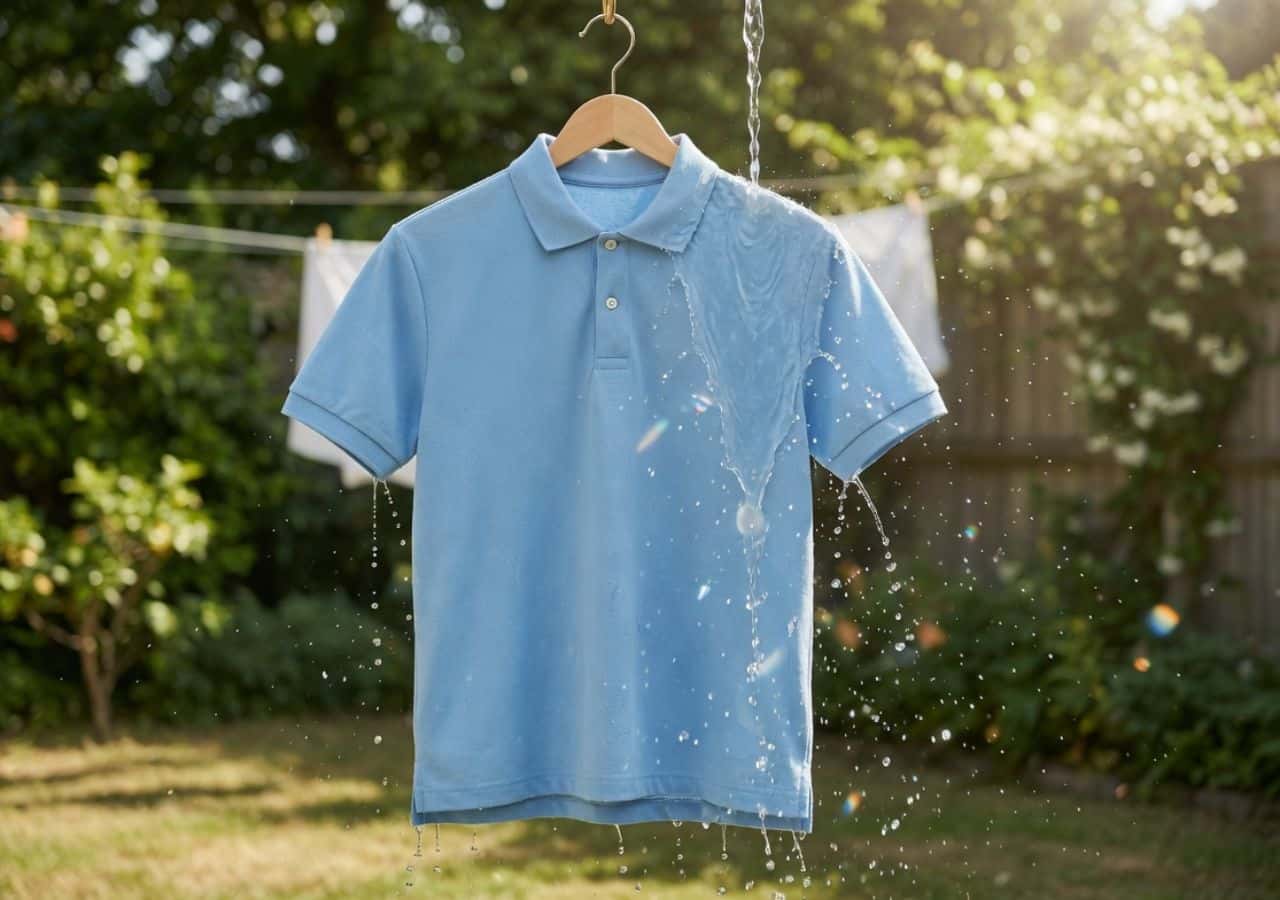
A new coating that turns ordinary fabric into a self-cleaning material could transform how people do laundry. Researchers developed the coating by alternately spraying two chemical compounds onto different fabric types.
The result is a surface so hydrated that stains, bacteria, and fungi wash away with plain tap water, cutting overall water, electricity, and time consumption by roughly 82 percent.
The study, led by Rong Wang from the State Key Laboratory of Digital Medical Engineering at Southeast University in Nanjing, China, was published in the journal Communications Chemistry.
The coating uses two compounds, poly(diallyldimethylammonium chloride) and poly(vinylsulfonic acid), sprayed in alternating layers onto fabric surfaces.
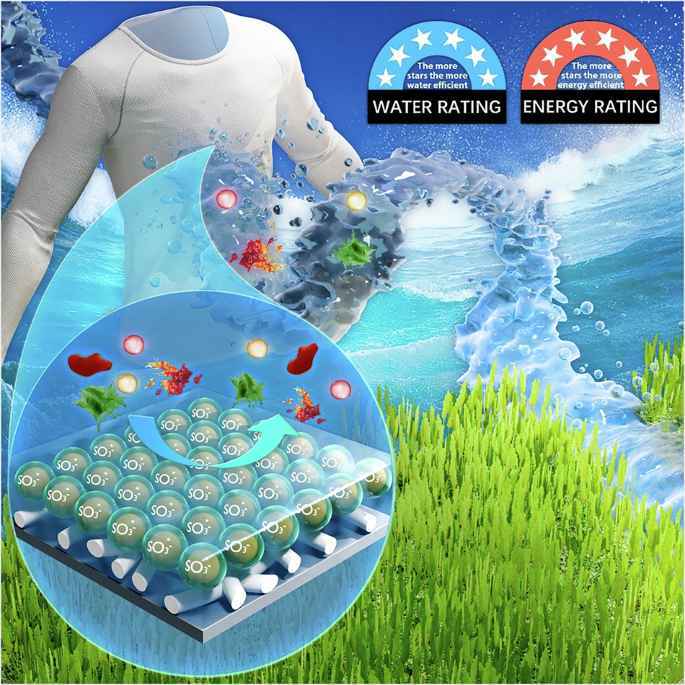
This builds an extremely dense layer of sulfonate groups that attract water molecules so strongly that they form a continuous protective shield.
That shield stops contaminants from bonding with the fabric in the first place. The coating works on both hydrophobic synthetic fibers and hydrophilic cotton equally well.
One rinse replaces five cycles, without any detergent
Traditional laundry requires one washing cycle followed by four rinsing cycles. The coated fabric needs only a single rinse with no detergent. In lab tests, wastewater from conventional detergent washing contained organic matter at 110 milligrams per liter.
Rinse water from coated fabrics registered just 1.51 milligrams per liter, nearly identical to tap water and well below the safe drinking water threshold.
The coating also holds back microplastic pollution. Detergents are known to help dislodge tiny plastic fibers from synthetic fabrics during washing.
The researchers found that even at low detergent concentrations, uncoated polyester released significant microplastics. Coated fabrics released far fewer, even when washed with surfactant-containing water.
In a real-world demonstration, researchers selectively sprayed the coating onto the right side of a white cotton T-shirt. After staining with oil dyed red, a simple machine rinse with hard water fully restored the coated side to white.
The uncoated side retained a visible red stain even after multiple detergent-assisted wash cycles. The dye had spread further into the fabric and could not be removed.
The self-cleaning fabric that beats premium detergents on hygiene
The hygiene benefits extended beyond stain removal. Coated fabrics prevented colonization by three common bacteria, including E. coli and S. aureus. They also repelled fungi, an area where even premium detergents fall short.
In one test, researchers coated one leg of a pair of cotton trousers, wore them for a day, rinsed them, and then kept them in warm, humid conditions. Mildew patches developed only on the uncoated leg.
In a separate test, blood-soaked coated cloths stored for one month showed no mold growth, while uncoated cloths developed visible black mold patches.
The coating survived 100 wash cycles, the equivalent lifespan of an average T-shirt. It also held up against extreme pH levels ranging from 1 to 13, intense UV radiation, 2,000 folding cycles, and sandpaper abrasion.
Biocompatibility tests confirmed the coating caused less than 5 percent cell death in laboratory tests and showed no harmful effects on plant germination.
Coating cost breaks even after just 15 wash cycles
On cost, applying the coating runs about $0.05 per square foot, which is roughly the surface area of a medium T-shirt (about 10.8 square feet).
That initial investment breaks even against ordinary detergents after 48 laundry cycles and against premium detergents after just 15 cycles.
After 100 cycles, the researchers calculated savings of up to $13 per pound of laundry compared to premium detergent users.
The broader stakes are considerable. China alone generates an estimated 10 billion metric tons of detergent-laden laundry wastewater each year. That figure exceeds the total minimum annual drinking water requirement for the entire global population.