

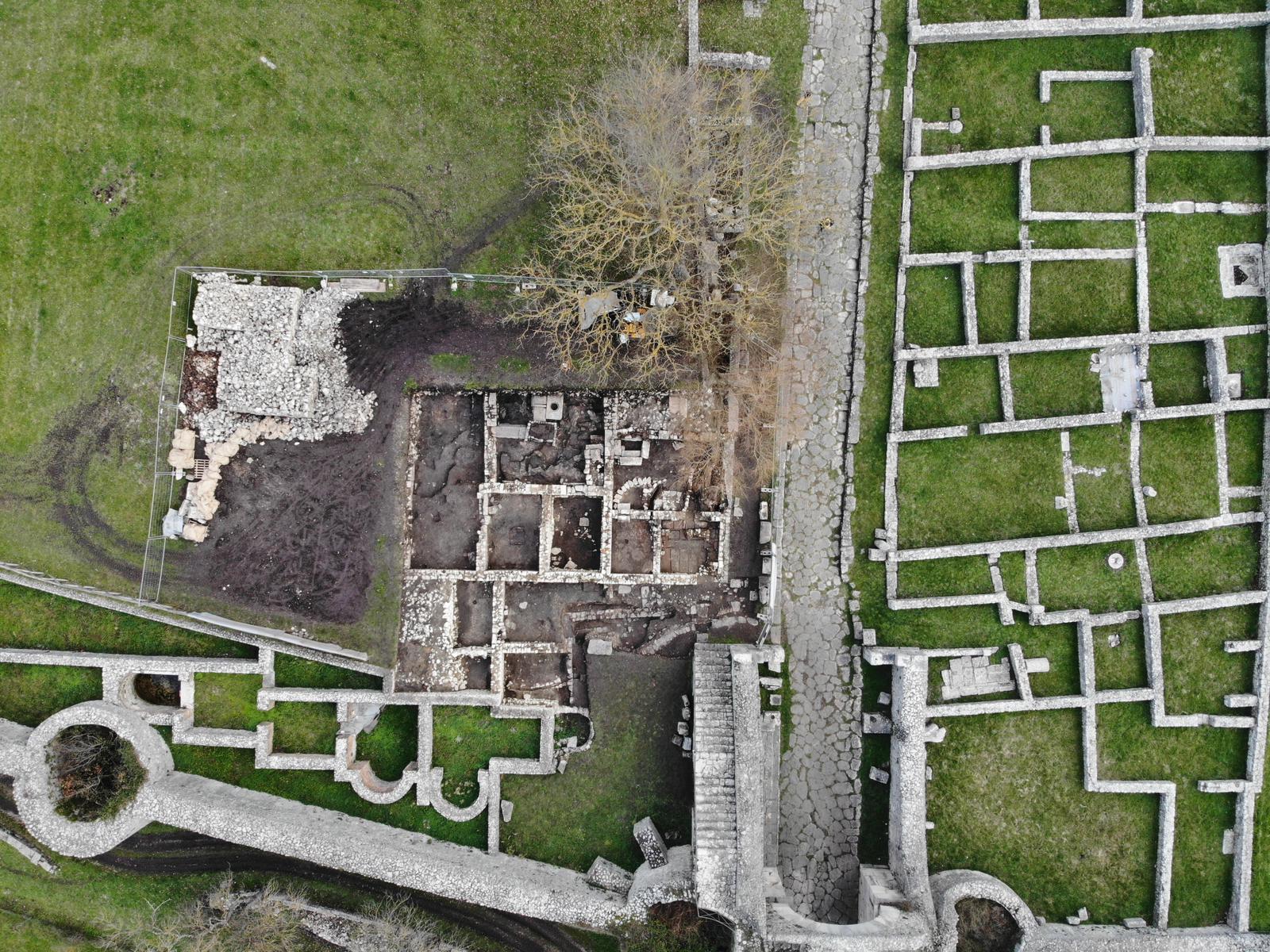
A new season of archaeological excavations has uncovered a remarkable discovery in the ancient city of Saepinum in southern Italy. Researchers have revealed an elite Roman house filled with treasures, advanced engineering features, and rare artifacts that shed light on life in the ancient world.
The findings come from recent excavations carried out between 2023 and 2025 at the site of Altilia, in the province of Campobasso. The discoveries are offering a clearer picture of how people lived, worked, and adapted their homes over several centuries.
Elite Roman house reveals hidden layers
Archaeologists uncovered a large domus, or private Roman residence, near Porta Bojano, one of the main entrances to the city. The house features a monumental entrance facing the decumanus, the city’s main east–west road. Its size and position suggest it belonged to a wealthy family.
The structure shows a long history of occupation, from the early Imperial period to the 6th century AD. Early materials, including decorated roof tiles and ceramics from the time of Augustus and Tiberius, point to its high status in the 1st century AD.
Archaeologists at Saepinum have uncovered an elite Roman house packed with everyday objects, rare artifacts, and surprisingly advanced water-heating technology. pic.twitter.com/ySqPEtkJhb
— Tom Marvolo Riddle (@tom_riddle2025) March 20, 2026
Over time, the house changed in use and design. Imported African terra sigillata pottery found at the site shows that the city was connected to Mediterranean trade networks during the High Imperial period. In later centuries, parts of the residence were adapted for storage and small-scale production, reflecting shifts in urban life during Late Antiquity.
Everyday objects offer a glimpse into daily life
Small finds from the excavation provide a detailed view of daily routines inside the house. Researchers recovered terracotta lamps, a rare incense burner, and small ceramic containers. Personal items such as bronze rings and a small chest key were also found.
These objects show how residents managed their homes and interacted with their surroundings. They also highlight the level of comfort and organization within an elite Roman household.
Advanced water system points to surprising technology
One of the most important discoveries is a large lead container linked to a domestic water-heating system. The cylindrical vessel is decorated with solar motifs and Gorgon heads, suggesting both practical and symbolic value.
Fragments of pipes and valves found nearby confirm that the house used an advanced hydraulic system. Such technology would have allowed for heated water and improved domestic comfort. Researchers say this level of engineering reflects the high status of the residents and the sophistication of Roman urban living.
Inscription confirms ties to the Roman Empire

The excavation also produced marble architectural fragments and an honorary inscription dated to 139 AD, during the reign of Emperor Antoninus Pius. The inscription records an intervention by the imperial household in the city.
This finding suggests that Saepinum maintained a close relationship with the central administration of the Roman Empire. It also highlights the city’s importance within the broader imperial network.
Earlier origins and continued life uncovered
Work in other parts of the site is revealing an even deeper history. Excavations in the Forum area have identified remains of a Samnite settlement dating to the 2nd and 1st centuries BC, showing that the site was occupied before the Roman city was established.
Researchers also uncovered drainage systems and structures linked to a Late Republican production building, likely used for wool processing. These findings show that Saepinum was both an administrative center and an active economic hub.
Further evidence comes from the cardo maximus, the main north–south street of the city. Archaeologists found that the road remained in use even after the fall of the Roman Empire. A hoard of coins from the 5th century AD, linked to the Byzantine period, confirms continued activity during this time.
A city that evolved over centuries
Researchers say the discoveries show that Saepinum was not a static settlement but a city that adapted over time. From its early Samnite roots to its Roman peak and later phases, the site reflects continuous change in architecture, economy, and daily life.
Ongoing excavations are expected to reveal more details about how the city functioned and how its residents responded to shifting historical conditions.


