

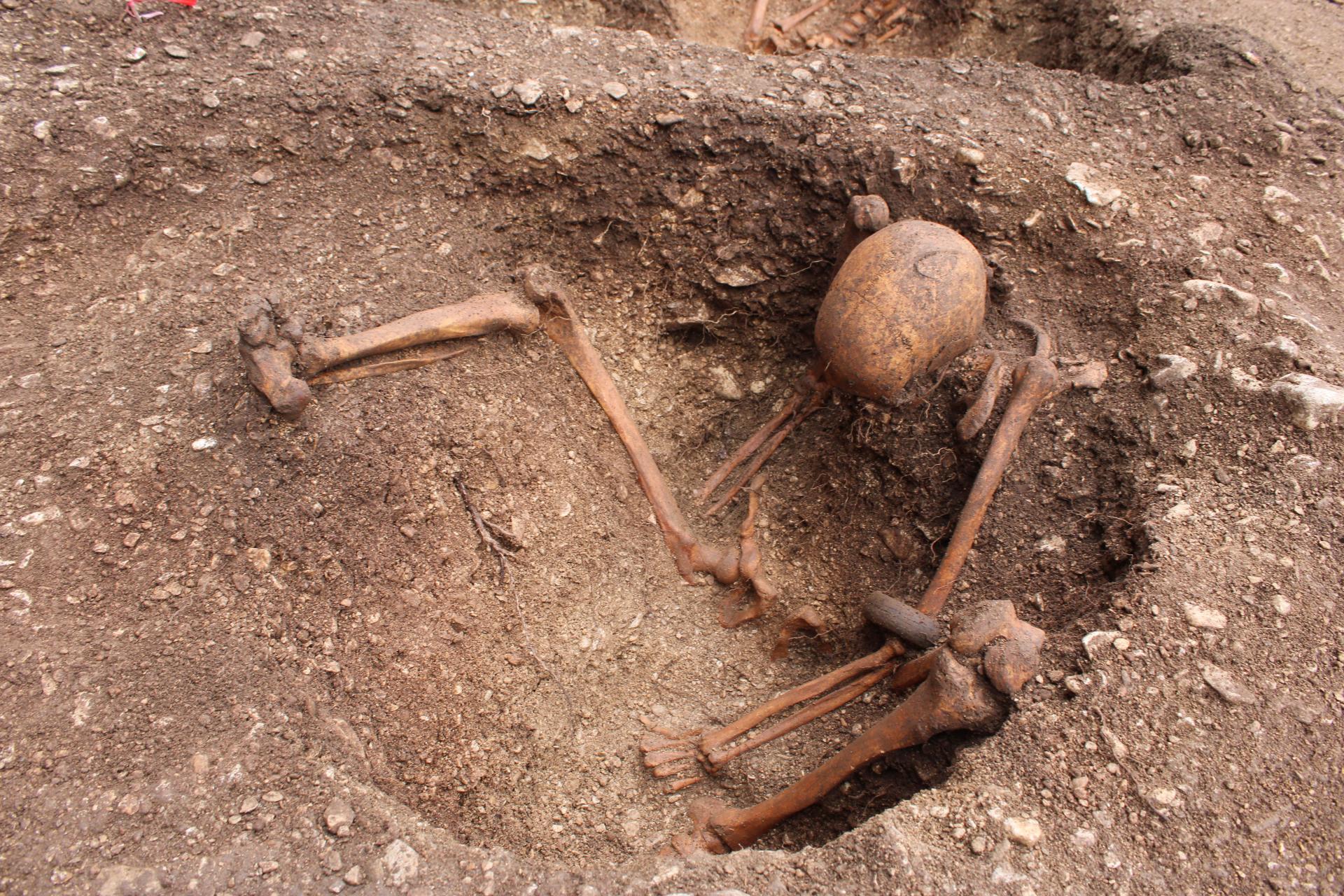
Archaeologists in Dijon, France, have uncovered graves of Celtic men—possibly warriors— buried ‘sitting upright’, adding to a rare group of Iron Age burials first announced in January 2025.
France’s National Institute for Preventive Archaeological Research (Inrap) said the latest dig at the Joséphine Baker school site found at least five more seated burials. At least three form a second line, parallel to the first and about 20 meters (66 feet) to the east.
The discovery centers on what archaeologists see as the most unusual part of the site. The oldest layers, likely from the Late Iron Age, first revealed 13 circular graves set in a straight north-south line over about 25 meters (82 feet). The new 2026 finds add five or six more graves. Despite erosion, most of the structures remain in good condition.
Celtic Warriors found ‘sitting upright’ in rows
Early study of the 13 people found in 2024 shows they were all men, ages 40 to 60, and between 1.62 and 1.82 meters tall (5 feet 4 inches to 6 feet). Inrap said the men appeared to have been in relatively good health, with signs of physical activity and strong teeth.

Researchers also found unhealed injuries on five or six of them, including cuts on the upper arm bone. One man had two sharp-force blows to the skull, possibly from a sword, pointing to a likely violent death.
Each adult was placed the same way. The body sat at the bottom of the pit, back against the east wall, facing west. The arms rested along the torso, with the hands near the pelvis or thighs. The legs were tightly bent, often unevenly. Only one object was found with the dead, a black stone bracelet dated to between 300 and 200 B.C.
Roman infant cemetery and later farming use
Inrap, France’s institute for archaeological research said only about a dozen archaeological sites have produced around 50 seated burials from the La Tène period, between about 450 and 25 B.C. Nine are in France and three are in Switzerland.
These graves are usually found on the edges of settlements and often near elite sites, sanctuaries or places of worship, rather than in regular cemeteries. Researchers said the uniform posture suggests a practice reserved for specific people, possibly linked to power, war, ancestry, politics or religion.
The Dijon site also includes a separate Roman-era infant cemetery from the 1st century A.D., with 22 burials of children under age 1. Some graves had stone linings, wooden coffin nails, coins or pottery.
Later planting pits cut through part of that cemetery, suggesting the area later shifted to farming, possibly vineyards. Thick garden soil from the former Cordeliers convent and a few remains of later buildings mark the site’s most recent phases.


