A pair of gold-plated earrings discovered in a burial is offering archaeologists a rare glimpse into the lives of elite women on the medieval Eurasian steppe in southern Siberia.
The burial, found in southern Siberia’s Sayan Mountains, contained a remarkable collection of objects that point to wealth, social status, and long-distance cultural connections stretching across Inner Asia more than 1,000 years ago.
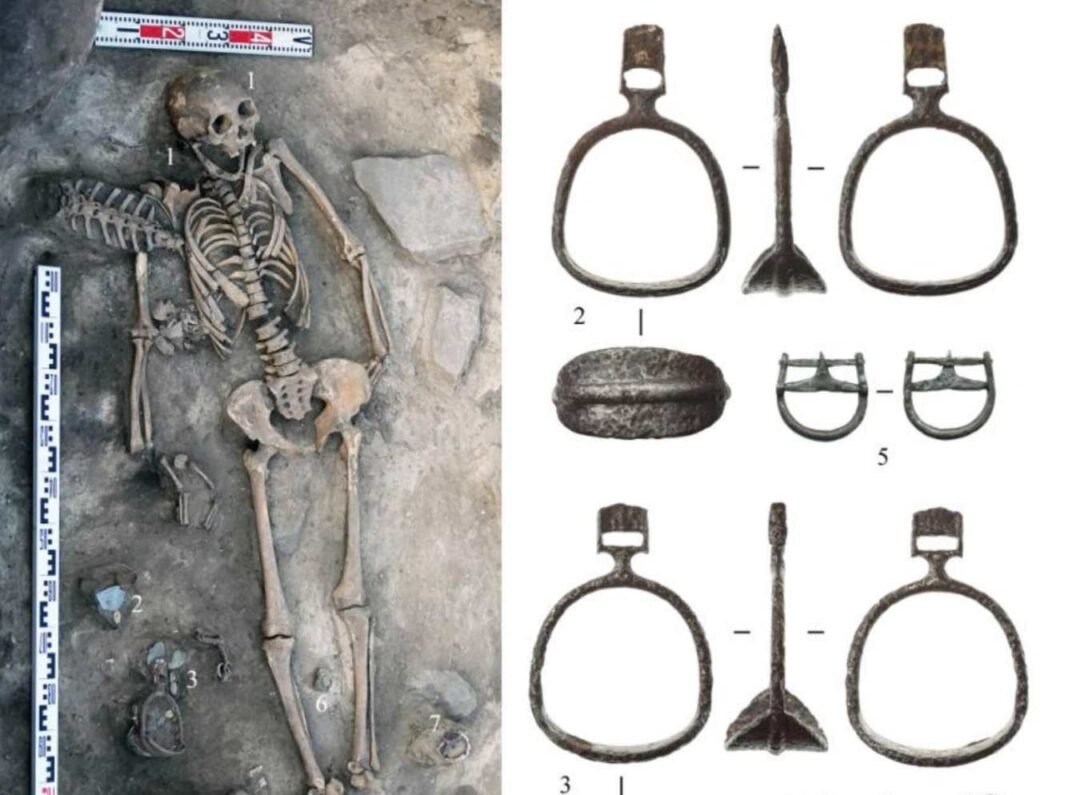
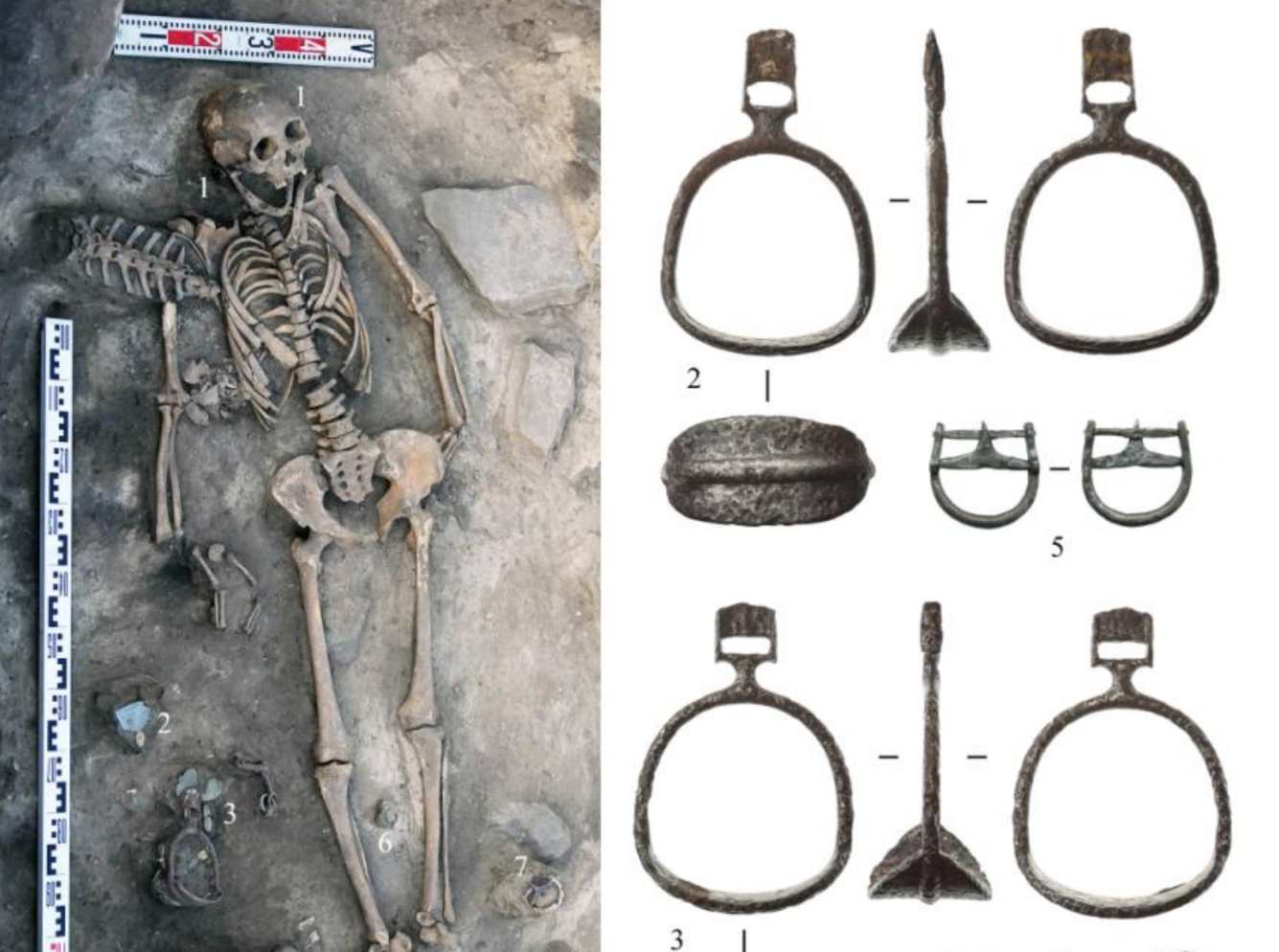
Researchers uncovered the grave at the Sayany-Pogranichnoye-4 cemetery near the Idzhim River in Russia’s Krasnoyarsk region. The burial contained the remains of an adult woman and a newborn child, along with jewelry, a knife, a spindle whorl, a Chinese-style mirror fragment, and an extensive collection of horse equipment.
According to researchers from the Institute for the History of Material Culture of the Russian Academy of Sciences, Novosibirsk State University, and Archaeology of Khakassia, the grave belongs to a rare category of elite medieval burials. Only a few dozen comparable examples have been documented across the Sayan-Altai region.
Earrings mark social standing
The most personal items in the burial were a pair of gold-plated earrings found near the woman’s skull, suggesting she was buried wearing them.
The earrings were made of bronze with traces of gilding and featured ring-shaped hoops, hanging pendants, and bead-like terminals.
Laboratory analysis revealed a sophisticated design. The main ring and upper bead were made from copper alloyed with tin and lead, while the lower bead contained mostly silver along with smaller amounts of copper, gold, and lead. Researchers believe it may have been crafted to resemble a pearl.
Similar earrings have been found in elite female burials in the Altai Mountains and Mongolia, particularly among ancient Turkic communities. Researchers say these ornaments likely served as visible symbols of rank and identity.
Horse equipment reflects wealth and prestige
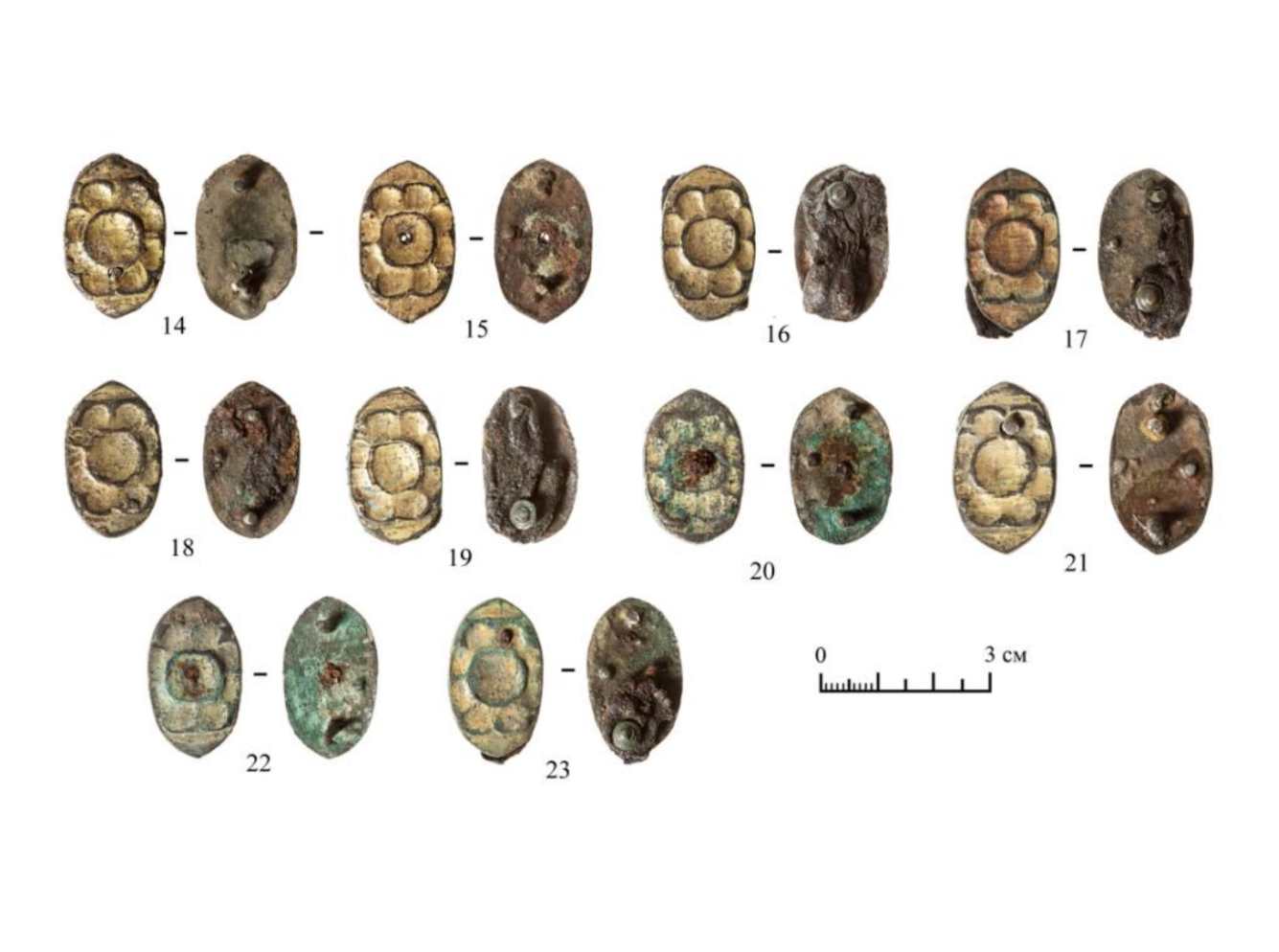
The burial also contained an impressive collection of horse gear, including stirrups, iron bits, gilded bronze fittings, bridle decorations, buckles, plaques, and pendants. A horse-skin deposit, consisting of the animal’s skull and limbs, placed with its hide, accompanied the grave. Such deposits are commonly associated with high-status nomadic burials.
One stirrup attracted particular attention. Decorated with silver wire inlay on iron, a technique known as damascening, it displayed intricate patterns across its neck, arch, and footrest. Researchers said the design closely resembles decorative styles used in China during the late Tang Dynasty between the late ninth and early 10th centuries.
A second stirrup was undecorated. Archaeologists suggest this difference may have been intentional, with the ornate stirrup displayed on the horse’s more visible side as part of a public display of status.
Chinese mirror points to distant connections
Another notable object was a fragment of a cast metal mirror decorated with a traditional Chinese “grape” motif featuring vines, leaves, grape clusters, and a bird. Mirrors of this type were popular among Tang aristocrats during the seventh and eighth centuries.
Although broken, the mirror fragment appears to have been curated for a long period before burial. Its worn edges suggest it retained symbolic value even after it could no longer function as a mirror. Across Eurasia, mirrors often carried ritual, protective, or ceremonial meanings.
A rare portrait of elite life
Radiocarbon dating places the burial broadly between the late ninth and early 13th centuries. However, the styles of the earrings, mirror, and horse equipment indicate the woman was most likely buried during the second half of the ninth century or the 10th century.
For archaeologists, the grave is significant because it combines evidence of personal identity with the ceremonial importance of horses in steppe society. Together, the artifacts reveal a world where social prestige, mobility, and cultural exchange were closely connected.
More than a millennium after her burial, the woman’s gold-plated earrings remain a powerful reminder of the status and influence she carried during life.