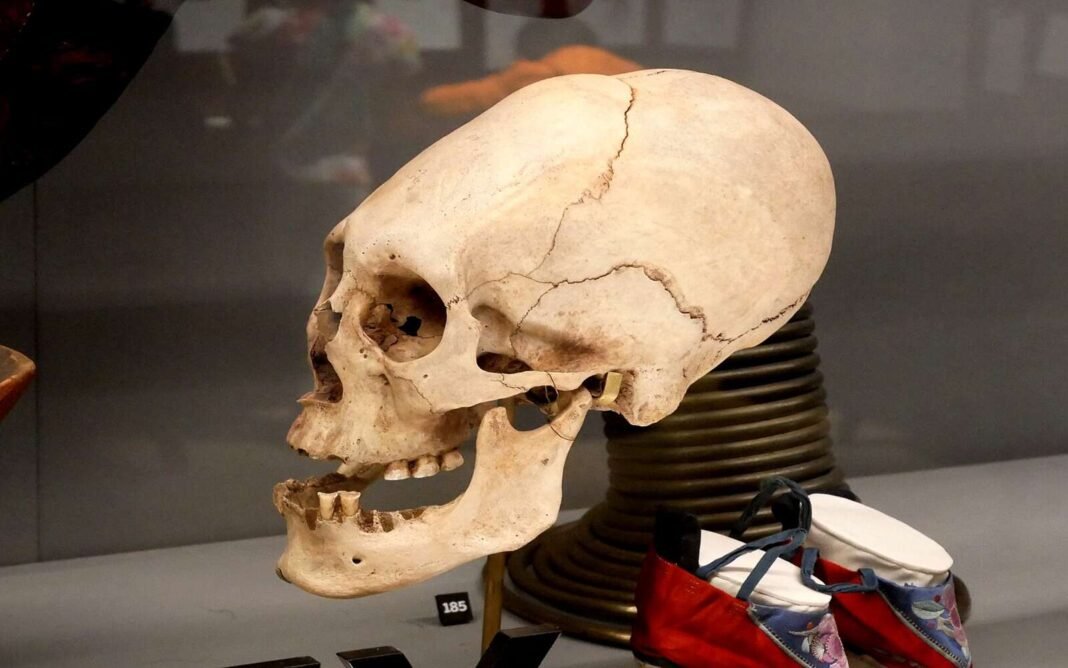

A new DNA analysis of the mysterious “conehead” mummies discovered in Peru has failed to fully explain the origins of the ancient remains, leaving one of archaeology’s most debated discoveries unresolved.
Researchers from Liberty University studied teeth taken from the Paracas skulls, a collection of more than 300 elongated human remains uncovered in Peru’s Paracas region during the 1920s.
Evidence of cranial deformation
The unusual skull shapes have fueled speculation for decades, including claims linking the remains to extraterrestrials. Most archaeologists, however, believe the skulls belonged to humans whose heads were intentionally reshaped during childhood through a cultural practice known as cranial deformation.
Researchers said previous studies relied mainly on visual examinations or incomplete genetic evidence. The latest study attempted to recover stronger DNA samples using powdered material extracted from the teeth.
Teeth are often used in ancient DNA studies because their hard enamel structure protects genetic material from moisture, bacteria, and decay over long periods.
Researchers test two DNA recovery methods
The research team used two different methods to recover DNA from the teeth. The first method removed a small amount of powder from inside the tooth root in an effort to preserve the ancient samples. The second method used a more aggressive process that ground entire teeth into fine powder to recover larger amounts of DNA.
Scientists then measured how much genetic material each method produced. The gentler extraction process recovered 2.3 nanograms of DNA per microliter. The stronger grinding method produced 14.1 nanograms per microliter, more than five times higher than the first approach.
A new DNA analysis of Peru’s mysterious “conehead” mummies failed to fully explain the origins of the ancient Paracas skulls. pic.twitter.com/72H8NEluiK
— Tom Marvolo Riddle (@tom_riddle2025) May 28, 2026
Even so, researchers said both results remained below the amount usually needed for reliable genetic sequencing. Laboratories typically require at least 20 nanograms of DNA for detailed ancestry analysis.
Researchers said the low DNA levels likely resulted from natural deterioration over thousands of years rather than laboratory contamination or testing errors.
Ancient skull-shaping practice remains the leading explanation
Most archaeologists continue to view the Paracas skulls as evidence of intentional cranial deformation, a practice documented in several ancient cultures across South America, Africa, and Central Asia.
The process involved gently wrapping an infant’s soft skull with cloth, rope, or wooden boards over several months to gradually reshape the head into an elongated form.
Researchers say the practice may have carried ceremonial, social, or cultural meaning within ancient communities.
Despite that explanation, the Paracas skulls remain central to fringe theories involving aliens and non-human ancestry. Paranormal researchers and television personalities have argued for years that the remains may not be entirely human.
Scientists involved in the latest study cautioned that inconclusive DNA results should not be interpreted as evidence supporting extraterrestrial claims.
The team plans to continue the investigation using a process called demineralization, which breaks down minerals inside teeth and bones to release additional DNA. Researchers hope the method will recover better-preserved genetic material and eventually provide clearer answers about the origins of the conehead mummies.