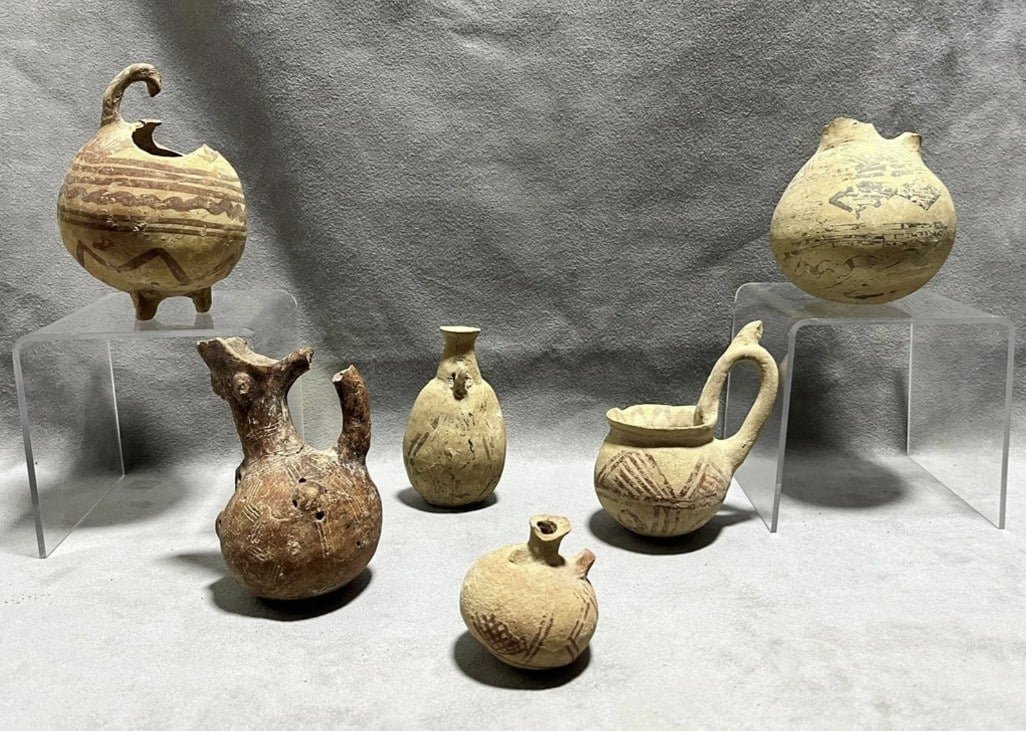

Cyprus has secured the return of eighteen antiquities from the United States after officials identified the items in an online auction and stopped their sale. The repatriated objects, which span from the Early Bronze Age to the 4th century BC, were formally handed over to the Embassy of the Republic of Cyprus in Washington on February 23, 2026.
The Cypriot Department of Antiquities, under the Deputy Ministry of Culture, announced the recovery after archaeological officers investigating the illicit online trade in Cypriot cultural heritage traced the objects to the auction. After consulting with the auction house, officials withdrew the antiquities from sale and arranged their repatriation to Cyprus.
Cyprus antiquities returned from the US span more than two millennia
The recovered collection covers a broad chronological range and offers a glimpse into Cyprus’ long artistic and cultural history. It includes two vessels from the Early Bronze Age, dated between 2500 and 1900 BC, and eleven vessels from the Middle Bronze Age, dated between 1900 and 1600 BC.
The group also features three vessels from the Cypro-Archaic I period, dating from 750 to 600 BC, one vessel from the Cypro-Archaic II period, dated between 600 and 480 BC, and a limestone male statue head from the 4th century BC. Together, the objects reflect different phases of Cypriot craftsmanship, ritual practice, and social development over the centuries.
The significance of the Cypro-Archaic period
Taken as a whole, the 18 repatriated antiquities trace more than two millennia of Cypriot history, from the Early Bronze Age to the 4th century BC. Four of those objects come from the Cypro-Archaic period, three from Cypro-Archaic I, dated to 750–600 BC, and one from Cypro-Archaic II, dated to 600–480 BC. In the British Museum’s chronological framework, this period marks a formative chapter in ancient Cyprus, defined by political consolidation, artistic growth, and stronger ties with the wider eastern Mediterranean.
During these centuries, the island’s city-kingdoms grew into important regional centers, while Cypriot society absorbed and reshaped influences from Ancient Greece and Egypt. This cultural blend helped define Cypriot identity. It shaped pottery, sculpture, religious practice, and political life, producing works that looked distinctly Cypriot rather than simply borrowed from foreign models. Cypro-Archaic material culture remains especially valuable because it shows how the island developed its own artistic character while taking part in the broader networks of the ancient Mediterranean.
Political power and mediterranean connections
Cyprus also developed as a network of city-kingdoms, including Salamis, Kition, Amathus, and Paphos, each ruled by its own dynasty. These kingdoms controlled trade routes, built diplomatic ties, and at times fell under the influence or domination of larger powers such as the Assyrians, Egyptians, and Persians. Sanctuaries, tombs, fortifications, and other monumental structures still reflect their wealth and importance.
The era also produced monuments that reveal Cyprus’ wider international connections. One of the most notable is the stele of Sargon II, dated to 707 BC and found at Kition in present-day Larnaca. Although it is not a typical example of Cypriot art, it remains historically important because it illustrates the island’s relationship with the Neo-Assyrian world and the broader political pressures that shaped Cyprus in the early first millennium BC.