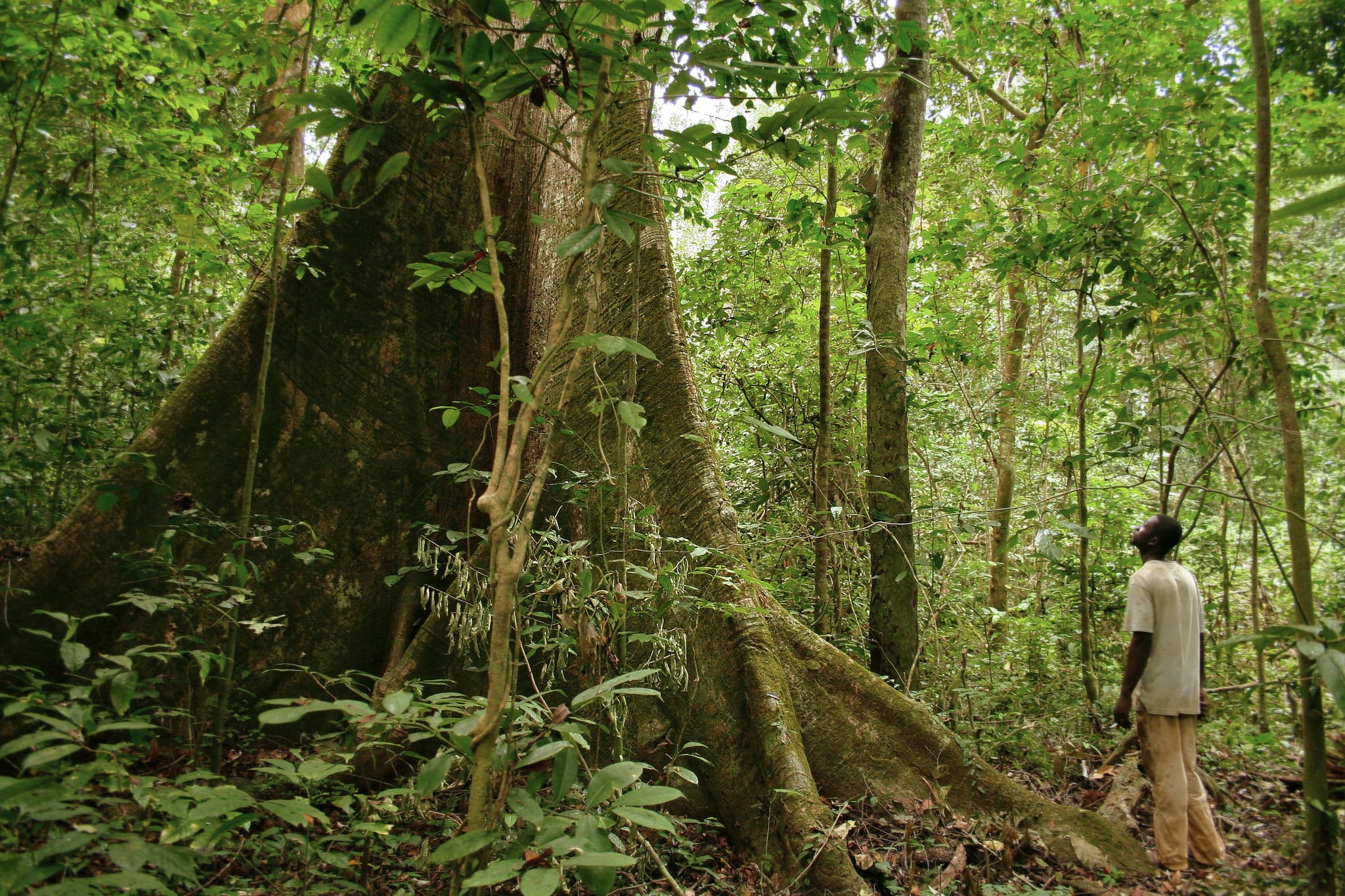
New research on forests has revealed a surprising trend. While large parts of Africa are losing forest cover, some areas are showing signs of natural regrowth without large-scale tree planting, which is a climate hope for the continent.
The findings come from a study published in Scientific Reports, led by scientists from the National Centre for Earth Observation, with contributions from the University of Leicester, University of Sheffield, and University of Edinburgh.
Mixed trends across the continent
Researchers found that Africa’s forests are undergoing a major transition. Since around 2010, many regions have shifted from absorbing carbon to releasing it, mainly due to deforestation and degradation in tropical rainforests.
From 2010 to 2017, the continent lost about 106 billion kilograms of forest biomass each year. The largest declines were recorded in tropical moist forests, especially in the Democratic Republic of Congo, Madagascar, and parts of West Africa.
However, the study also identified pockets of recovery. In some savanna regions and drylands, vegetation increased slightly, driven by natural regrowth rather than planting efforts.
Natural regrowth offers a different path
Scientists say this regrowth is linked to a process known as natural regeneration. In many landscapes, tree roots and stumps remain alive underground even after trees are cut. These systems can produce new shoots if they are protected and managed properly.
In parts of East Africa, including areas of Tanzania, farmers are using simple methods to support this process. Instead of planting new trees, they protect young shoots and prune weaker growth so stronger stems can develop.
Africa’s forests are showing an unexpected twist. New research finds natural forest regrowth in some regions, even as overall losses continue.
Scientists say protecting these gains could be key to climate action. pic.twitter.com/maf65IQ4Xp
— Tom Marvolo Riddle (@tom_riddle2025) April 13, 2026
Researchers say this approach can help trees grow faster. Existing root systems already reach deep into the soil, allowing regrown trees to access water more easily than newly planted seedlings.
Technology reveals detailed patterns
To track these changes, scientists combined satellite data with machine learning and field measurements. They used laser data from NASA’s GEDI instrument and radar observations from the Japan Aerospace Exploration Agency ALOS satellites.
This allowed them to map aboveground biomass across Africa in detail. The analysis captured both forest loss and small-scale regrowth at a local level over more than a decade.
Global implications and urgent action
Despite signs of recovery in some areas, researchers warn that overall losses still outweigh gains. Heiko Balzter, senior author of the study, said the findings highlight the need for stronger climate action.
He explained that if forests continue to release more carbon than they absorb, global efforts to meet the 2°C target under the Paris Agreement will become more difficult.
The issue has also gained attention at the recent COP30 Climate Summit, where leaders announced the Tropical Forests Forever Facility to support forest protection.
Researchers say combining large-scale policies with local practices such as natural regeneration could help reverse forest loss. Without sustained action, they warn, Africa’s forests may continue to weaken as a key part of the global climate system.