

Ancient DNA from Mycenaean livestock reveals an unexpected genetic connection between mainland Greece and far-western regions. A rare mitochondrial signature found in pigs at the Mycenaean citadel of Tiryns shows that animals—and likely the people who moved them—traveled far more widely across the Mediterranean than traditional archaeological evidence alone could reveal.
The finding highlights the deep connectivity of Mycenaean Greek society at a moment of dramatic political change.
Tiryns as a center of Mycenaean Greek power

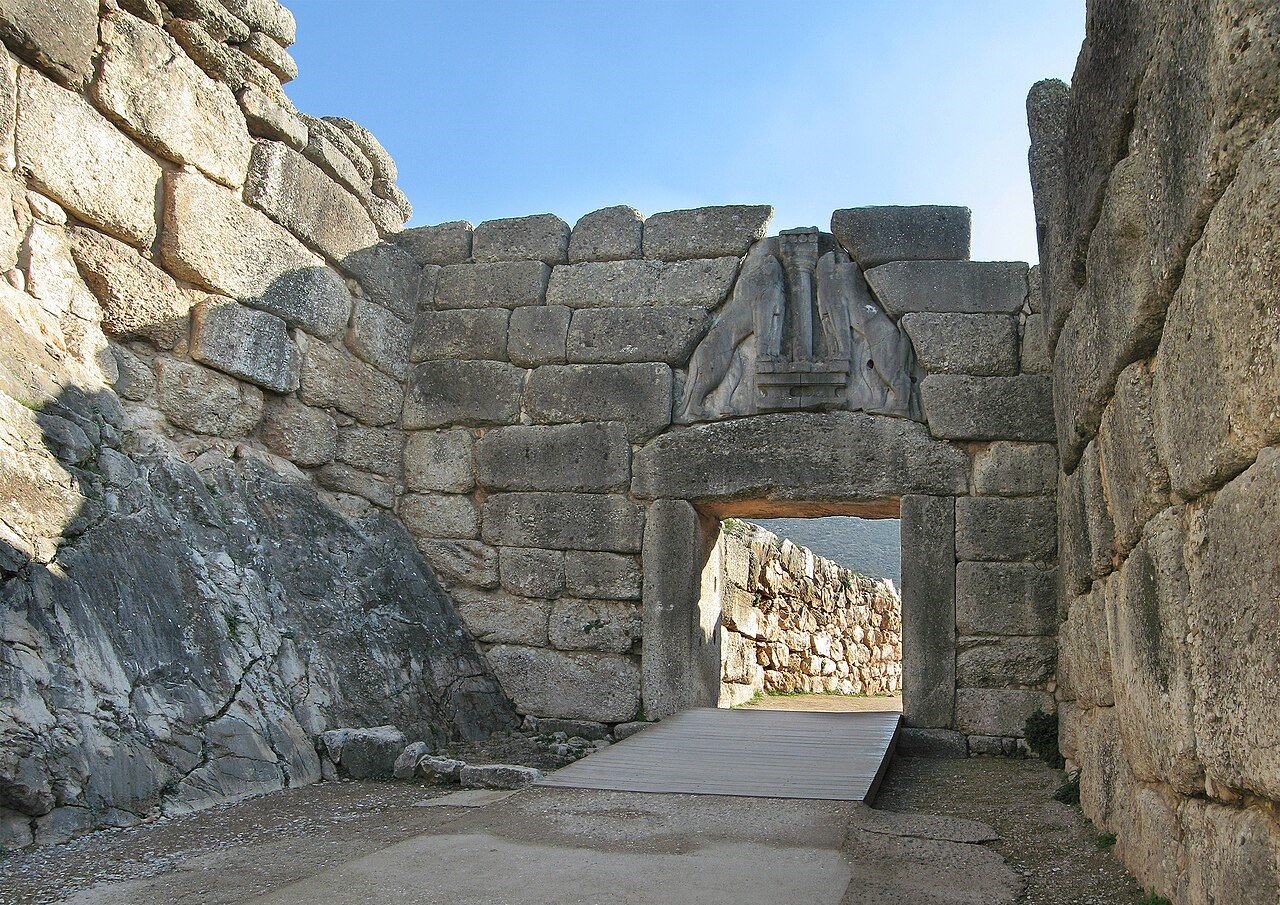
Tiryns held a central place in Mycenaean Greece. Its Cyclopean fortifications, palatial architecture, and commanding position on the Argolid plain made it both a political hub and a major harbor. From here, Mycenaean Greeks linked themselves to broader Mediterranean networks that stretched to Crete, Cyprus, the Levant, and the western coasts, often grouped under Italy.
Archaeologists have long traced these ties through imported pottery, metals, and small luxury goods. Ancient DNA now reveals that these connections extended into everyday life, shaping even the livestock that fed the community.

Researchers examined pig and cattle remains from settlement layers dating between 1250 and 1050 BC. This era spans the final palatial phase and the period after the palaces fell around 1200 BC—one of the most consequential turning points in early Greek history. The destruction of the palace system reshaped trade, population movements, and economic organization across the region.
A rare western lineage reaches a Mycenaean Greek stronghold
Among the pigs sampled, one carried a mitochondrial haplotype previously known only from western areas associated with Italy. Its appearance in Tiryns marks the first evidence of this lineage outside that region. The presence of this animal indicates that Mycenaean Greeks were connected not only to their eastern neighbors but also to western Mediterranean groups.
The finding supports long-standing theories that Mycenaean sailors traveled widely and maintained sustained contact with western communities. It also shows that mobility in the Late Bronze Age was not limited to high-status goods.
Livestock moved along the same routes, following the paths of traders, migrants, and possibly skilled specialists who crossed the sea carrying animals with them.
Genetic shifts after the collapse of the palaces

The ancient DNA also reveals how Mycenaean networks changed after the destruction of the palaces. A pig haplogroup with Near Eastern origins appears during the palatial period but disappears in the post-palatial layers. The changing genetic profile suggests a realignment of trade routes and exchange systems after the fall of central authority.
This pattern fits broader archaeological interpretations of the era. As the palatial centers collapsed, long-range connections weakened, and communities reorganized their economies. Tiryns remained influential, but its patterns of interaction shifted. The livestock DNA captures these changes from the perspective of the animals that sustained the population.
Cattle DNA was less well preserved, allowing conclusions only for the earlier palatial period. Even so, the pig data alone mark a clear distinction between the world before and after the collapse.
Animals as markers of Greek mobility and identity
Zooarchaeological studies at Tiryns had previously suggested that most pigs were bred locally. Their bones did not reveal any obvious signs of foreign origin. Ancient DNA provides a different view. A single genetic variant can uncover distant links and reveal routes of movement that material culture alone could not confirm.
Across the Bronze and Iron Ages, pigs carried genetic signatures from Europe into the eastern Mediterranean and from the Near East into Greece, Sardinia, and Sicily. The Tiryns lineage adds a western component to this pattern, situating Mycenaean Greece firmly within a Mediterranean web of exchanges.
The results show that early Greek communities were not isolated. They were active participants in a system of mobility that carried animals, goods, and knowledge across thousands of miles. In this sense, livestock become markers of Mycenaean identity—signals of who the Greeks interacted with and how far their influence extended.
A deeper look at a changing Greek world
The research, led by Meirav Meiri and published in Journal of Archaeological Science: Reports, illustrates how ancient DNA can illuminate the lived realities of Mycenaean Greece. The collapse of the palaces reshaped political power, trade, and community life. These shifts leave traces not only in architecture and artifacts but also in the genes of the animals, people raised, traded, and consumed.
Through the DNA of pigs, scholars gain a clearer picture of Mycenaean mobility and resilience. The unexpected western lineage at Tiryns reinforces the idea that Bronze Age Greece was deeply interconnected—a maritime culture that looked both east and west.
Even in moments of upheaval, Mycenaean Greeks remained part of a wider Mediterranean world. Their animals tell that story as clearly as their monuments, revealing the routes that linked them to distant shores and carried their influence across the sea.


