

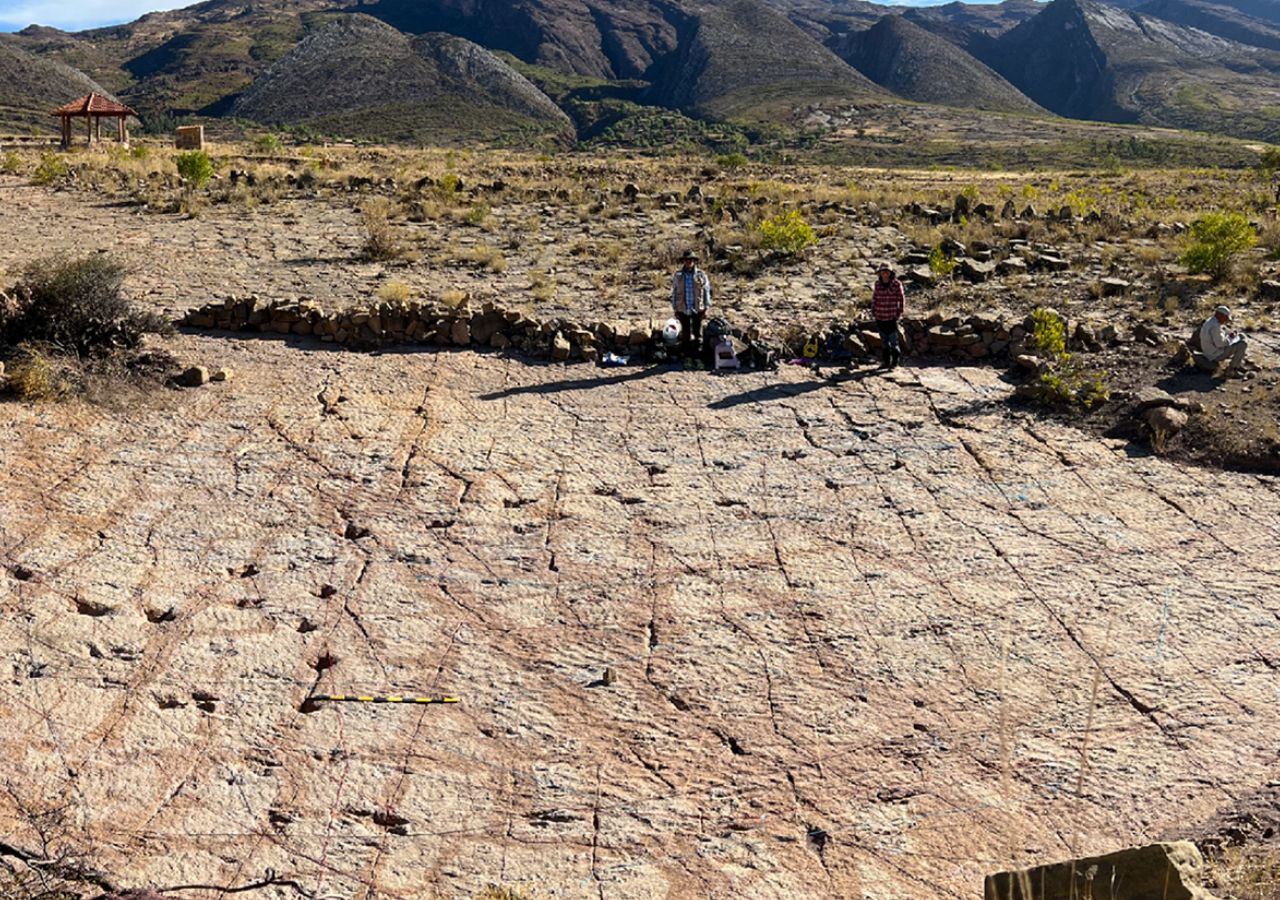
Researchers have uncovered more than 18,000 fossilized dinosaur footprints and swim marks in Bolivia, marking a historic discovery in the field of paleontology.
Found at the Carreras Pampa site inside Torotoro National Park, the discovery offers the largest collection of dinosaur tracks ever documented at a single location. The fossilized prints, which include both land and swim tracks, suggest the area once served as a major thoroughfare for prehistoric species.
The site, located in central Bolivia, was already known to scientists but had never been fully studied. A new analysis published in the journal PLOS One details the findings, which include 16,600 theropod footprints and 1,378 swim tracks.
The abundance of prints and their arrangement reveal a wide range of behaviors, from walking and running to swimming and turning. Some tracks also show tail drag marks, an uncommon feature in other sites.
Ancient activity captured in fossilized motion
Jeremy McLarty, a paleontologist and associate professor at Southwestern Adventist University in Texas, said the site holds the highest number of dinosaur tracks ever found in one place.
He added that it also preserves more swim trackways than any other known location. According to McLarty, this makes Carreras Pampa a rare record of how dinosaurs moved across both land and shallow water.

Covering about 80,000 square feet, the site sits on what was once an ancient shoreline. Ripple marks are still visible in the sediment running in a northwest to southeast direction, aligning with many of the fossilized tracks.
The research team began their work by clearing debris, rocks, and layers of sediment to reveal the prints beneath.
Wide range of track sizes and species
The tracks vary widely in size and shape, indicating that different species passed through the area. Some prints measure less than 4 inches long, possibly left by small theropods like Coelophysis or by juveniles of larger species.
Larger footprints exceed 12 inches and may have come from mid-sized carnivores such as Dilophosaurus or Allosaurus. Researchers noted that much larger predators like Tyrannosaurus rex usually leave prints measuring around 16 inches.
Swim marks appear as straight or curved grooves. McLarty explained that the main grooves were likely made by a dinosaur’s middle toe scratching the bottom of a body of water, while smaller nearby grooves came from the outer toes.
Unlike most sites, Carreras Pampa preserves alternating left and right swim tracks, giving researchers rare insight into aquatic movement.
Bolivia’s role in preserving dinosaur footprints
Some trackways run in parallel, suggesting that certain dinosaurs may have traveled in groups. McLarty pointed out that Bolivia is already known for its rich fossil sites.
The second-largest collection of dinosaur tracks is also located there, at Cal Orck’o, though that site is positioned along a steep wall and is more limited in surface area.
This latest discovery further establishes Bolivia as a significant location for studying dinosaur footprints and ancient ecosystems.


