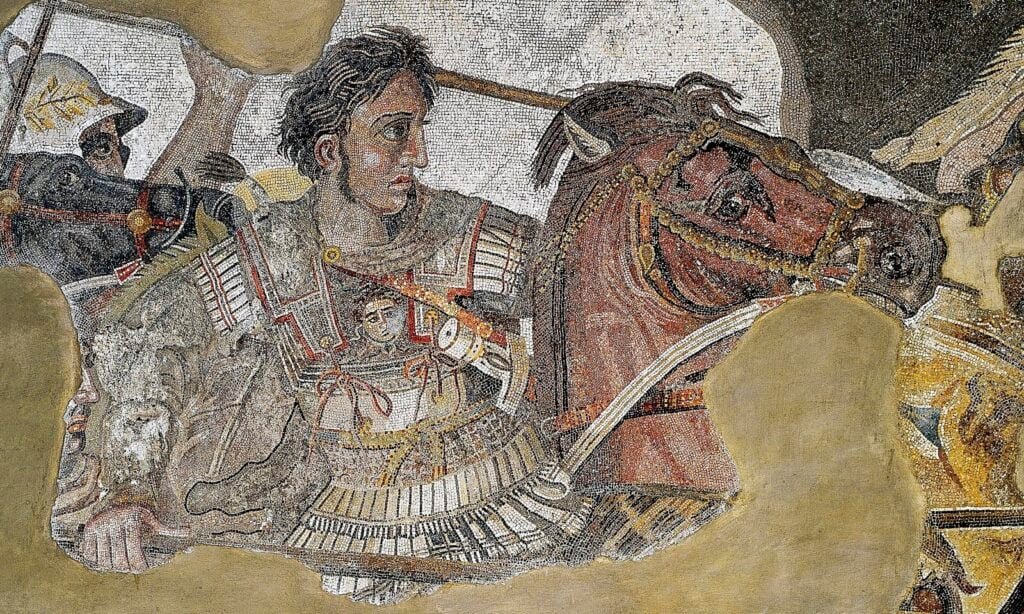

A biography of Alexander the Great has made history with a major literary prize win, becoming the first book covering ancient history to receive the Baillie Gifford Prize for Non-Fiction.
British historian Edmund Richardson won the £50,000 ($67,200) award for “Alexander: God, King, Man” at a ceremony in London on Wednesday. The victory was the Durham University professor’s first major literary prize.
The book was chosen from more than 350 eligible works by a six-member panel led by broadcaster Kirsty Lang. Judges praised its detailed research and storytelling, which follows Alexander from an uncertain young ruler to the conqueror of the Persian Empire.
Lang called it “non-fiction writing at its very best” and highlighted its use of recent archaeological discoveries and new technology. The award, established as the Samuel Johnson Prize in 1999, recognizes English-language nonfiction across subjects ranging from history and politics to science and the arts.
How a biography of Alexander the Great made history with a major literary prize win
Richardson spent more than a decade researching the book, traveling across four continents and translating material from 12 ancient languages. His work draws on records beyond the familiar Greek and Roman accounts, including evidence from the civilizations Alexander encountered. The account also uses Babylonian astronomical records to offer views of events beyond Alexander’s own army.
Last night the brilliant Edmund Richardson won the Baillie Gifford Prize for Non-Fiction with his cinematically excellent Alexander: God, King, Man.
Huge congratulations to Edmund and all the other shortlisted authors. pic.twitter.com/HaY2R0eGZJ
— Bloomsbury Books UK (@BloomsburyBooks) November 5, 2026
The account follows a 20-year-old king who inherited a troubled Macedonian kingdom after his father was assassinated in 336 B.C. It examines his invasion of the Persian Empire, his growing claims to extraordinary authority and the violence that accompanied his conquests. Alexander died in Babylon in 323 B.C., at age 32.
Rather than portray him only as a military genius, Richardson explores his insecurities, ambitions, and changing relationships with those around him. Richardson also examines how Alexander’s campaigns changed connections between communities across the ancient world.
Richardson’s research stood out in a competitive field
The other finalists included Patrick Radden Keefe’s “London Falling,” Nicholas Boggs’ “Baldwin: A Love Story” and Matthew Sweet’s biography of Barbara Cartland, “The Great Dictator.” Books by Anand Gopal and Andrea Wulf completed the six-title shortlist, announced Oct. 1. The Financial Times reported that the judges reached their decision by majority vote.
Richardson welcomed the recognition in comments released by Durham University, describing the other finalists as authors he admired. He said he was grateful that his book had been selected alongside theirs.
The prize organizers said the decision marked the first time a work on ancient history had won the award in its 27-year history. Last year’s winner was Australian writer Helen Garner for “How to End a Story,” a collection of diaries.