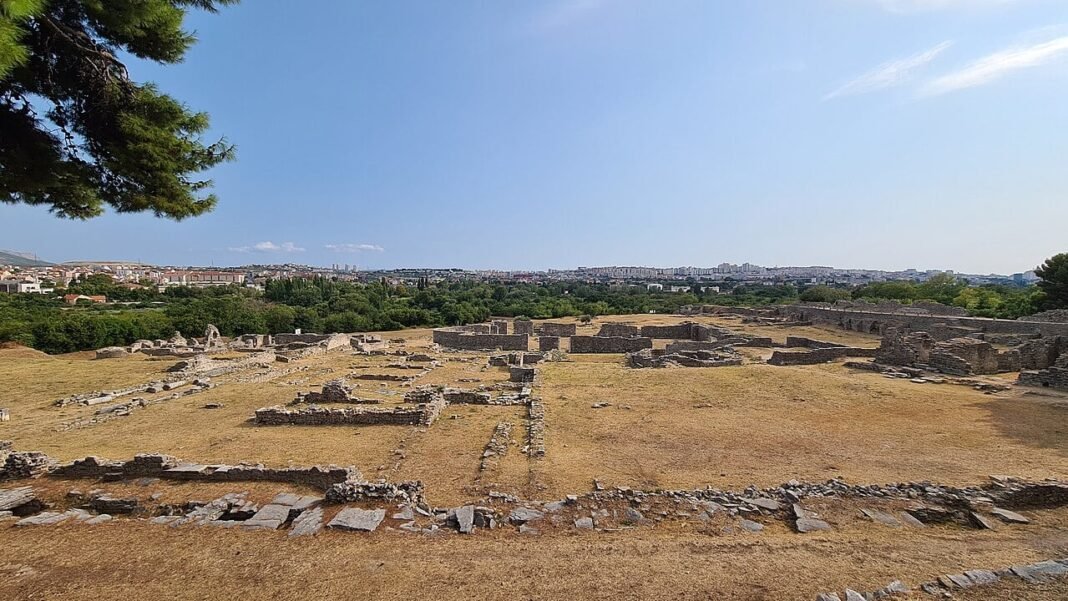
Archaeologists working in the historic center of Strasbourg, France, have uncovered rare evidence tracing the city’s development from a Roman military settlement to a medieval and modern urban district.
The discoveries come from a preventive excavation ordered ahead of a planned tourist residence in the city center. The dig, conducted under the authority of the DRAC Grand Est, covered a 462-square-meter (4,973 square feet) site within Strasbourg’s historic island.
Researchers say the location preserves an unusually complete sequence of occupation spanning nearly two thousand years. The excavation revealed tightly layered archaeological deposits that document continuous settlement from the Roman period through the Middle Ages and into modern times.
Each phase reflects shifts in military presence, civilian life, and urban organization in what is now eastern France.
Roman military camps shaped early Strasbourg

During the Roman period, Strasbourg was known as Argentorate and served as a key military center along the Rhine frontier. Researchers say the 2nd Legion established the first major camp in the early 1st century AD. The 8th Legion later replaced it toward the end of the century.
The presence of these legions transformed the surrounding landscape. Civilian settlements known as canabae legionis developed just outside the fortified camps. These early suburbs housed traders, craftsmen, and families who supported the military economy.
Rue Sainte-Hélène lies within the heart of this former civilian zone. Archaeologists uncovered Roman-era dwellings about four meters below modern street level. Thick layers of silt deposited by the Rhine and nearby rivers helped preserve these remains.
At least two underground cellars, dating from the 2nd to 3rd century AD, indicate that the suburbs became increasingly permanent. Artifacts recovered from the cellar fills include painted wall plaster, roof tiles such as tegulae and imbrices, and daub fragments.
Researchers say these materials point to earth-and-timber buildings used for both residential and commercial purposes.
Medieval expansion reshaped the former Roman suburb

After antiquity, the area entered a new phase of development beginning in the late 12th and early 13th centuries. Archaeologists uncovered a series of masonry structures linked to expanding housing and urban growth.
Builders used orange bricks, many of which were later cut down and reused during subsequent construction phases. A dense network of walls dating from the 13th to the 16th centuries reflects repeated rebuilding as Strasbourg grew into a major medieval city.
Pits and wells filled with household waste help date these occupational phases. The excavation also revealed traces of modest dwellings with mud brick walls, though erosion and later disturbances make their original layout difficult to reconstruct.
Drapers’ Guild left lasting marks on the neighborhood
These developments paved the way for the establishment of the Drapers’ Guild hall, or Tucherzunft, in the late 14th century. The guild played a central role in Strasbourg’s textile economy and social life.

Researchers believe buildings at 3 rue Sainte-Hélène served as annexes to the guild complex, possibly functioning as an inn or drinking hall. An oven uncovered on the site dates to this period and likely supported communal meals and banquets.
One of the most striking finds is a large brick-built latrine with a vaulted ceiling. Measuring more than three meters in length and over five meters in height, the structure reflects advanced planning and organized sanitation in medieval Strasbourg.
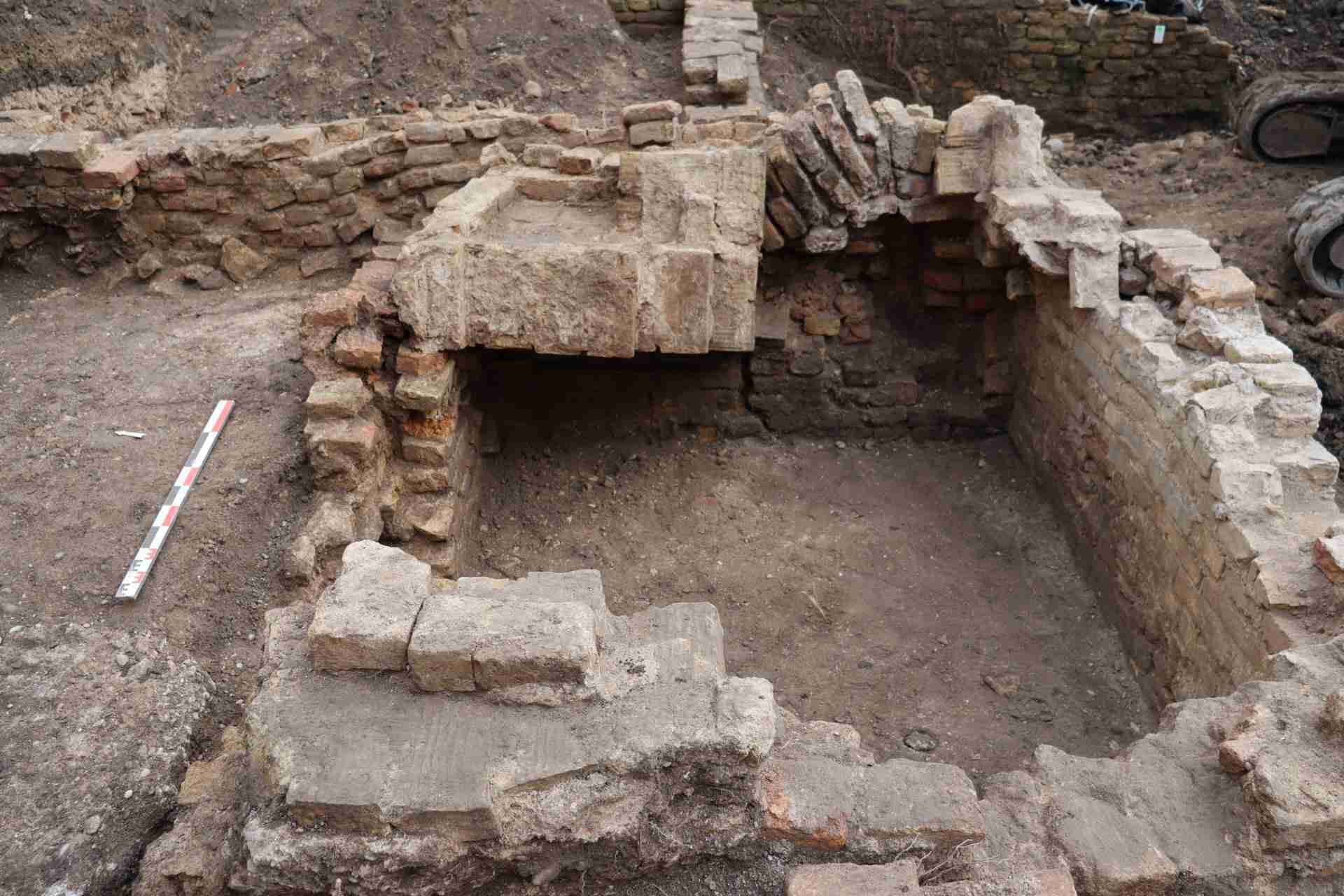
Archaeologists excavated the latrine in stages and carried out detailed photogrammetry, allowing for a full three-dimensional reconstruction. Analysis revealed at least two phases of vault repair, the earliest dating to the first half of the 15th century.
The fill yielded a wide range of artifacts, including ceramics, animal bones, fish remains, eggshells, glass vessels, metal utensils, and stove tiles decorated with historical scenes.

Modern uses are layered over ancient foundations
After the Drapers’ Guild was abolished in 1791, the site underwent repeated transformations. Archaeologists uncovered masonry pillars built from reused bricks and sandstone blocks, along with flooring fragments and demolition debris.
Historical records show the buildings later served as a theater, synagogue, furniture store, bistro, gymnasium, cinema, and brewery. They were last used as storage and housing before demolition in 2023.
Post-excavation analysis is now underway. Specialists from multiple disciplines are studying the structures and artifacts to reconstruct the site’s long-term evolution.
Researchers say the findings offer a rare opportunity to follow the transformation of a single location in Roman Strasbourg, France, from frontier settlement to modern city block, revealing how urban life adapted across centuries.