Greece is a land of rich history and breathtaking landscapes, home to large volcanoes that have shaped the country’s terrain over millennia. Some of these volcanoes lie within popular tourist destinations, drawing thousands of visitors each summer for their beautiful beaches and scenic views, yet few are aware of the ‘sleeping giants’ that lie beside them.
The cataclysmic eruption of the Santorini volcano more than 3,500 years ago and the steaming craters of the island of Nisyros are only two of the many volcanoes in Greece.
The country’s volcanic activity is concentrated along the Hellenic Volcanic Arc. This arc is a 500-kilometer (310-mile) long chain formed by the subduction of the African tectonic plate beneath the Eurasian plate. It stretches from the Peloponnese in the southern part of the Greek mainland to the Dodecanese islands, encompassing both active and dormant volcanoes. Among these, five are classified as active to this day.
Which volcanoes are active in Greece today?
The question of how many volcanoes are active in Greece sounds simple, but is slightly more complicated than it might seem. Depending on the scientific definition of what constitutes an active volcano, most scientific organizations agree that there are five volcanoes that are active in the country:
The volcano of Santorini, including both Nea Kameni and Kolumbo, the volcano of Nisyros, the volcano of Methana, that of Milos and the volcano of Gyali.
The Smithsonian Institution’s Global Volcanism Program identifies these five Holocene volcanoes in Greece, which are considered active based on their geological activity.
Holocene is a term that refers to the current geological period, which started approximately 11,700 years ago.

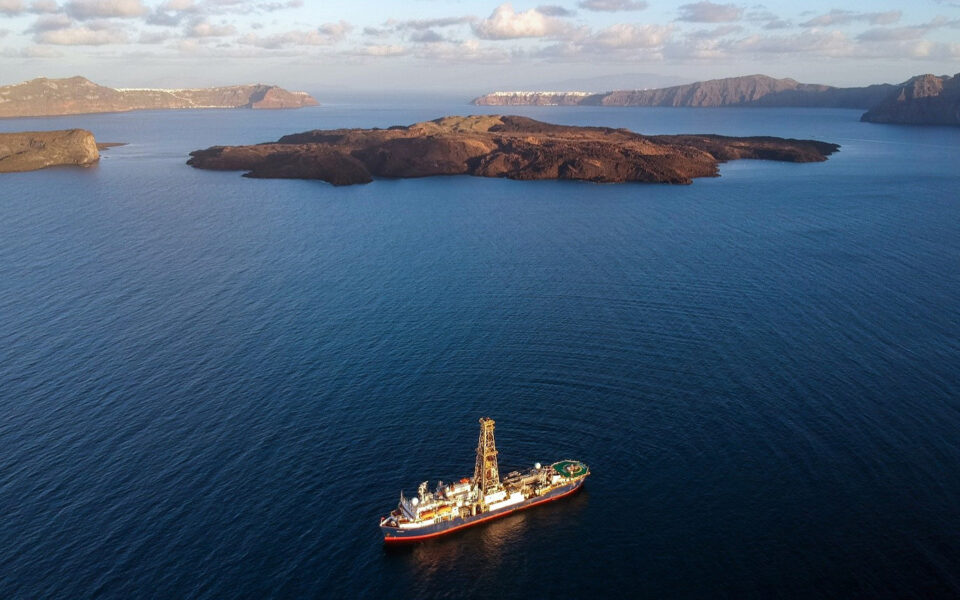
Santorini might be the most famous of Greece’s volcanoes with Nea Kameni and Kolumbo.
The recent earthquake swarm that has plagued Greece’s famous Santorini island, sparking public debates about volcanoes, has brought the topic of other volcanoes in Greece back into the spotlight, many of which are unknown to the general public.
Santorini is known worldwide for its stunning caldera, formed by a massive eruption around 1600 BC.
This event changed the island’s shape but also contributed to the gradual decline of Crete’s Minoan civilization.
Today, visitors to Santorini can explore Nea Kameni, which currently has a lava dome in the center of the caldera.

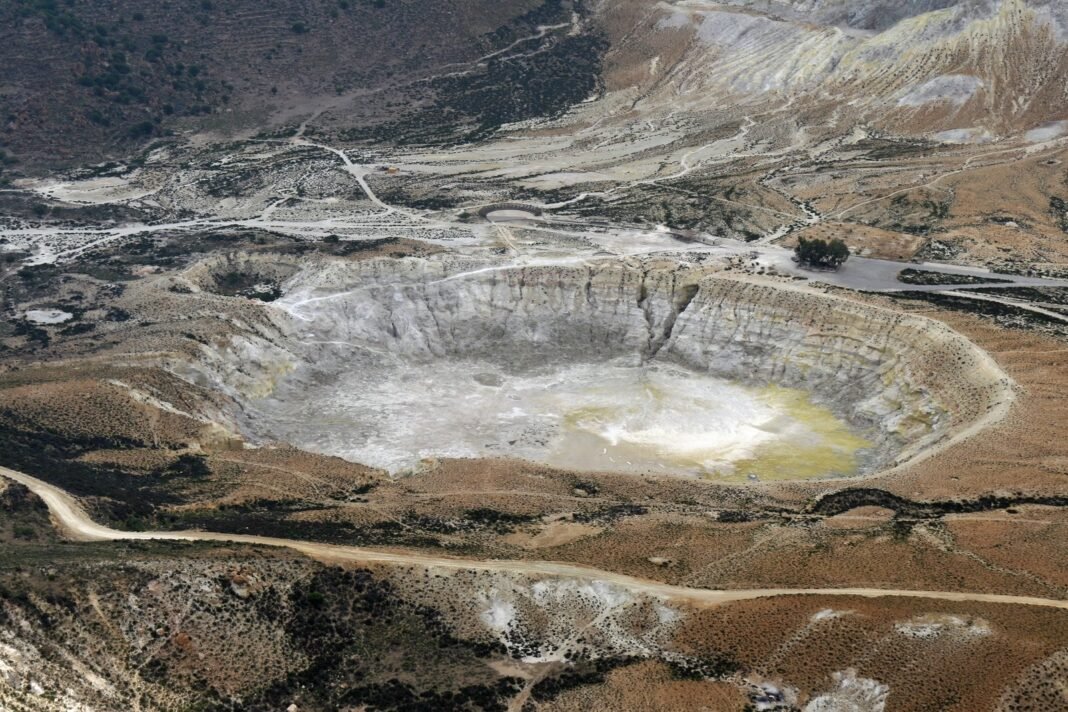
Nisyros is a small Greek island that boasts one of Europe’s youngest active volcanoes.
Its crater is dubbed “Stefanos” and has a clearly defined shape that can be seen from above. Its distinctive shape is covered with yellow sulfur deposits and bubbling mud pools.
The Nisyros volcano last erupted in 1888, but underground geothermal activity continues to shape its landscape today.
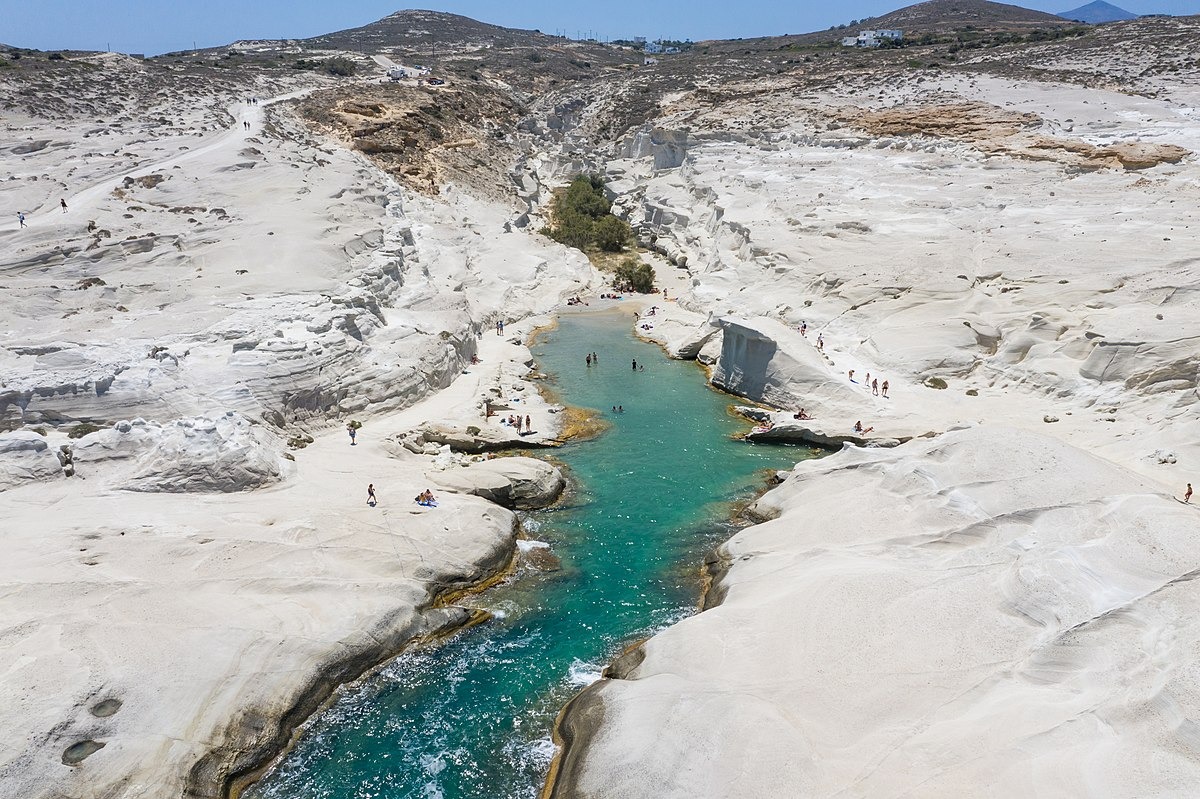
Milos is another popular Greek island that hosts a volcano.
Known for its rich mineral deposits and stunning beaches, Milos is home to a dormant volcano that last erupted in 140 AD.
Milos’ volcanic past has gifted the island with spectacular landscapes, unique rock formations, and hot springs. The island is famous among lovers of beautiful landscapes, due to its unique terrain shaped by ancient eruptions.

Methana is another volcano on a peninsula in the Saronic Gulf south of the Greek capital, Athens.
Methana, interestingly features over 30 volcanic craters. However, the most recent eruption of the Methana volcano took place around 258 BC.
Visitors can still hike through its rugged terrain to see evidence of past volcanic activity.
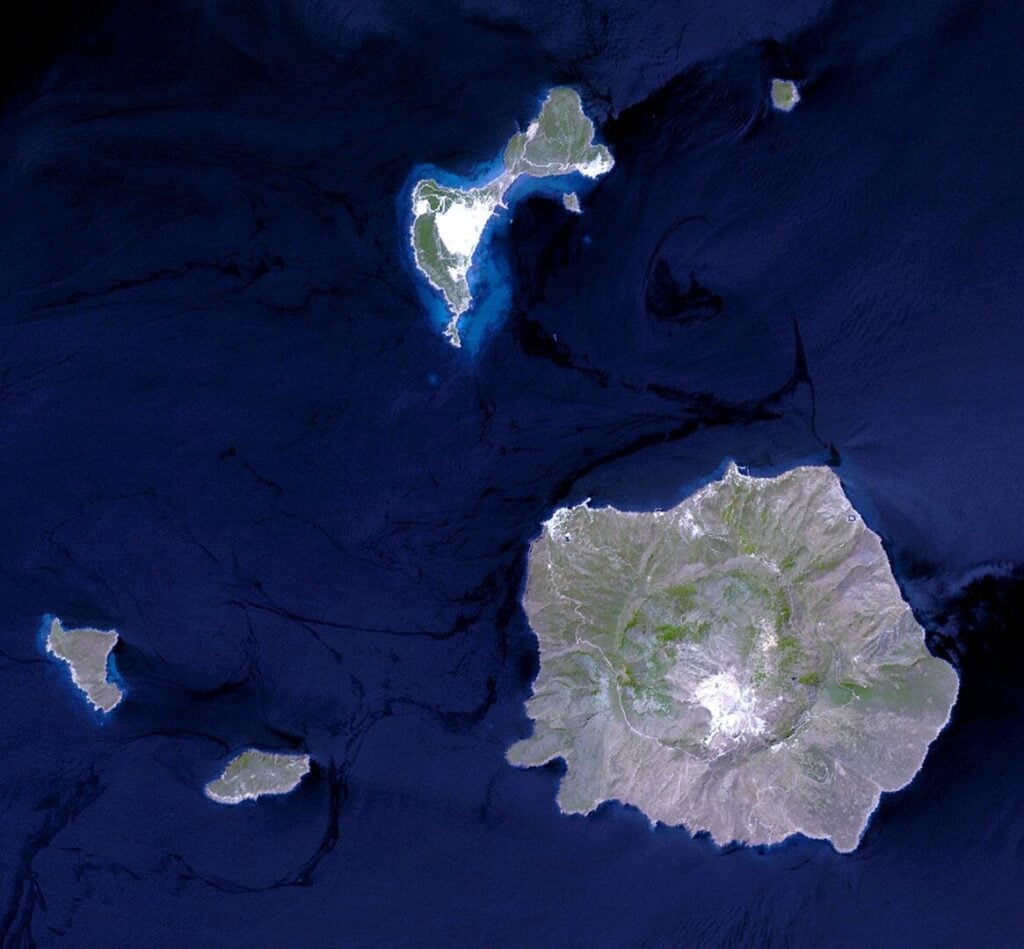
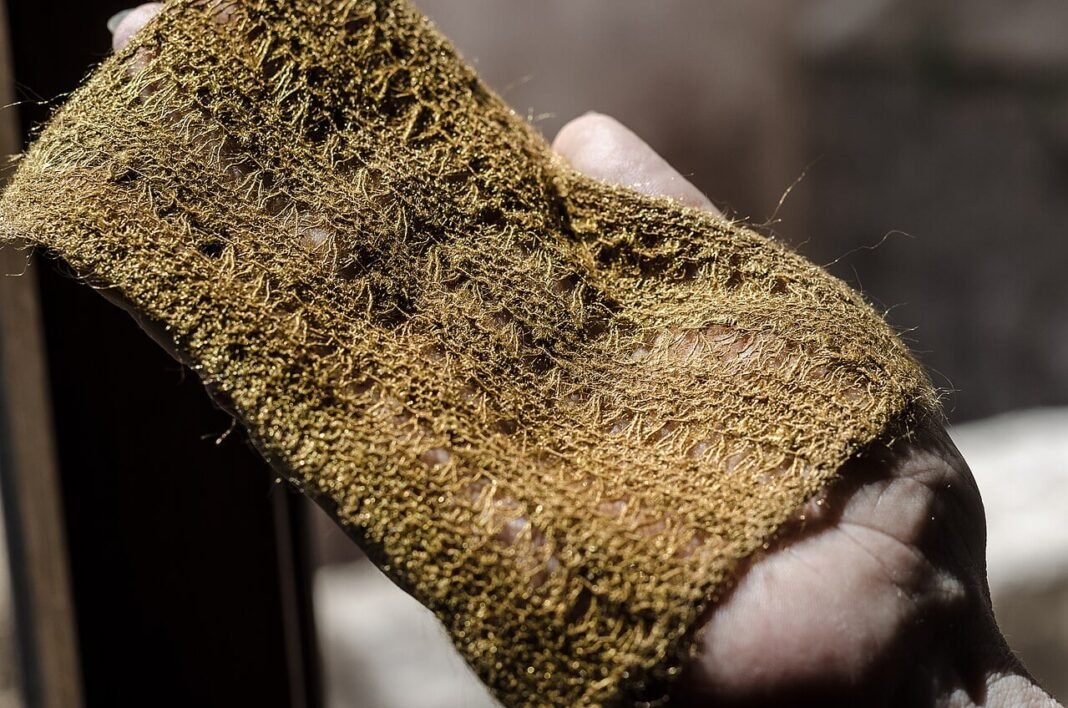
Gyali is a small volcanic islet near the island of Nisyros. This place hosts a volcano composed mainly of pumice and obsidian and although not currently active, it is a prominent example of the beauty ancient volcanoes can create.
Though less well-known than its neighboring volcanoes of Nisyros and Santorini, it remains geologically significant, as it gives scientists valuable information about the past of the broader area.
In addition to these sites, Greece is also dotted with extinct or dormant volcanoes, meaning that they haven’t exploded in a significant amount of time and are not expected to produce any major incidents soon.
These include volcanoes on the islands of Aegina and Kos, as well as on the Greek mainland, including in Evros, Pella, Thebes and Corinth, home to the Sousaki volcano.
Is there an exact number of volcanoes in Greece?
Due to varying classification standards and continuing discoveries, there is no clear scientific consensus regarding Greece’s precise number of volcanoes.
The widely accepted five Holocene volcanoes in Greece are Santorini (Nea Kameni and Kolumbo), Methana, Milos, Gyali and Nisyros. The Smithsonian Institution’s Global Volcanism Program recognizes them as active South Aegean Volcanic Arc members.
Nevertheless, other volcanic formations that are older than the Holocene epoch include volcanic relics like those on Kos and at Sousaki in Corinth, and additional structures like undersea volcanoes, making it difficult to determine a definitive number.