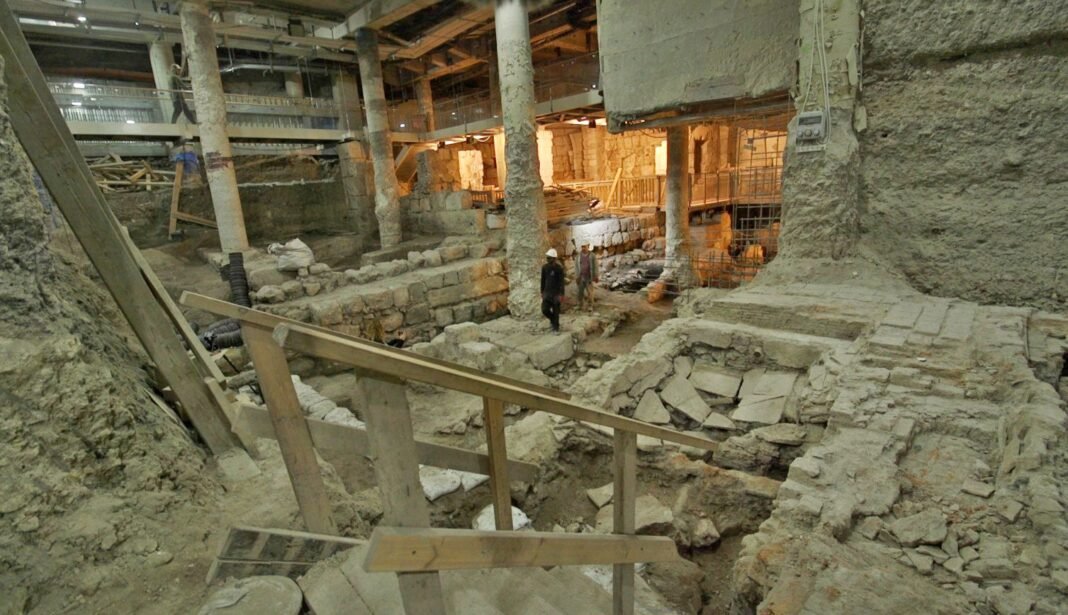
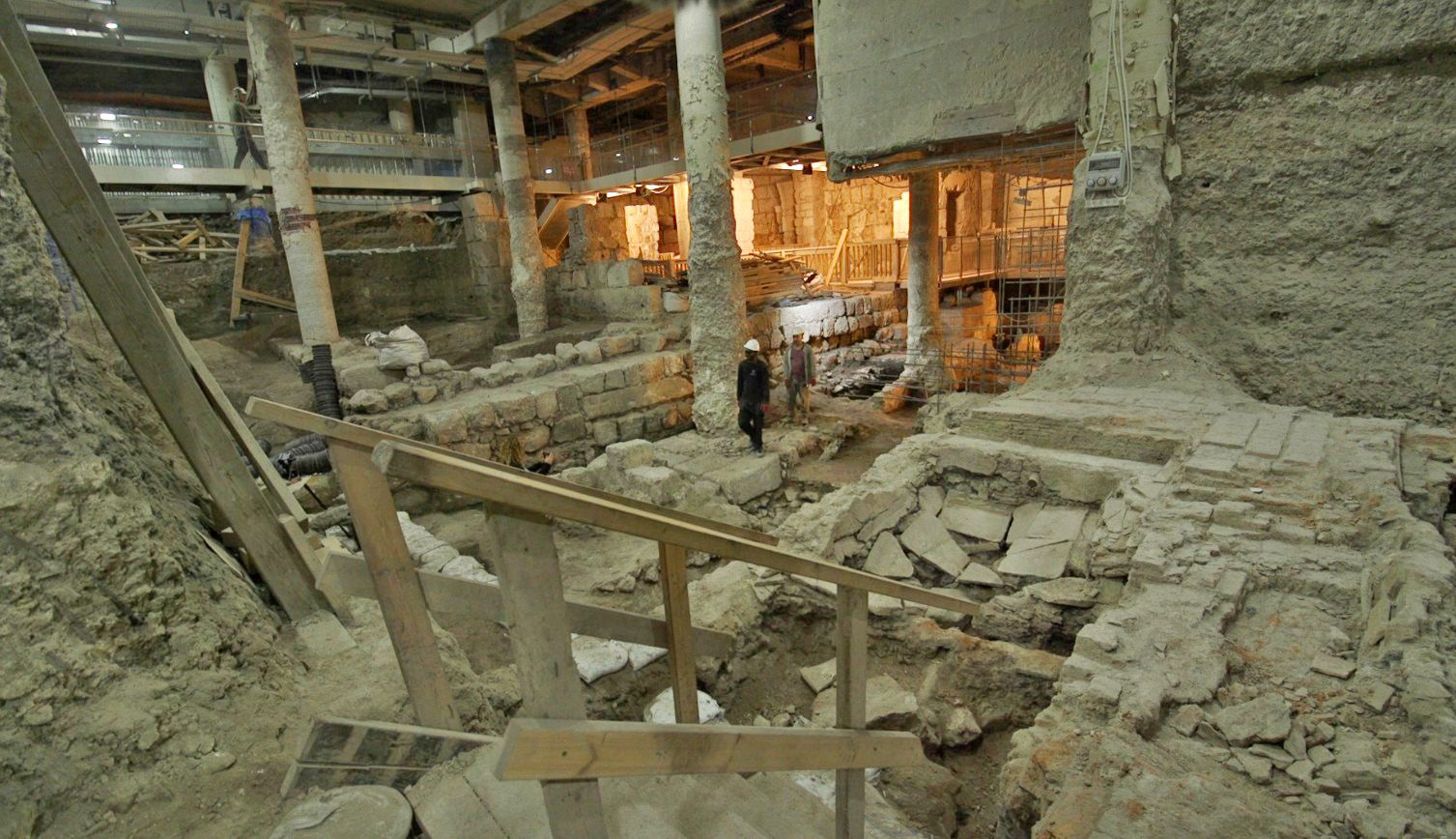
Archaeologists have uncovered a rare ritual bath carved into rock beneath the Western Wall Plaza in Jerusalem, offering new insight into religious life in the city during the final years of the Second Temple period.
The discovery, announced by the Israel Antiquities Authority and the Western Wall Heritage Foundation, was found sealed under a heavy layer of debris dating to 70 CE. That destruction layer, which includes charred ash and household items, is believed to mark the Roman Empire’s devastating conquest of Jerusalem nearly 2,000 years ago.
Measuring about 3 meters (9.8 feet) long and 2 meters (6.5 feet) high, the rectangular installation includes four steps cut into the rock, leading into a plastered basin.
Its location is significant, situated near the ancient entrances to the Temple Mount—Robinson’s Arch to the south and the Great Bridge to the north—where large numbers of pilgrims once passed.
Daily Life and religious practice in the temple city
Excavation director Ari Levy said the discovery supports the understanding of Jerusalem as a Temple-centered city, where laws of ritual purity shaped everyday routines. He explained that the frequent presence of ritual baths and stone vessels across the area reflects how seriously both residents and visitors observed these religious practices.
Levy added that the phrase “purity spread in Israel” stems from this strict adherence to ritual laws. He emphasized that items such as ritual baths and stone containers have consistently appeared in archaeological digs throughout Jerusalem and its surroundings, reinforcing the city’s deep religious character during that time.
Stone vessels found at the site highlight the community’s efforts to maintain ritual purity. According to religious law, stone does not absorb impurity, unlike pottery or metal, making these vessels ideal for repeated use.
Historic significance of ritual bath discovery in Jerusalem
The Israel Antiquities Authority noted the importance of the discovery’s timing. It comes just ahead of Asara B’Tevet, a fast day commemorating the siege of Jerusalem by the Babylonian king over 2,500 years ago.
Heritage Minister Rabbi Amichai Eliyahu said the find strengthens the link between daily life and spiritual practice during the Second Temple era. He pointed out that the timing of the discovery adds emotional weight, aligning with a day of remembrance and reflection. Eliyahu stressed the need to continue archaeological research and preserve findings that capture the city’s heritage.
Mordechai Eliav, director of the Western Wall Heritage Foundation, described the ritual bath as a powerful symbol of resilience. Found with destruction-era ash at its base, it serves, he said, as a lasting reminder of the Jewish people’s ability to recover from loss and move toward renewal.