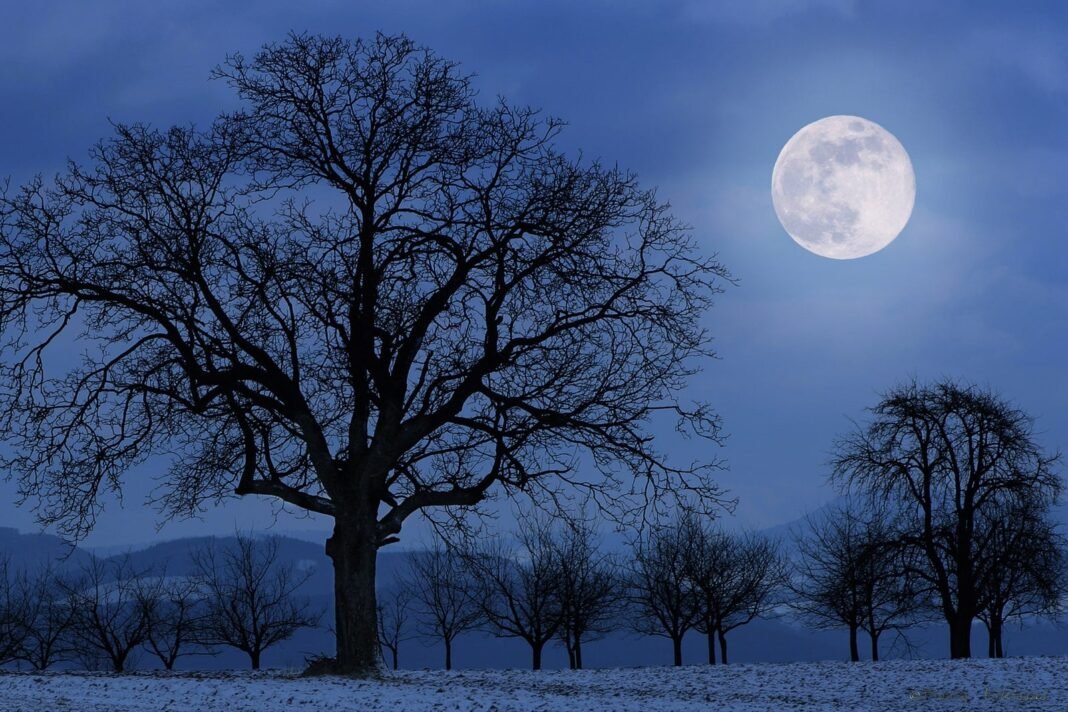

Early December will bring a standout supermoon, offering a fuller, brighter, and more dramatic lunar view than at any other time this season.
The enhanced glow and impressive size will make it an eye-catching moment for anyone who steps outside shortly after sunset.
A full moon that dominates the season
On December 4, 2025, the Moon will reach peak brilliance, offering observers around the world an especially luminous sight. This isn’t just another full moon—astronomers rank it as the second-largest of the year, cementing its place as one of 2025’s standout astronomical moments.
December’s full moon has long carried seasonal nicknames in various cultures. “Cold Moon” is one of the most widely recognized, connected to the plunge in temperatures that typically marks the start of winter across the Northern Hemisphere.
Older traditions also reference this moon as the Long Nights Moon or the Moon Before Yule, reflecting the extended darkness and winter festivities associated with this time of year.
The science behind its supermoon status
Supermoons occur when the Moon is full while positioned close to perigee, the point where its orbit brings it nearest to Earth. This orbital coincidence results in a moon that appears subtly larger and notably brighter.
In December 2025, the Moon will sit about 357,218 kilometers (221,801 miles) from Earth. Even more remarkable, it hits full phase just 12 hours after perigee, making the visual effect stronger than in a typical supermoon.
December supermoon’s unique feature
One of the defining characteristics of this particular full moon is how high it will sit above the horizon for observers in the Northern Hemisphere. Because a full moon rises opposite the Sun, its position is linked to the Sun’s seasonal path.
With the winter solstice approaching later in the month and the Sun sinking low in the sky, the December full moon will swing to an unusually elevated position.
This elevated perch means the Cold Moon will shine for long hours and appear exceptionally radiant against the dark winter sky.