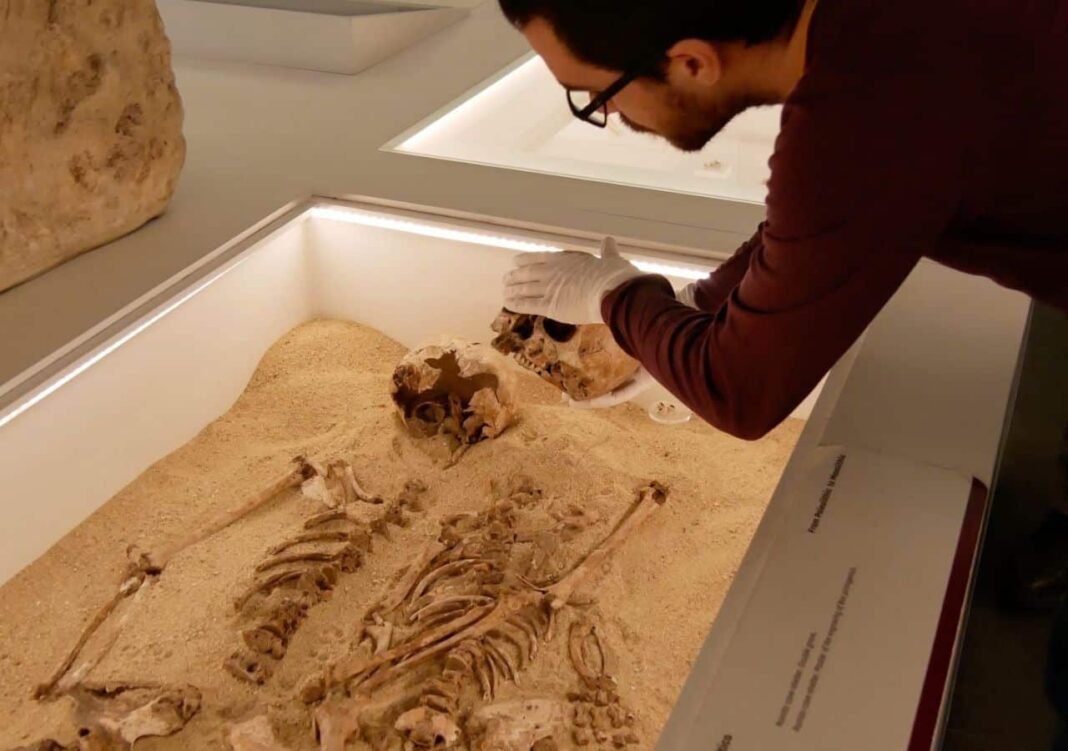
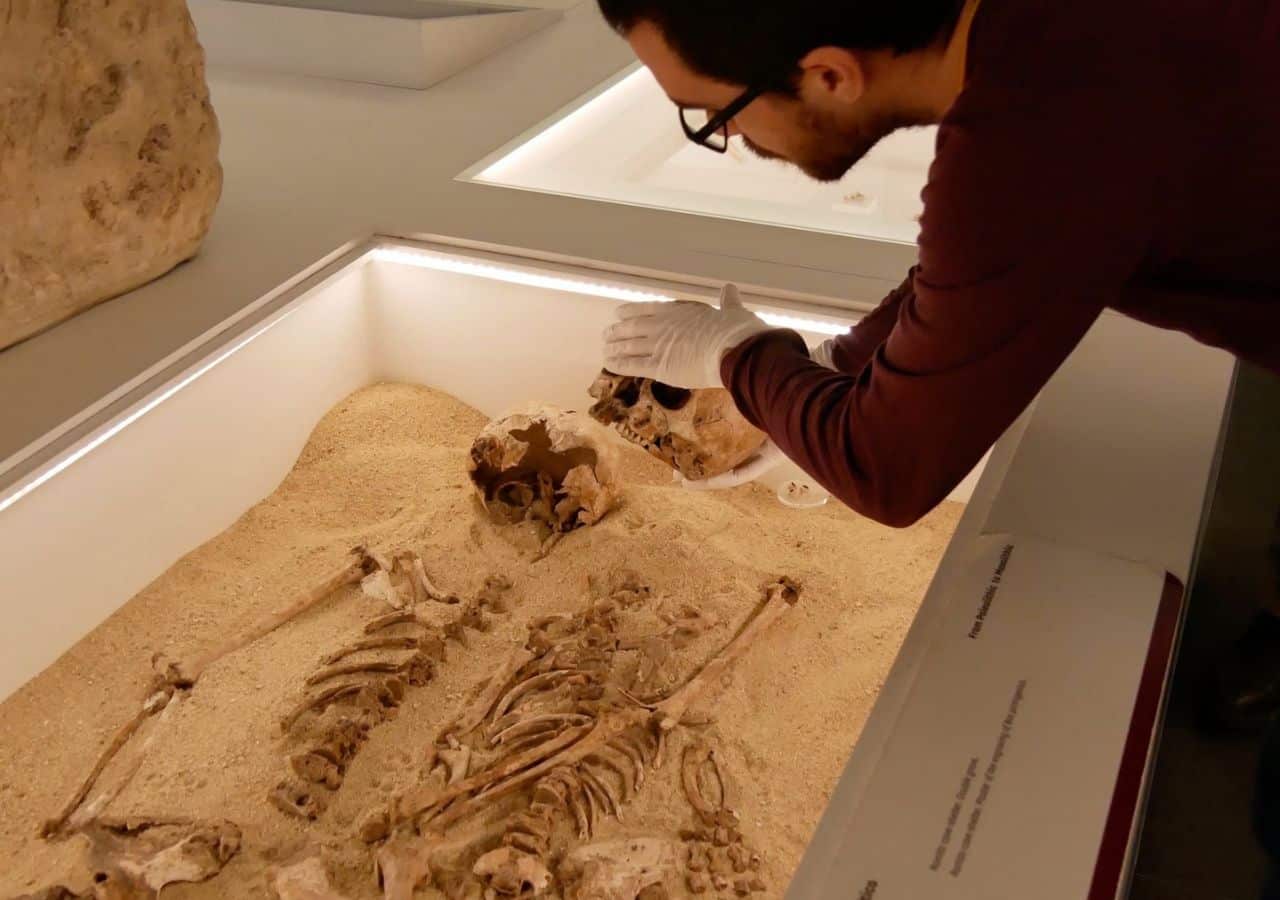
A 12,000-year-old skeleton uncovered in a cave in southern Italy has revealed one of the earliest known cases of rare dwarfism in humans, according to a new genetic study. The individual, a teenage girl, showed signs of a severe growth disorder that affected the development of her arms and legs.
Researchers identified the condition as acrosomelic dysplasia, Maroteaux type, a rare form of dwarfism that results in extreme limb shortening. The disorder was confirmed through DNA analysis of the remains, marking the oldest genetically diagnosed case of its kind.
The skeleton, found in Italy, shows that the genetic mutation responsible for this rare dwarfism was already present in human populations thousands of years ago.
Genetic testing confirms oldest case of a growth disorder
The girl, known as Romito 2, was discovered in the Romito Cave in Calabria alongside the remains of other prehistoric individuals. Her stature was estimated at 3 feet 7 inches.
Researchers found in the study that both copies of her NPR2 gene carried mutations that interfered with bone growth, leading to limited mobility and physical challenges.
Teenage girl who lived in Italy 12,000 years ago had a rare form of dwarfism, DNA study shows
by Sascha Pare – published 6 hours ago“In 1963, researchers unearthed two Stone Age skeletons that were buried in an embraced position in a cave in Italy. Now, DNA testing has revealed… pic.twitter.com/qNGSYQj9xi
— HETLAU 🧬 (@hetlau) January 29, 2026
Adrian Daly, a physician and endocrinology researcher at the University Hospital of Liège in Belgium, called the discovery a significant milestone in medical science.
He explained that this case represents the earliest DNA-based diagnosis of a genetic disease in modern humans, the earliest recorded instance of a rare disorder, and the earliest confirmed familial genetic condition.
Daly noted that identifying a single-letter mutation in someone who lived more than 12,000 years ago pushes the record for such diagnoses back by nearly 10,000 years.
Prehistoric case of rare dwarfism in Italy’s skeleton
Further analysis revealed that Romito 2 was buried near an adult woman, Romito 1, who stood about 4 feet 9 inches. DNA testing confirmed they were first-degree relatives, likely mother and daughter or sisters. Romito 1 carried only one mutated NPR2 gene, which may have contributed to her shorter height, but she did not have the full disorder.
Both individuals belonged to the Villabruna genetic cluster, a hunter-gatherer group that spread through Europe around 14,000 years ago. Although researchers found no evidence of close interbreeding, the population near the cave was likely small.
Neither skeleton showed signs of trauma, and researchers noted that Romito 2 had a diet and health status similar to others buried at the site. They concluded that despite her condition, she received care and support from those around her, likely within her family.