
Archaeologists have uncovered significant pre-Hispanic vestiges in Mexico’s Xiutetelco, located in the Sierra Nororiental region of Puebla, shedding new light on the ancient trade networks and funeral rites of the area.
The discovery was made during an archaeological rescue operation conducted by the National Institute of Anthropology and History (INAH) alongside municipal infrastructure improvements.
According to Mexico’s INAH, the archaeological rescue allows for the recovery of key pre-Hispanic materials to understand the origins of the settlement,” the institute stated in Bulletin 36.
The discovery
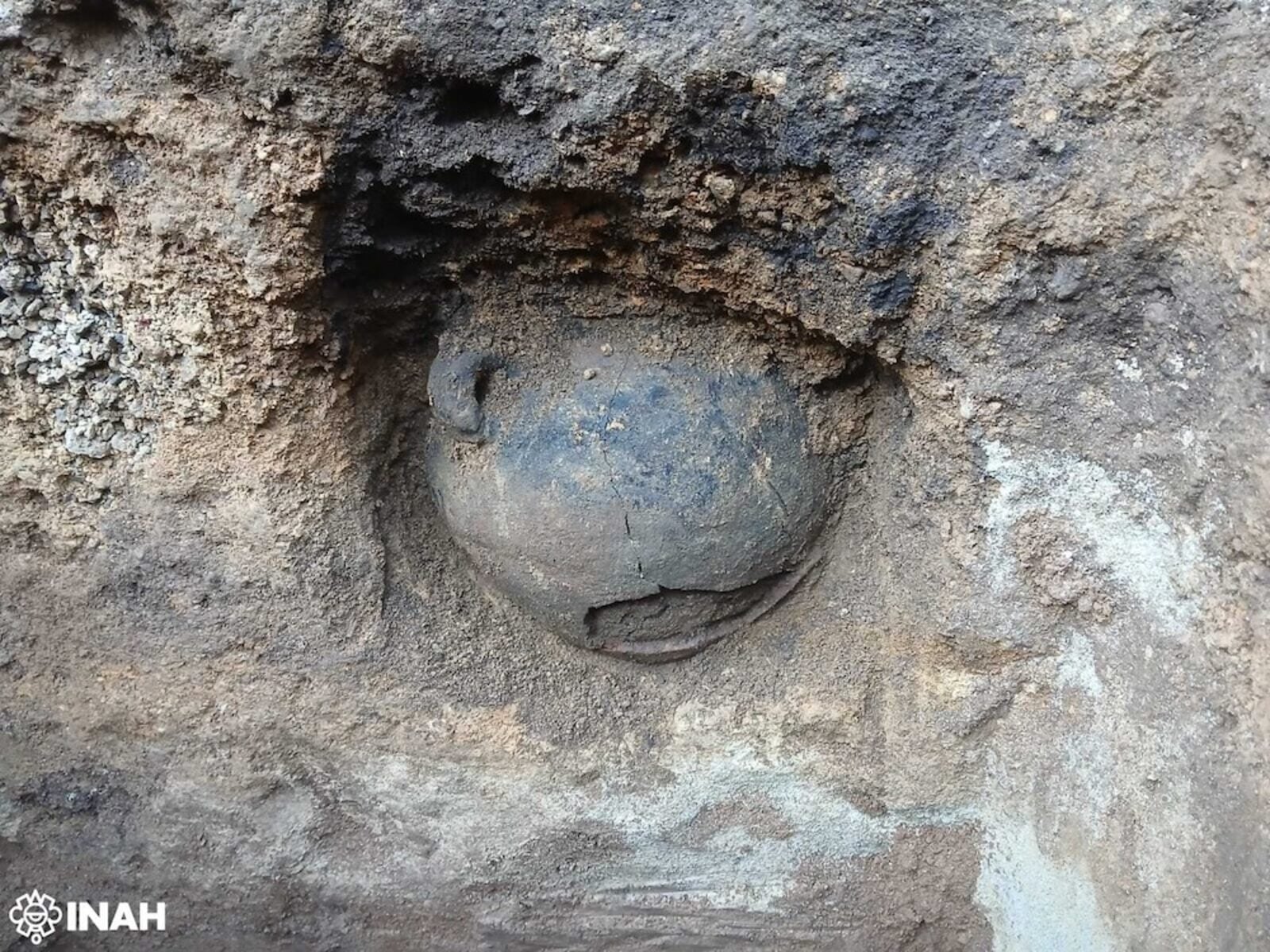
The primary find, unearthed earlier this month, is a globular pot measuring approximately 30 centimeters (about 12 inches) in diameter, possibly dating from the Epiclassic period (600–900 A.D.) and associated with the platform of a building’s basement.

Experts believe the vessel served a specific ritualistic purpose. Vessels like the one found are usually linked to funeral practices, in particular with burials of newborn infants, the text INAH stated in a bulletin.
Due to the fragility of the artifact, the team extracted the piece in a block of soil. It will be transferred to the Community Museum of Xiutetelco for excavation and analysis to determine its original content.
The findings have historical significance
The modern town of San Juan Xiutetelco sits atop what was once a major ancient city covering approximately 28 hectares.
In its bulletin, the INAH said that the architectural characteristics of the basements located point to the existence of a wide ceremonial space that, in addition, served as a strategic node for the exchange of luxury goods at a long distance.
Project coordinator Alberto Díez Barroso Repizo noted that the findings suggest a “cultural continuum” spanning from the pre-Classic period (100–650 A.D.) to the Early Postclassic (900–1200 A.D.). The team is investigating links between this settlement and major powers such as Teotihuacan and Tula, as well as Huastec and Totonac groups.
Diez Barroso added that finding the pot associated with the architectural remains of a great platform will help to know the context and the function that the ceremonial precinct of Xiutetelco had. “The line of investigation that we are following, starting from the finding, is the cult to ancestors,” he said.
Excavation context
The rescue work for the pre-hispanic artifacts at Xiutetelco began in December 2025 in coordination with the Xiutetelco City Council. The dig was necessitated by public works on Cuauhtémoc Street, including repaving, drainage updates, and the installation of underground wiring.
The current investigation continues exploration efforts first initiated in the 1940s by archaeologist José García Payón.
The recovered items are expected to remain in the region, with INAH Puebla Director Gustavo Donnadieu Cervantes advocating for their integration into the local Community Museum.


