Researchers studying the ancient city of Azaila in northeastern Spain have uncovered one of the richest records of everyday writing from pre-Roman Iberia, offering rare insight into how ordinary people used written signs in daily life.
A new study by Aránzazu López Fernández, published in the journal Palaeohispanica, shows that writing in Azaila was not limited to elites or official monuments but appeared on storage jars, transport vessels, and household goods.
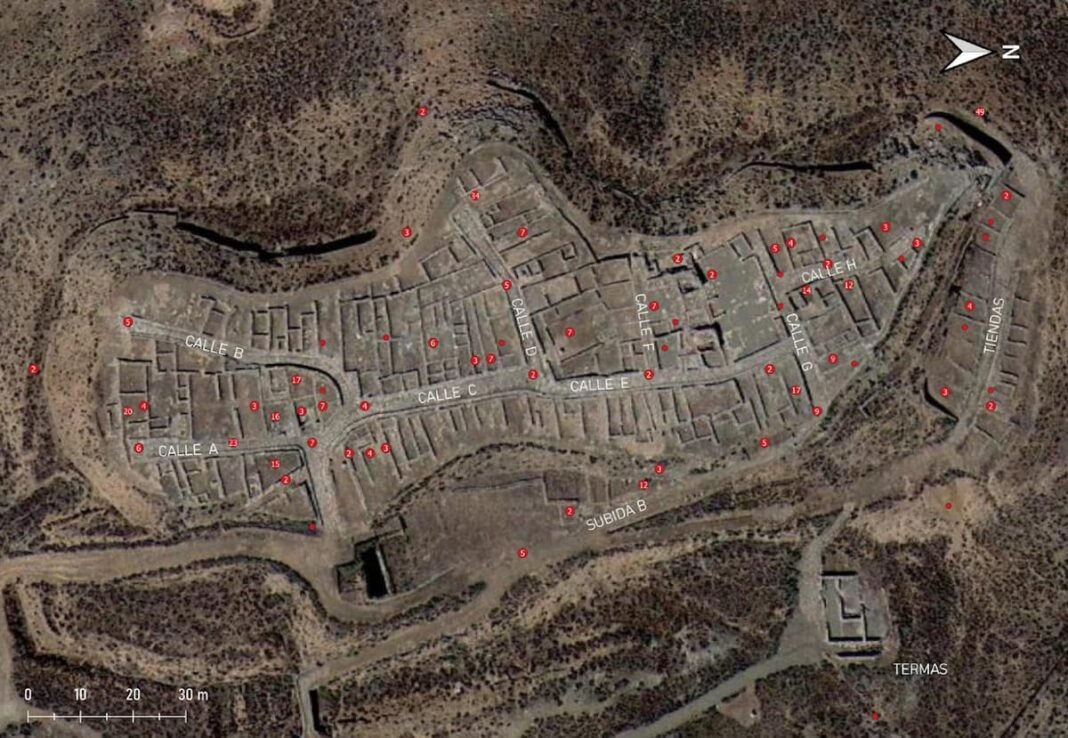
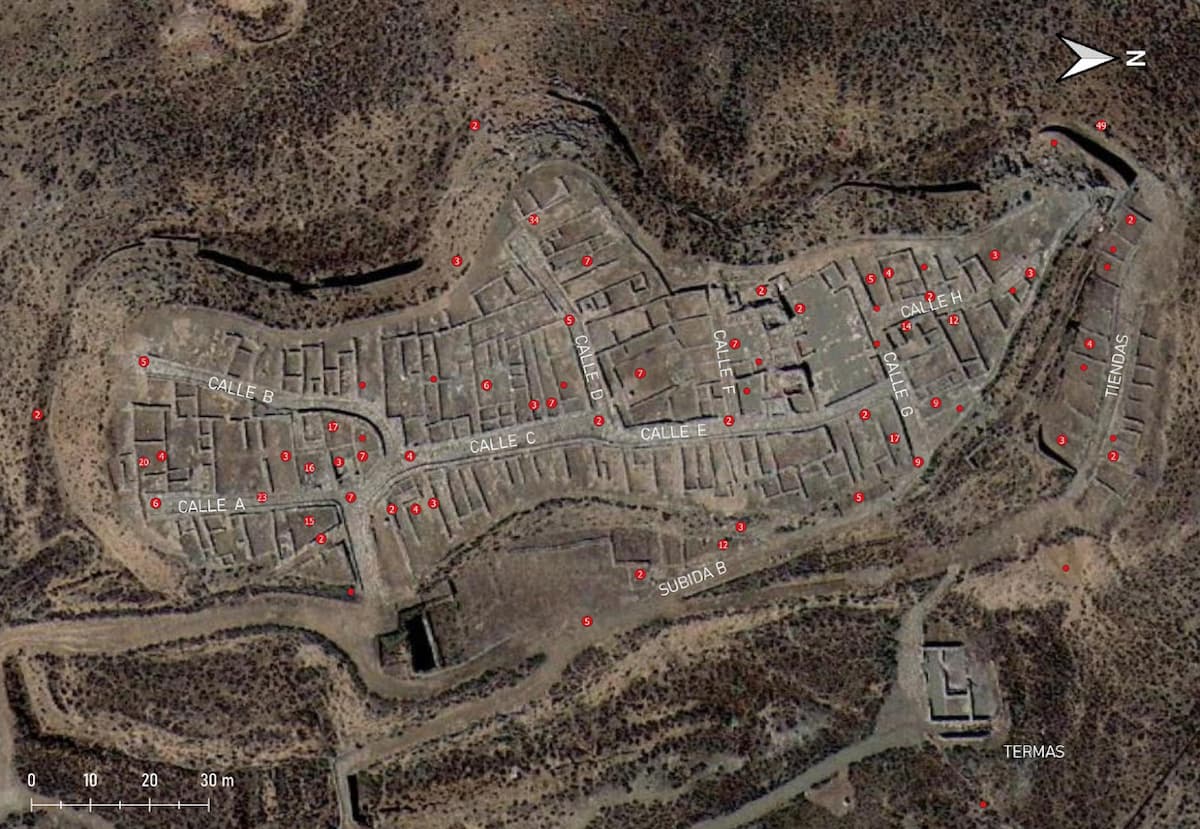
The research focuses on Cabezo de Alcalá, a hilltop settlement near modern-day Azaila in the province of Teruel. Between the second and first centuries BC, the site functioned as an active Iberian city. Archaeological evidence suggests its occupation ended abruptly during Roman-era military unrest in the region.
That sudden destruction left behind a concentrated archive of inscribed objects, preserving a snapshot of writing practices at a single moment in time.
Storage ceramics form the core of the written record
Most of the inscriptions identified in the study appear on storage and transport ceramics. Amphorae account for nearly 80 percent of the assemblage. These vessels were used to move goods such as wine, oil, and other commodities. The remaining inscriptions appear on dolia, kalathoi, jars, and similar containers linked to storage and handling.
Researchers found that inscriptions were placed deliberately. On amphorae, writing most often appears on the neck or nearby areas, followed by the handle. These locations were highly visible during use and transport.
This chart shows how writing followed trade in the ancient city of Azaila. Nearly 80% of inscribed storage ceramics were amphorae, highlighting their central role in Iberian–Roman commerce, according to new research. pic.twitter.com/Dbdo0uEgSg
— Tom Marvolo Riddle (@tom_riddle2025) January 30, 2026
Latin inscriptions favor the handles, while Iberian texts appear across a wider range of surfaces. On other storage containers, especially large dolia, inscriptions tend to cluster along the rim or outer wall. The placement suggests that the texts were meant to be read during daily activities rather than hidden or symbolic.
Writing techniques reflect cultural and economic exchange
The study documents a wide range of inscription techniques. Iberian texts were most commonly scratched into the surface after firing, allowing users to add information at different stages of an object’s life. Latin inscriptions were usually stamped or painted, reflecting Roman administrative practices.
Painted inscriptions, known as tituli picti, appear mainly on amphorae. These texts carried temporary information related to storage, transport, or trade. One example refers to aged wine, pointing to product quality and commercial value. Such markings show that Azaila was connected to wider trade networks that relied on shared systems of labeling and control.
Limited re-marking points for practical use
Despite the variety of techniques, most vessels were marked only once. Only a small number of amphorae carry more than one inscription. This finding is notable since amphorae often passed through multiple hands during production and distribution.
Researchers interpret this limited re-marking as evidence that the texts served specific and immediate purposes. The same pattern appears on domestic ceramics from the site, where writing also seems practical rather than decorative.
Names, numbers, and minimal marks
Some inscriptions are longer and more complex. Amphorae carry the longest texts in the Azaila assemblage, including one example with 18 signs arranged across two lines. Many inscriptions record personal names, written in full or abbreviated form. These names likely belonged to individuals involved in production, ownership, or trade.
Alongside names, researchers identified numerical and metrological signs linked to quantities, weights, or organization. Even single letters and simple symbols carry meaning. Although linguistically limited, these marks show that writing was familiar and widely used. They reflect a basic level of social literacy within the community.
A snapshot of writing in a society in transition
The study concludes that Azaila offers an exceptional view of everyday writing in an Iberian city during a period of growing Roman influence. Roman-style containers and administrative methods coexisted with Iberian language and marking practices, forming a shared system shaped by cooperation rather than replacement.
Rather than monuments or official records, the inscriptions of Azaila record ordinary lives. They show how people managed goods, marked ownership, and navigated economic exchange. Few archaeological sites preserve such a detailed picture of writing in daily use, making Azaila a key case for understanding literacy in pre-Roman Iberian society.