

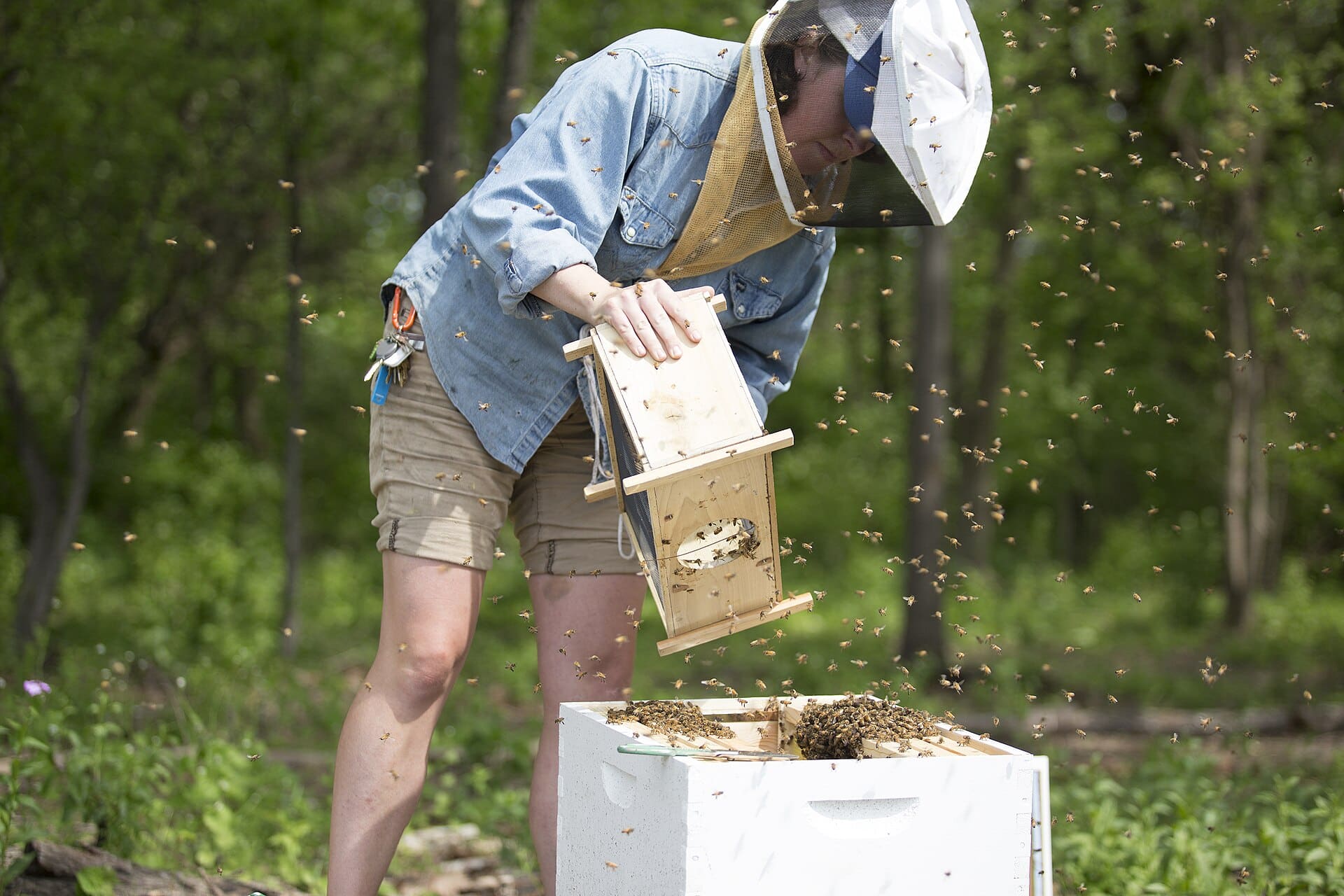
Greece ranks third among all European Union countries for the number of beehives on its farms, with 1.2 million hives recorded in 2023, according to new data from Eurostat. The findings come as the world marks World Bee Day on May 20, a day set aside to highlight the vital role bees and other pollinators play for both people and the planet.
Italy leads the bloc with nearly 1.9 million beehives, followed by Romania at 1.7 million. Greece comes in third, ahead of Bulgaria, which recorded 1.0 million hives.
These four countries together account for a significant share of the EU’s total, which reached 9.4 million beehives on farms in 2023. That figure reflects a 16% rise compared to 2020, when the bloc had 8.1 million hives.
It is worth noting that these figures capture only beehives located on farms, as farm structure statistics do not count hives kept outside agricultural settings. The actual total across all EU farms and non-farm locations may be higher.
Greece’s 1.2 million beehives rank third across the EU
The growth was not uniform across the bloc. Among countries with available data, 12 EU member states reported more beehives in 2023 than in 2020. Italy recorded the biggest jump, adding over 822,000 hives, a rise of 79%.
There were 9.4 million beehives on EU farms in 2023. 🐝🐝
Highest numbers among EU countries in:
🇮🇹Italy (1.9 million beehives on farms
🇷🇴Romania (1.7 million)
🇬🇷Greece (1.2 million)Read more 👉https://t.co/I9Ge2VuGFl#WorldBeeDay pic.twitter.com/IFW3DzAERV
— EU_Eurostat (@EU_Eurostat) May 20, 2026
At the same time, 10 countries saw their hive numbers fall. Hungary recorded the steepest drop, losing around 152,000 hives, a decline of 34%, while Spain saw its count shrink by roughly 131,000 hives, or 14%.
Bees play a key role in food production by pollinating a wide range of crops grown in both warm and cool climates. They survive cold winters by staying inside their hives and drawing on stored honey reserves.
EU’s ‘New Deal for Pollinators’ targets full recovery by 2030
The timing of this data release aligns with broader EU efforts to protect pollinators. In 2023, the European Commission put forward a plan called “A New Deal for Pollinators,” which updated a 2018 initiative and responded directly to a European Citizens’ Initiative calling on policymakers to protect both bees and farmers.
The plan calls on EU institutions and member states to take concrete steps to reverse the decline of wild pollinating insects by 2030.
Researchers and policymakers see this goal as closely connected to the EU’s broader Nature Restoration Regulation and its Biodiversity Strategy for 2030.

