For the millions of individuals comprising the Greek Diaspora, getting Greek citizenship is a long struggle against the notorious bureaucracy.
In the United States, Canada, Australia, and elsewhere generations of Greeks have been raised on stories of the “old country,” preserving traditions, language, and a fierce sense of patriotism. Yet, for many, this emotional bond is meeting a cold, impenetrable wall: the Greek bureaucracy.
Under the Greek Constitution (Article 4) and the Greek Nationality Code, citizenship is governed by the principle of jus sanguinis—the right of blood. Legally, the child of a Greek parent is Greek from the moment of their first breath.
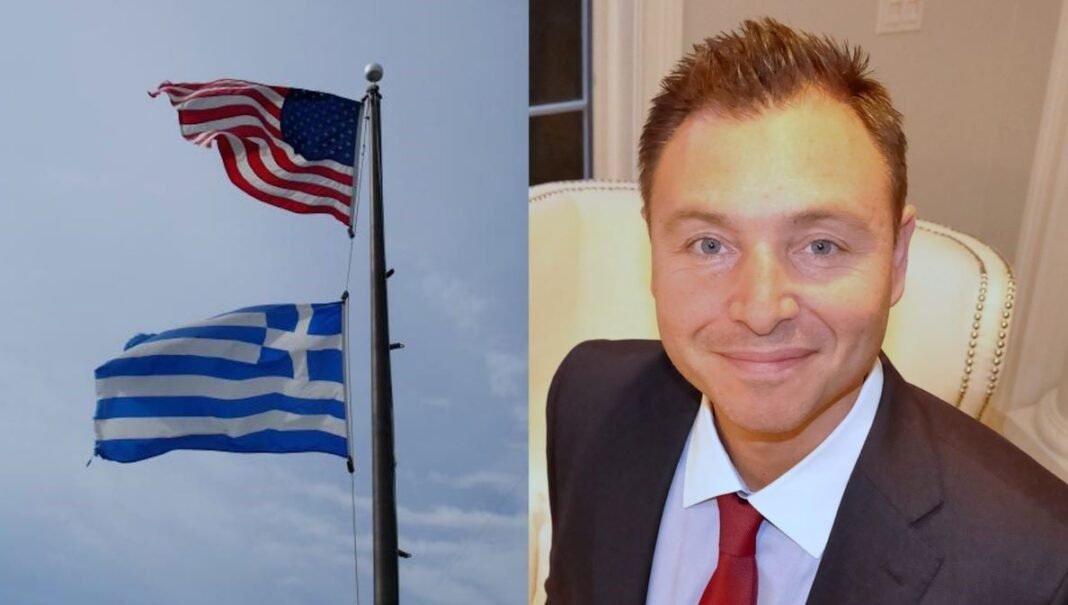
However, as documented in recent interviews with Greek community leaders Ted Argeroplos and Kostas Alexakis, as well as an online questionnaire we posed on the matter, the “recordation” of this birthright has become a gauntlet of administrative hurdles that can last over a decade.
Greek citizenship: The legal myth vs. the bureaucratic reality
At the heart of the issue is a fundamental disagreement between the law as it is written and the law as it is practiced by the “autonomous deep state” of Greek bureaucracy. Attorney Kostas Alexakis is blunt about the legal standing of the Diaspora:
“An adult Greek American who can prove nexus to a Greek parent is Greek at birth. The question is the requirement that his or her parents’ wedding must be registered in Greece and transcribed in Greece. It’s a requirement that’s artificially put in front of applicants because most of them don’t have control over their parents’ marriages.”

Alexakis argues that the current administration—and indeed successive governments for decades—has allowed bureaucrats to use marriage transcription as a “chokepoint.” If a parent is deceased, divorced, or simply unwilling to navigate the complex registration of a decades-old foreign marriage, their children are effectively barred from their birthright.
“There is no logic at all that you’re Greek but the state says, ‘oh, your parents or your grandparents have not recorded their wedding in Greece, therefore, we will not record you as Greek,’” Alexakis notes.
He contends that the government is failing to apply the principle of “proportionality” required by the Constitution. Instead of allowing for standalone municipal registration—a simple record of a person’s existence linked to a Greek parent—the state demands a perfect, unbroken chain of marital records that often do not exist.
Alexakis speaks of his 27-year-old daughter, who was told by a consular officer that her application wouldn’t even be accepted because her parents hadn’t registered their marriage in Greece. This “refusal to abide by the law,” as he describes it, creates a widening rift.
A ten-year gauntlet: The story of Ted Argyropoulos

While Alexakis provides the legal framework, Ted Argeroplos provides the human face of this struggle. His experience is a masterclass in bureaucratic exhaustion. For Argeroplos, the process wasn’t just about paperwork; it was about navigating a system that seemed designed to discourage even the most devoted Hellene.
“My father came to the States… his name was Argyropoulos, then he married my mother, her name was Argeropoulos, then he got his citizenship papers and they cut his name to Argyros… we had to get apostille after apostille after apostille, changing names and all that. I’m probably one of the worst examples in the whole process.”
Argeroplos’s battle lasted ten years. It is a timeline that shocks the conscience, yet he admits that many Greek-Americans simply give up long before the decade mark. “People are like, ‘why do you even do this?’” he says. “The point is that for me, because my parents are Greek, we have a love for Greece; we will go through the pain.”
The “GENO” crisis: Greeks in name only
Perhaps the most haunting concept introduced by Argeroplos is the rise of the “GENO”—the Greek in Name Only. He warns that the Greek government is operating on borrowed time. The “Baby Boomer” generation of the diaspora remains tethered to the 1950s version of Greece—a patriotic, traditional, and deeply connected community. But their children and grandchildren are different.
“This is the critical point,” he warns, “because our generation is the one—if you lose after us, you could never, ever get them back, because they’re going to be GENOs. They’re going to be Greeks in name only. They won’t even know the village their parents came from, where their roots came from, nor do they care. And you just lost probably billions of dollars moving forward.”
The digital age exacerbates the cultural gap. Argeroplos notes that today’s youth are a “TikTok generation” used to instant results. They are unlikely to spend ten years—or even ten months—fighting a faceless bureaucracy for a passport they are told they already have a right to. If the process remains a “browbeating” experience, the diaspora will eventually stop trying, resulting in a permanent loss of Greek identity abroad.
The strategic cost: Time, talent, and treasure
The tragedy of this bottleneck is not merely emotional; it is a massive strategic failure for the Greek state. At a time when Greece is grappling with a severe demographic crisis and a “brain drain” of its domestic youth, it is actively pushing away a population of millions that could provide the “Time, Talent, and Treasure” necessary for a national resurgence.
Argeroplos points to the immense resources held by the Greek-American community:
- Treasure: Baby boomers in the U.S. hold a significant portion of the world’s net worth. They have the capital to invest in Greek commerce and real estate.
- Talent: These are highly successful professionals—CEOs, doctors, and engineers—who want to mentor young Greeks and bring “different ways of thinking” to the Greek economy.
- Time: As they retire, they want to spend months in Greece, but are currently limited by the 90-day “foreigner” rule.
“It makes you less inclined to invest in Greece because you’re treated just like another foreigner,” Alexakis argues. Argeroplos adds that the diaspora doesn’t just want to “take”; they want to contribute. He mentions organizations like the Panhellenic Scholarship Foundation and THI (The Hellenic Initiative) as examples of this desire to help. Yet, the state treats the Greeks of diaspora as a burden rather than an asset.
The “deep state” of the bureaucracy
Both men identify the same culprit: a stagnant bureaucracy that even high-ranking politicians seem unable or unwilling to challenge. Alexakis recalls a conversation with the Deputy Minister of Foreign Affairs, who initially agreed the situation was “insane” but later admitted he could not force the embassy or the bureaucracy to change.
“They’re bureaucrats. They learn one way to do things and that’s what they want to do,” Alexakis says. He notes the irony that while the government passed a law to open up postal votes for the diaspora, they simultaneously make it nearly impossible for that diaspora to be recognized as citizens.
Even the family of former Prime Ministers is not immune. Alexakis recalls a conversation with Nikos Papandreou, a member of the European Parliament and son of Andreas Papandreou, who admitted that getting his own citizenship recorded was a “hell of a process.”
A path forward: Reform the Greek Citizenship Code

Greece needs to start a reform of the Greek Citizenship Code and simplify documentation requirements, especially for second- and third-generation descendants, and accelerate the lengthy and bureaucratic process.
The solution proposed by Alexakis and Argeroplos is not to hand out citizenship to anyone with “a drop of Greek blood,” but to simplify the verification of those who clearly meet the legal criteria.
- Also Greek consulates need staff that understands the perspective of diaspora Greeks. It is common practice to have consulate employees to make up their own rules, open during their own hours and often make the service to the Greeks abroad look like a favor and not a responsibility for which they are being paid.
- Acknowledge “Greek at Birth”: The state must accept that municipal registration is a record of an existing status, not the creation of a new one.
- Standalone Registration: Adults should be allowed to register based on proof of a Greek parent, without being forced to transcribe the marriages of parents who may be long dead or divorced.
- The “Fast-Track” Marketing Tool: Argeroplos suggests the government should view citizenship as a marketing tool to “embrace” the diaspora. This includes a detailed FAQ, digital tracking of applications, and dedicated advocates to push clear-cut cases through the system.
A final warning
Greece is at a demographic and cultural crossroads. The “patriotism of the 1950s” that fueled the diaspora for decades is fading. If the Greek state continues to allow its bureaucracy to gatekeep the nation’s bloodline, it will soon find itself a country without a diaspora to lean on.
As Ted Argeroplos concludes, “I wish it was just more simple for the rest of the world. It’s the best place on the planet… but if you don’t have Greeks from Greece that come to America and have the heart to come back and help the people that you have now, once you lose them, you’ll never get them back.” Will Greece embrace its children abroad, or will it let them become “Greeks in Name Only”?
Greek authorities
Greek Reporter relayed the diaspora’s concerns to the Greek Ministry of Interior, the government body responsible for citizenship matters, as well as the Ministry of foreign Affairs who is in charge of the operation of Greek Consul services abroad.
The Ministry of Interior, through a written statement acknowledged that the “bureaucratic practices of previous decades created complex, time-consuming, and often disproportionate obstacles for Greeks abroad to access Greek citizenship.”
Dimitrios Karnavos, the General Secretary of the Ministry of Interior for Greek citizenship, told Greek Reporter that the concerns expressed by the Greek diaspora are “neither unknown nor indifferent to us. On the contrary, they constitute a critical framework for reflection and action for the Greek public administration.”
He conceded that this bureaucracy has been “potentially acting as a deterrent and distancing a portion of the diaspora from an active relationship with the Greek state.” Adding, “the challenge today is to create the conditions for reconnecting the diaspora with Greece.”
Karnavos said the government is investing “in the digital transformation of these processes,” which he expects will “contribute decisively” to faster application processing. However, he stressed that the intended reform of the Greek Citizenship Code is not designed to relax the fundamental requirements for acquiring citizenship, but to simplify procedures to “facilitate access for those who can directly prove their Greek descent.”
Greek Reporter also reached out to the Chair of the Standing Parliamentary Committee on the Diaspora for comment, but had received no response by the time of publication.
What Diaspora Greeks are saying
In an online survey conducted on the Greek Reporter Facebook page, the large majority of Diaspora Greeks echoed these frustrations, recounting similarly arduous experiences in their quest for Greek citizenship.
A facebook user named Tano, described the procces “A bit easier than going to Mars.” while Sue wrote “It took 5 yrs and a trip back to Crete…”
Here are some of the replies from our online questionnaire:
Took a month and did it from Aus. My issue has however been them spelling my surname with the Greek conjugation even in the part with English letters, so now I have two passports that have slightly different surnames. I will be fixing that once I’m up for next renewal, as it’s problematic in everyday life now that I live in France. – Alex J Serras
My citizenship took many years to complete. The biggest hurdle was finding the records I needed from Greece. I was lucky that there weren’t any big name changes to justify, and once I had all the paperwork all I had left was an appointment at the Consulate that included a “Greekness ”  interview. These are becoming more rigorous as the years go by. The good news is all the people whose parents are or were Greek citizens don’t have to go through these steps. – Kiki Angelakis Corbin
Both of my husbands parents were born in Greece and he was born in America. Because my husbands dad shortened his first name and mom put the English translation of her first name on his birth certificate, they won’t give him citizenship. The parents Greece birth certificates don’t exactly match my husbands American birth certificate. On our third lawyer and have to go before the high courts in America to have my husbands birth certificate amended. Then maybe he can get his citizenship. – Náture Kastroulis
Both parents Greek. Married in Greece. I’m born in Aus. Took a few years. At the end it got too confusing and wait was too long between appointments, only for them to change rules/requirements in between, without telling me. In the end I got a lawyer (based in Athens) who I sent everything to and said “here, this is what I have and here is where I’m at.” She helped me navigate things and I was on my own Merida (citizen) in a matter of weeks. – David Moschos
Getting sent from one office to the other.they say no not here back to original office..they again say no go to the other office..they do something small like a stamp then send you back to the original ..they say ok you need one more thing from office #2 ..I go back to the other office they are on lunch break…- Chris Roum
My dad got his in a week in Adelaide. My mum got hers in a month and I got mine within 3 months! Adelaide consulate is great!!! – Aristides Tselekidis
If you have the correct paperwork, names match etc it is fairly smooth but you need to push for appointments. Dont believe when the embassy says oh no appointments for months or years. – Angela Marneris
5 years, easier if I was an asylum seeker…. Wake up Greece, treat your citizens better.- Christo Vas