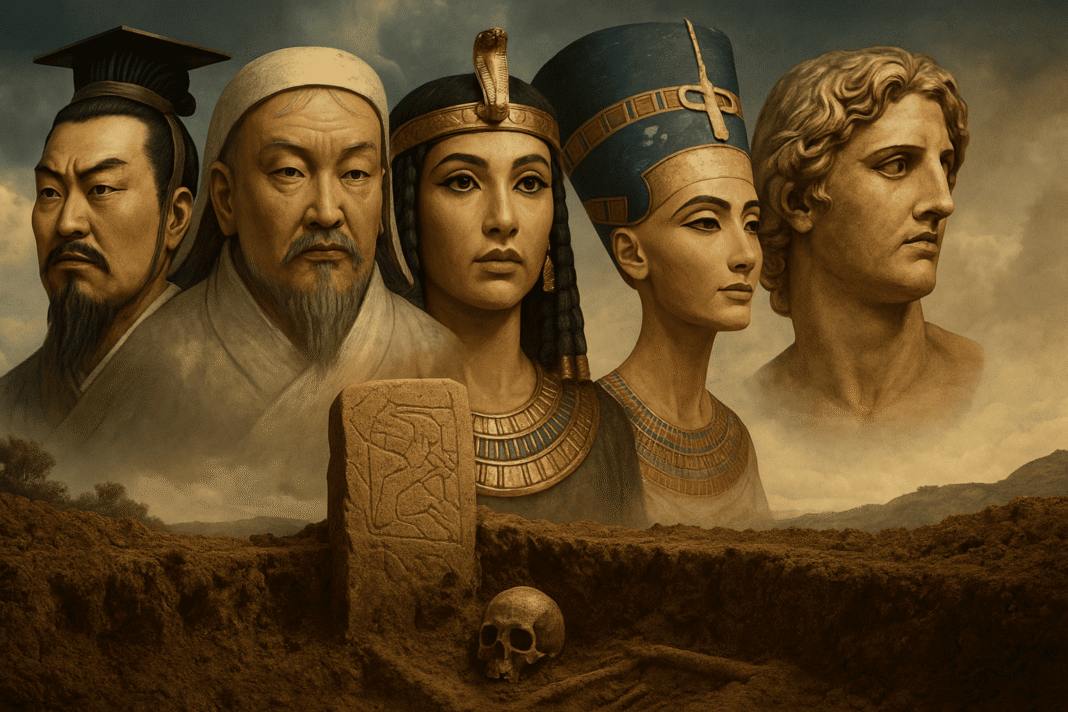
Some of history’s most important rulers took their secrets with them to graves that have become archaeological holy grails and remain a mystery, capitvating explorers, scholars, treasure hunters, and other professionals—as well as the general public—for centuries. What is fascinating about these lost tombs is that their absence has turned certain historical figures into something like a myth.
This might sound like an exaggeration, but rest assured it isn’t. When we can visit Napoleon’s tomb at Les Invalides or look into Tutankhamun’s golden burial chamber, these rulers become more human, finite, and real. On the other hand, emperors and queens of whom there is no trace left remain a living mystery for every generation that searches for them.
China’s first emperor and the mystery of his tomb
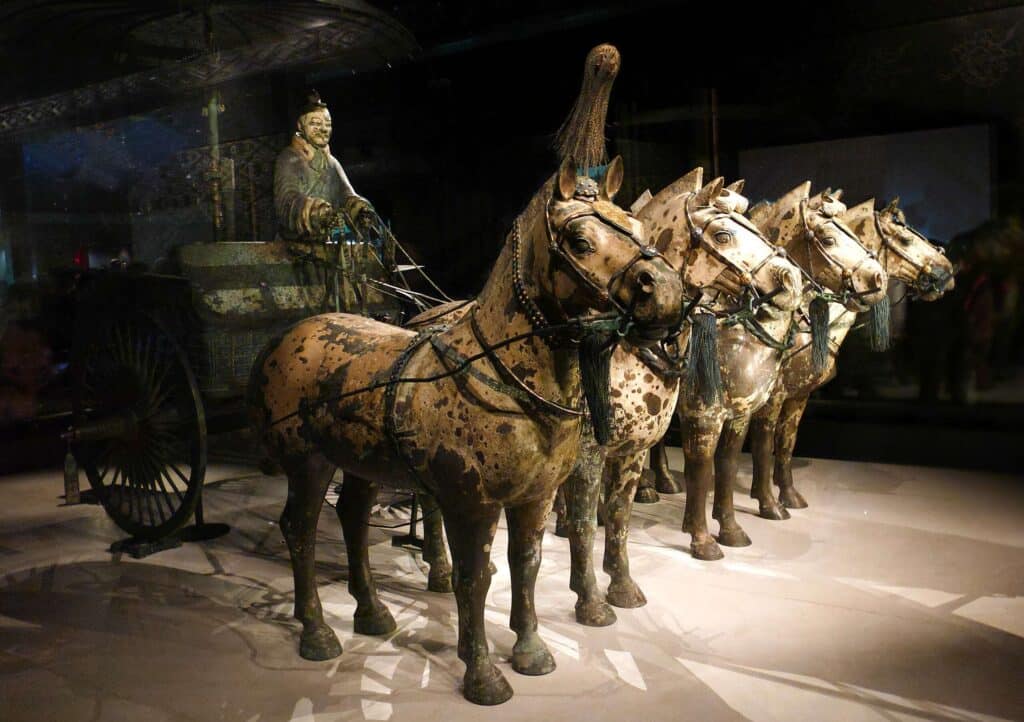
China’s First Emperor, Qin Shi Huang, lies somewhere beneath Mount Li, surrounded by his famous terracotta army. We know exactly where his tomb is—so as you can tell it is not the biggest mystery ever. However, there is an even greater story surrounding him. The real puzzle is why, after decades of archaeological advances, we still haven’t opened it and archaeologists continue to debate doing so.
The answer to this plausible question reveals how much archaeology has changed since the days of treasure-hunting explorers of the 19th and early 20th centuries. When researchers first excavated the terracotta warriors in the 1970s, they watched helplessly as the brilliant paint on the clay figures crumbled away within hours of exposure to air. It was a shocking lesson for archaeologists that, sometimes, the greatest discoveries require the greatest amount of patience.
Ancient historian Sima Qian wrote that the emperor’s tomb contains rivers of mercury and deadly booby traps waiting for those hasty enough to dare reveal his tomb. For centuries, scholars dismissed these accounts as literary exaggerations and nothing more than an urban legend. However, modern surveys detected dangerous amounts of mercury levels in the groundwater around the tomb, making the mystery real. Suddenly, those “mythical” death traps looked quite real, and archaeologists realized there was truth to what once had been deemed a laughing matter.
The mausoleum stretches 115 feet (35 meters) underground and covers an area thirteen times larger than the already massive terracotta pits. Opening it would require literally decades (if not centuries) of meticulous work and enormous resources, all while risking irreversible damage to artifacts that have survived over two thousand years. Hence, although we do know where the tomb of the First Emperor of China is, we also know its whereabouts remain deliberately unexplored.

Genghis Khan: The most legendary conqueror in the world
Genghis Khan is another historical figure whose tomb poses an entirely different challenge. While archaeologists debate whether to open Qin Shi Huang’s tomb, we can’t even agree on where the Great Khan is buried, bringing us back to the old dog mystery of the whereabouts of this man. What makes this story interesting is that this was exactly his goal.
The Mongol military machine that conquered vast lands from China to Eastern Europe was built on exceptional speed, discipline, and psychological warfare. Genghis Khan understood that mystery could be as powerful as any army. According to Marco Polo and other medieval sources, the Khan’s funeral was orchestrated like a military campaign designed to obliterate all traces of the burial site and leave all future generations wondering about what happened to this great man after his death.
The stories vary, but they share common elements of people trying to keep it as secret as possible. Some sources describe two thousand slaves being killed after the funeral, followed by the execution of their guards, adding to the mystery. Others speak of rivers diverted over the grave or thousands of horses stampeding across the site to eradicate any markings. Whether these tales are true or legendary myths isn’t really important, as what remains true is that the whereabouts of the tomb of Henghia Khan remain a mystery.
Most researchers believe the Khan lies somewhere in the Khentii Mountains of Mongolia, in an area known as Ikh Khorig—”the Great Taboo.” For centuries, only the Mongol royal family could enter this sacred region. Even to this day, the Mongolian government restricts access, viewing unauthorized archaeological work not just as scientifically questionable but as culturally offensive to their nation.

Cleopatra and Marcus Antonius
Egypt is undoubtedly a land of archaeological wonders that still guards some of its greatest secrets. Cleopatra VII—the famous last pharaoh, political mastermind, and legendary leader—died by suicide in 30 BC alongside her Roman lover Mark Antony. Ancient sources agree they were ceremoniously buried together, but their tomb has completely vanished from historical record.
This disappearance wasn’t accidental. When Octavian (later Augustus) conquered Egypt, he had many reasons to hide or destroy Cleopatra’s tomb. She remained a great symbol of Egyptian autonomy and strength, and her burial site could have become the epicenter of future rebellions. Better to let her memory fade into myth than risk it inspiring new uprisings was the Roman rationale.
The search for Cleopatra has led archaeologists on a scavenger hunt to numerous places. Much of ancient Alexandria now lies beneath the Mediterranean, submerged by the earthquakes and rising sea levels of over two millennia. Her palace, where she may have died, is definitely underwater. Could her tomb be there too?
Dr. Kathleen Martinez, a Dominican lawyer and archaeologist, has spent years on excavations at Taposiris Magna, a temple complex west of Alexandria. Her team has identified a wealth of clues, including coins with Cleopatra’s image, a mask possibly linked to Mark Antony, and, in 2022, a remarkable tunnel system stretching over half a mile beneath the temple and extending towards the Mediterranean Sea.
Traditional Egyptologists such as Zahi Hawass are skeptical, however. Ancient Egyptians rarely buried royalty in temples, it is argued. Nonetheless, Martinez believes Cleopatra and Antony were special cases—foreign rulers who might have adopted Roman burial customs. The debate continues, as the lost tomb of Cleopatra and Mark Anthony remains to be found.

Nefertiti and her mysterious vanishing
Another great mystery is the question of Queen Nefertiti’s tomb. The wife of the revolutionary pharaoh Akhenaten, she helped transform Egyptian religion, art, and politics during one of the most tumultuous periods of the nation’s history. Then, around the twelfth year of her husband’s reign, she simply vanished.
Did she die? Was she exiled? Did she continue ruling under a different name that remains unknown? Nobody knows for certain, and her mummy has never definitively been identified.
Egyptologist Nicholas Reeves sparked international headlines recently with his theory that Nefertiti lies hidden behind the walls of Tutankhamun’s tomb. Using high-resolution photographs, Reeves claimed to have identified the outlines of sealed doorways in King Tut’s burial chamber. He also suggested that the famous golden death mask might have originally been made for Nefertiti rather than the boy king.
Initial radar scans seemed to support Reeves’ theory, detecting what appeared to be metal and organic materials behind the walls. However, subsequent studies have been inconclusive, and many experts now remain unconvinced. The Egyptian government has been cautious about authorizing invasive exploration of one of its most famous tombs, based on what might be wishful thinking, keeping Nephertiti’s lost tomb a hidden treasure.

Attila and the theory of the moving river
Attila the Hun earned his nickname “the Scourge of God” by terrorizing the late Roman Empire. His death in 453 AD was as dramatic as his life—he died on his wedding night, possibly from a nosebleed or alcohol poisoning. But it’s what happened next that has resulted in one of archaeology’s most fascinating mysteries.
Many believe that Attila’s body was sealed in three nested coffins: iron, silver, and gold. To hide his grave from enemies who might have wanted to dishonor it, his warriors supposedly diverted a river, buried him in the riverbed, and then restored the waterway to flow over his tomb to keep him hidden for eternity. As a final precaution, they also killed everyone involved in the burial to ensure absolute secrecy, a story similar to that of Genghis Khan. The pattern is clear: If your enemies can’t find your body, they can’t humiliate it or use it as a symbol against your people.
Modern searches have focused on Hungary and the surrounding region. Search efforts are particularly focused on the Pillish Mountains, as it is believed they might be part of Attila’s lost capital. Nonetheless, much like Alexander the Great’s lost tomb, most experts believe Attila’s grave will only be found by chance—if ever.
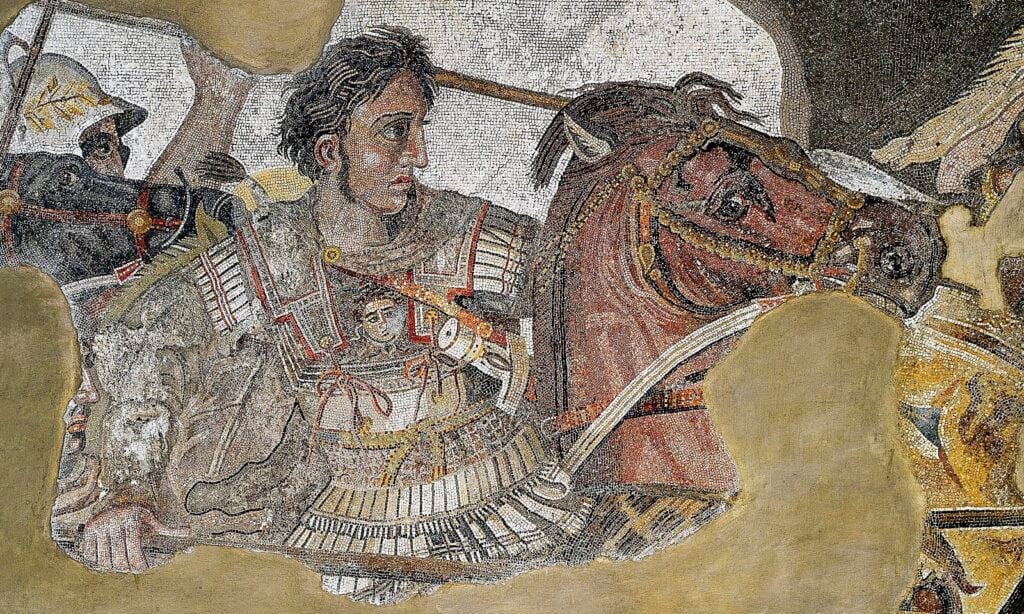
The lost tomb of Alexander the Great
Probably the most important question when it comes to lost, forgotten, and forbidden tombs pertains to the whereabouts of Alexander the Great’s burial site, which has frustrated historians and archaeologists for centuries. Unfortunately, however, we’re no closer to an answer today than we were a century ago.
What we know for certain is that Alexander died in Babylon in 323 BC, and his body was mummified according to Egyptian customs. From there, things get interesting and slightly chaotic. The corpse of this Great Greek warrior didn’t stay put but was transported first to Egypt’s Valley of the Kings and then later moved to a purpose-built mausoleum, the Soma in Alexandria, probably around 305 BC.
For several centuries, this wasn’t exactly a secret. The tomb was popular enough that Roman Emperor Augustus made a pilgrimage there to pay his respects to the great Macedonian leader. Ancient writers have made mention of this, which is how we are aware of this fact today. The problem is that sometime around 500 AD, there were, mysteriously, absolutely no more references to the tomb.
Nobody knows what actually happened, but theories, as we can all imagine, come and go. One of these suggests that the now lost tomb’s location was so well-known that writers and chroniclers didn’t bother making a record of it—similar to the way we don’t include directions to our local McDonald’s because “everyone knows where it is.”
Another theory suggests that early Christians deliberately destroyed or hid it to stop pagan worshiping that was probably taking place there. There’s even a theory that priests hid the tomb during the Alexandrian Crusade in 1365 in trying to protect it from incoming crusaders.
The problem with finding Alexander’s tomb today is that modern Alexandria sits directly on top of the ancient city. Any serious excavation would mean disrupting a massive megalopolis, tearing up busy streets, and displacing thousands of residents.
Then there’s the water problem. Ancient maps suggest that much of Alexandria’s royal quarter, including possibly the Soma itself, now lies underwater. Rising sea levels over the past 1,500 years have swallowed up significant portions of the ancient city, so there is a theory that Alexander’s lost tomb might possibly be underwater.
Some archaeologists, such as Egypt’s former antiquities minister Zahi Hawass, remain convinced the tomb will eventually turn up. Most experts, however, believe this will be a purely coincidental occurrence. Until then, Alexander’s final resting place remains one of archaeology’s greatest mysteries.
What connects all these lost tombs is how they’ve changed the way we think about archaeological exploration. The extreme secrecy surrounding these tombs—often involving the killing of witnesses—is proof that the road to discovery remains challenging.