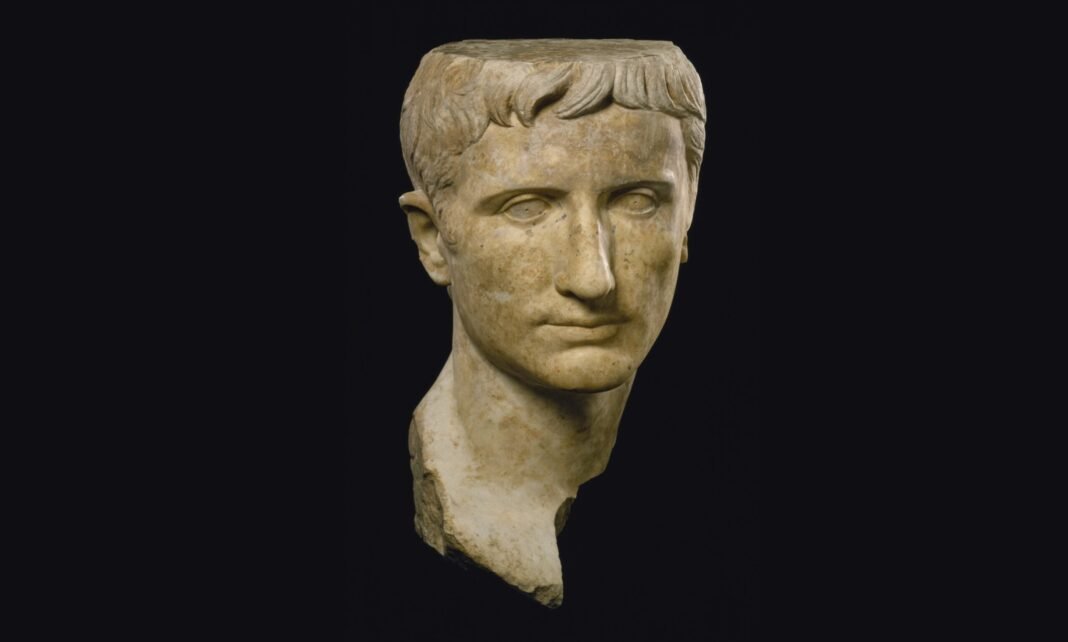

Of all the things we know about Rome, the story of its first emperor, Augustus, is the one that the Roman Empire celebrated above all others.
For the Romans, Augustus was their savior, the man who ended decades of bloody civil war and ushered in an era of prosperity and peace. He was seen as the chosen one, the leader who could solve more problems than anyone before him.
However, over a century later, the famous historian Tacitus told a different story. He looked past the common beliefs that Augustus was nearly a god, deserving of marble monuments and official recognition. Tacitus sought to uncover the uncomfortable truth about how Augustus actually built the Roman Empire, challenging decades of official narratives and deeply held beliefs. These stories had led everyone to believe that Augustus was the kind of leader who appears only once in a lifetime.
Tacitus attempted to change people’s beliefs of Augustus
It is undeniable that Augustus was a master of public relations, which helped him build a legacy that lasted for millennia. He knew how to present himself as the humble restorer of the Republic, a leader who simply guided the state back to the traditional values that had made Rome great. His own account of his life, the Res Gestae, is a brilliant autobiography, although it reads more like propaganda, listing his achievements and portraying him as a reluctant hero who was unable to resist the call of fate.
However, Tacitus did not accept this narrative. In his masterpiece, the Annals, he examines every major milestone of Augustus’ reign to show that the man was not what the public believed. He presents Augustus not as a savior but as a highly cunning operator who understood that power was everything. Tacitus argues that by providing stability and cheap food to the masses, Augustus effectively bribed the Roman people with comfort, trading their freedom for security and a false sense of prosperity. The peace he brought, the famous Pax Romana, was not a gift but a transaction with a very high price: the liberty of Rome and its people.

Power, propaganda, and the Imperial family
So how did Augustus pull off such brilliant propaganda? Tacitus shows us. He explains how Augustus gradually consolidated all the essential powers of the state into his own hands, including military command, legal authority, and religious leadership.
Augustus did all this while maintaining the illusion that the Senate still held power, preserving the all-important Roman ideals. It was a quiet transfer of power, almost like a non-violent revolution, which made it subtle and all the more effective. Tacitus also reveals the machinations of the imperial court, giving voice to the dark rumors surrounding Augustus’ family during his reign, particularly the “convenient” deaths of his grandsons and potential heirs.
These events hint that the seemingly peaceful and harmonious domestic life of the emperor’s household was far darker than even his harshest critics suggested. For Tacitus, Augustus’ entire project rested on a foundation of carefully managed appearances. The clash between the official narrative—that Augustus was a divine leader restoring Rome’s greatness—and a historian’s critical perspective offers a lasting lesson on power, perception, and control still relevant today.
Augustus created a model for autocratic rule that leaders have been copying ever since: control the official narrative, provide security, and frame your power as a duty rather than ambition. If it sounds familiar, it’s probably because it is. On the other hand, Tacitus equips us with the tools to see through it. His insistence on questioning motives and looking beyond the official account is the essence of critical thinking—and what we would now call investigative journalism.
He reminds us that history is an ongoing argument and that everything depends on perspective. In an age saturated with political spin and social media narratives, his work feels more relevant than ever. He teaches us to be skeptical, to ask difficult questions, and to remember that the most compelling stories are often the ones we should examine most closely.