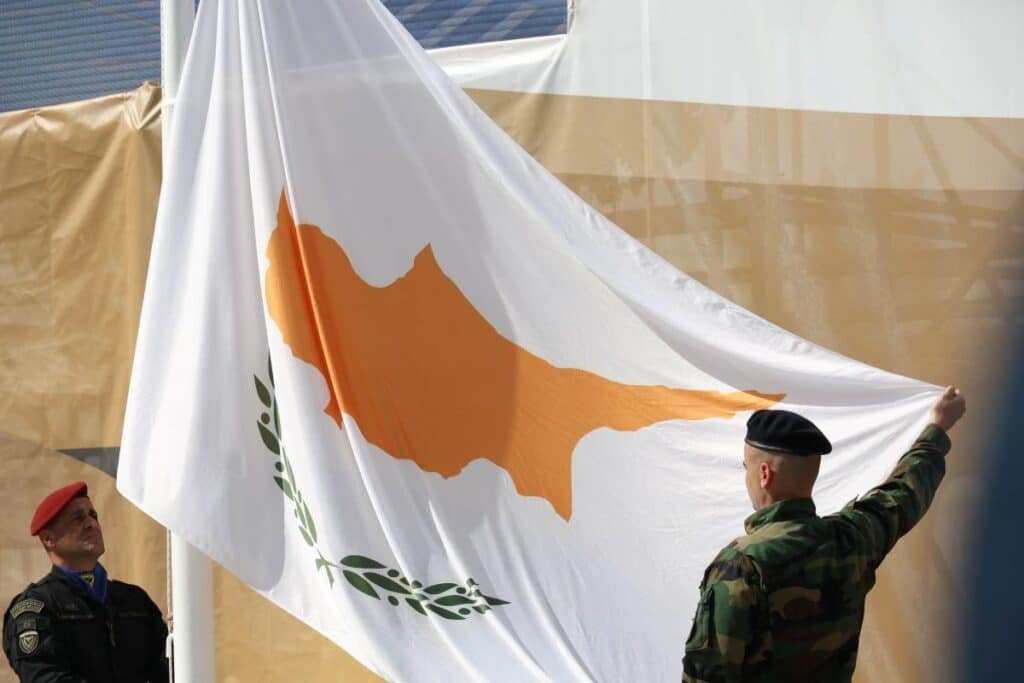
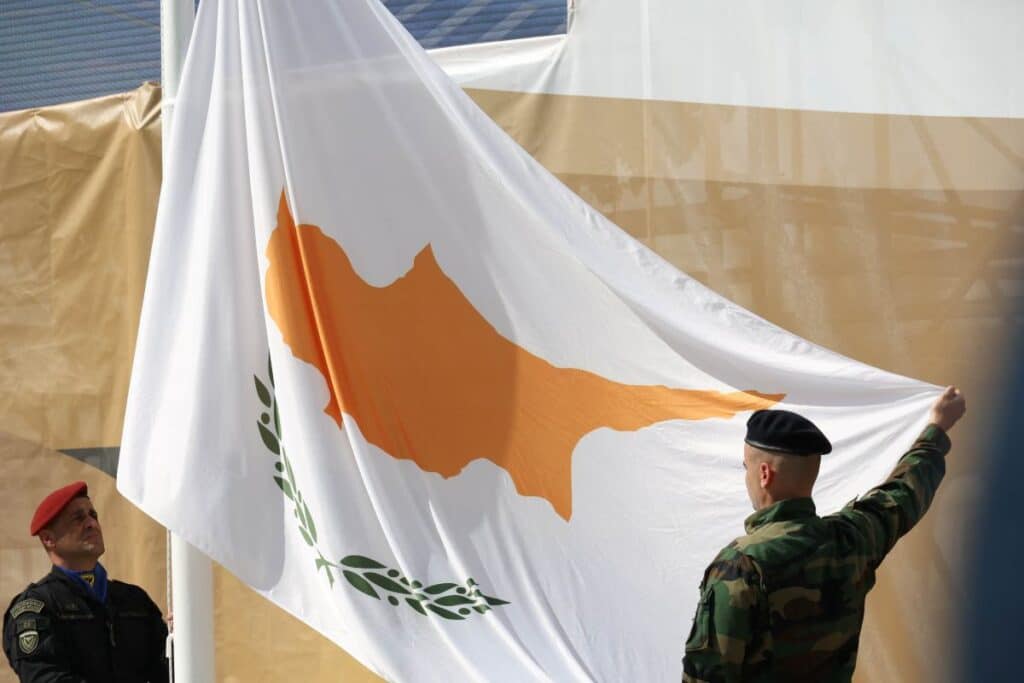
The flag of the Republic of Cyprus, a copper-colored outline of the island above two green olive branches on a white field, shows a map of the island itself. It was designed in 1960 by a Turkish Cypriot art teacher, İsmet Güney, and more than four decades later he said he had never been paid for it.
Güney, who died in 2009, is also credited with designing the young republic’s coat of arms and its first banknotes, the Cyprus pound. Yet his name is little known outside Cyprus, and the flag he drew remains one of the island’s most visible symbols.
A flag that could not be blue or red
Cyprus became independent from Britain on August 16, 1960, under the 1959 Zurich and London agreements between Britain, Greece and Turkey. The Republic of Cyprus was proclaimed that day, with Greek Orthodox Archbishop Makarios III as president and the Turkish Cypriot leader Fazıl Küçük as vice president.
The new state’s constitution set strict terms for its flag. Article 4 required that “the Republic shall have its own flag of neutral design and colour, chosen jointly by the President and the Vice-President of the Republic.” In practice that ruled out blue and red, the colors of the Greek and Turkish flags, as well as a cross or a crescent.
Accounts differ on how the design was chosen. Several describe a design competition held in 1960, which Güney’s entry won. Others say the proposal reached Makarios through a school teacher carrying a message from Küçük. All agree that Makarios selected Güney’s design with Küçük’s consent, and the new flag of neutral design came into use on August 16, 1960.
Copper and olive branches
Güney’s answer was a white flag bearing a silhouette of the whole island. The map was meant to be the color of copper, the metal long associated with the island’s name. Copper made Bronze Age Cyprus a major Mediterranean trade hub, and in that era its mines produced more copper than any others in the Mediterranean.
Below the map, two crossed olive branches were meant to symbolize peace between the Greek Cypriot and Turkish Cypriot communities. The design has changed only slightly since. In April 2006, the official shades of copper and green were revised and the proportions were changed from 3:5 to 2:3.
The teacher behind the design
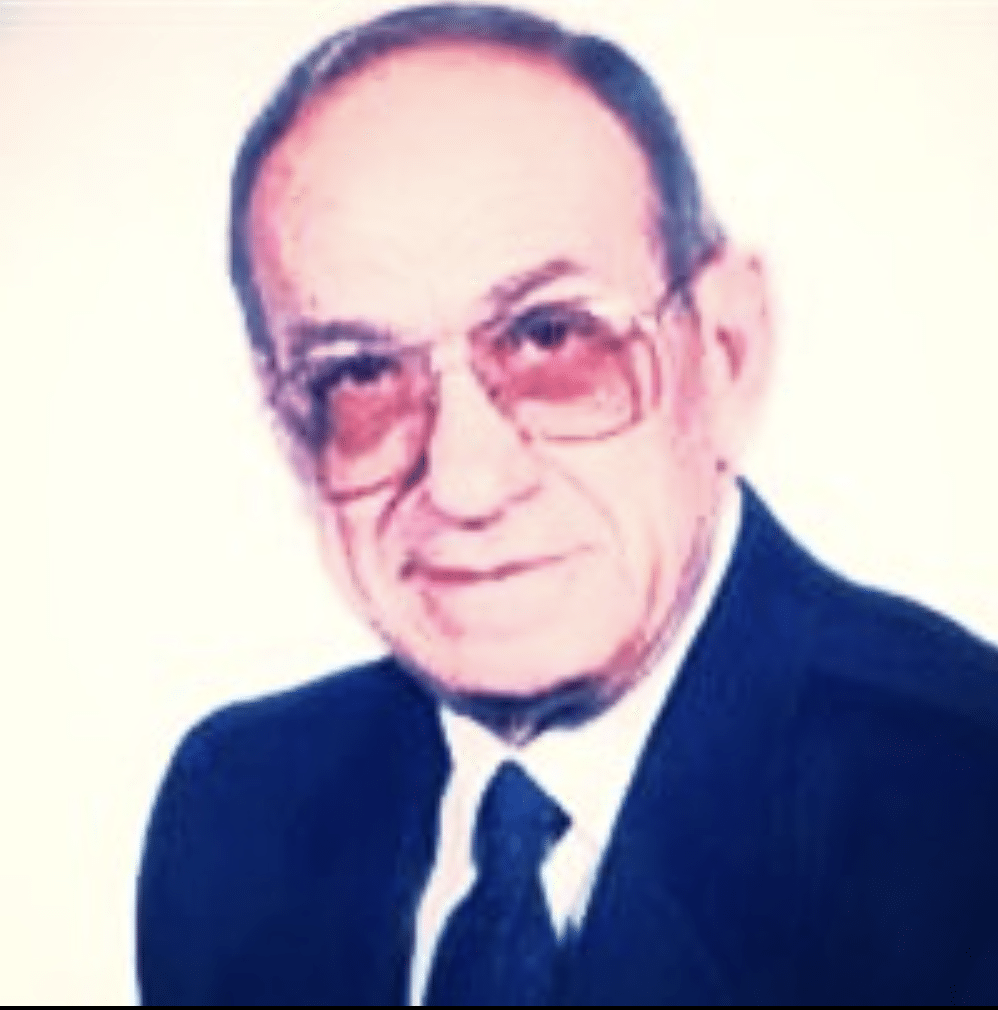
Güney was born in Limassol on July 15, 1923, under British rule. He began painting in high school and, after graduating from the Teachers’ Training College, became an art teacher in 1948. He taught art and history at the Turkish boys’ lyceum in Nicosia until 1977.
In 1947, he became the first Turkish Cypriot painter to hold a solo exhibition. He later worked with the Turkish impressionist İbrahim Çallı, studied at Stranmillis College in Belfast on a scholarship in 1967 and held a major retrospective in Nicosia in 1986. He was also known as a cartoonist.
A claim for £20 a year
In June 2006, Turkish Cypriot newspapers reported that Güney, then in his 80s, was seeking payment from the Republic of Cyprus, 46 years after Makarios chose his design. Güney said Makarios had promised him £20 ($27) a year for designing the flag, but that he had never received the money.
He sought the arrears, which would have come to £920 ($1235) by then, along with compensation for the use of his design under copyright. He hired a Greek Cypriot law firm to pursue the case and said he was prepared to take it to the European Court of Human Rights if necessary.
Andros Kyprianou, then spokesman for the left-wing party AKEL, responded that if such an agreement had existed between Güney and Makarios, the government should look into it.
Whether the claim was ever settled is not clear. Güney died of cancer in the north of Nicosia on June 23, 2009, at the age of 85. Makarios himself had died in 1977, three years after the coup and Turkish invasion that divided the island.
The flag Güney designed for still flies over government buildings in the south, while the occypied-by-Turkey north, where he lived and died, flies flags of its own.