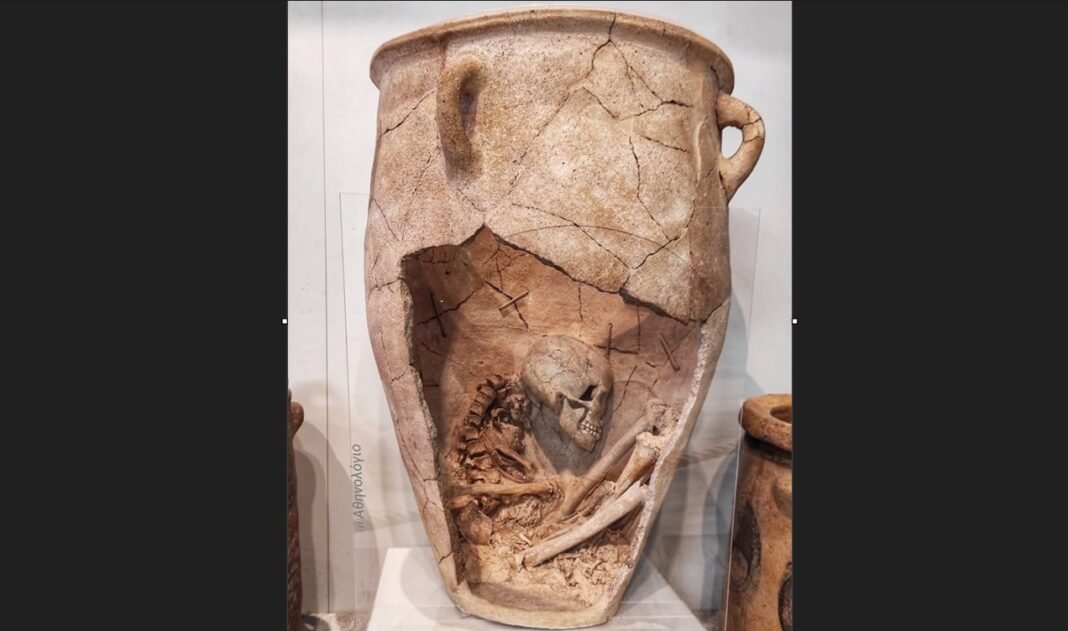

The Minoan pithos burial is one of the most profoundly moving exhibits in the Heraklion Archaeological Museum.
It is a 3,700-year-old clay vessel containing the skeletal remains of a human being. This artifact is a pithos, a large storage jar typically used for grains or oil, repurposed here as a final resting place.
The burial was discovered in the ancient cemetery of Ai-Lias at Knossos. It dates back to the Middle Minoan IIIB – Late Minoan IA period (approximately 1650–1500 BC). Measuring roughly 1.40 meters in height, the jar has been preserved with its side open, allowing modern viewers to witness the intimate manner in which the deceased was laid to rest.
The symbolism of the fetal position
The person within the jar was placed in a tight fetal position. Archaeologists and historians often interpret this specific posture as highly symbolic. By placing the deceased back into a rounded clay vessel in the same position they held before birth, the Minoans essentially transformed the pithos into a symbolic womb.
This practice suggests a belief in a cycle of life, where the “mother earth” receives the body to prepare it for a future rebirth or a journey into the next world.
A window into the Minoan soul
While many archaeological finds focus on the grandeur of palaces or the intricacies of jewelry, this “humble” pithos burial offers a direct, emotional connection to the individual Minoan experience. It demonstrates that even thousands of years ago, the act of burial was a deeply considered process intended to provide the deceased with “companionship” and protection for eternity.
Today, the exhibit remains a favorite for visitors because it strips away the distance of time. It presents the human form not as a mere relic, but as a person who was once cared for and sent into the unknown with hope and reverence.
Related: Greece Builds Museum for 7th Century BC Shackled Skeletons