In the heart of the Ancient Agora of Athens, nestled against the northern boundary, once stood a structure that served as the city’s intellectual and visual soul: the Stoa Poikile, or “Painted Porch.”
Built around 460 BC, this building was more than just a sheltered walkway. It was a crossroads of history, a public art gallery of unparalleled fame, and the literal birthplace of one of the world’s most enduring philosophies.
A masterpiece of propaganda and myth
The Stoa earned its name from the monumental panel paintings that adorned its interior walls. Unlike many temples of the era, the Stoa was a secular space, designed for the Athenian public. The paintings—executed by master artists like Polygnotos and Mikon—were not mere decorations; they were a sophisticated blend of history and mythology designed to cement Athenian identity.
The most celebrated of these was the Battle of Marathon. It depicted the Athenians’ improbable victory over the Persians in 490 BC, shown in three cinematic stages: the initial charge, the desperate struggle by the ships, and the Persian retreat into the marshes.
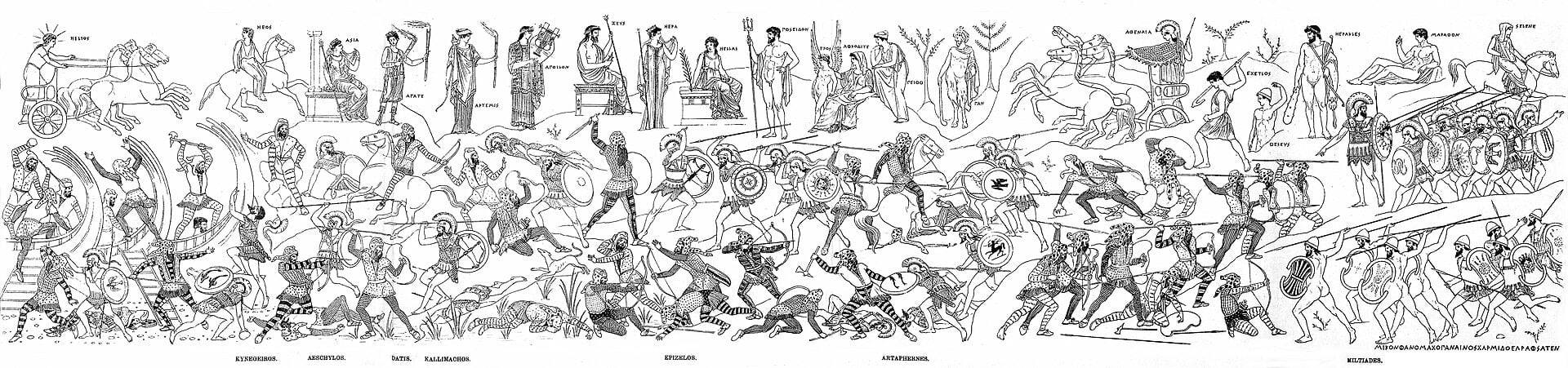
What we know about the Battle of Marathon painting comes primarily from the detailed descriptions of the ancient traveler Pausanias. Modern scholars and artists have created reconstructions to visualize how this massive, three-stage narrative would have looked to an ancient Athenian.
Alongside this historical grit were mythological parallels, such as the Amazonomachy (the battle against the Amazons) and the Sack of Troy. By placing the victory at Marathon next to these legendary tales, the Athenians were making a bold claim: their recent triumphs were as divinely significant as the heroic deeds of the Iliad.
The birth of Stoicism
While the walls spoke of war, the air within the Stoa eventually filled with logic and ethics. Around 300 BC, Zeno of Citium began teaching his students beneath its shaded colonnade. Because they gathered at the “Stoa,” they were dubbed the Stoics.
The environment of the Stoa Poikile was perfectly suited for this philosophy. Stoicism emphasized resilience, virtue, and the mastery of one’s own mind in a chaotic world. To Zeno and his successors, there was no better place to teach these principles than a public porch surrounded by the physical reminders of past struggles and the bustling, unpredictable energy of the marketplace.
Archaeological echoes
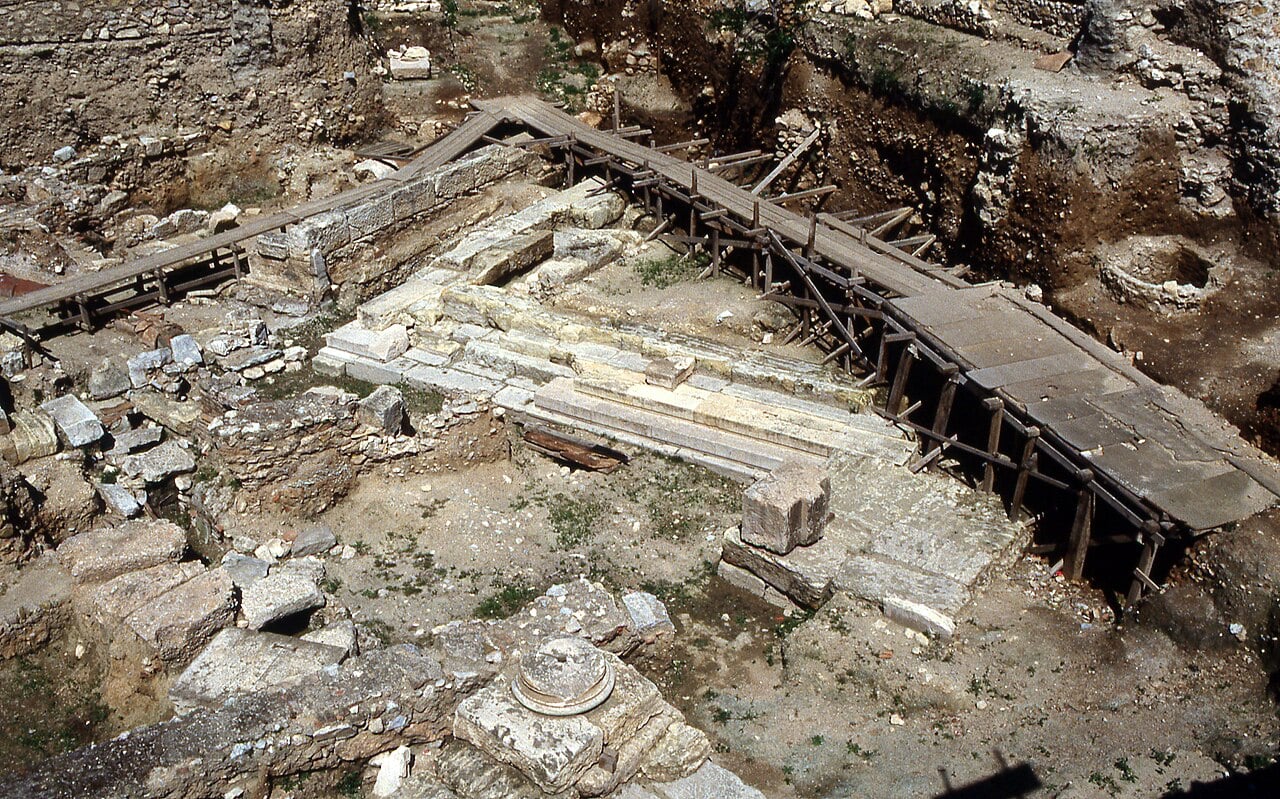
For centuries, the exact location of the Stoa was a mystery, buried beneath the modern shops of the Monastiraki district. It wasn’t until the American School of Classical Studies began excavations that its foundations were finally revealed.
The artifacts recovered from the site provide a visceral link to the past. The most striking find is a Spartan bronze shield, captured by the Athenians at the Battle of Pylos in 425 BC.
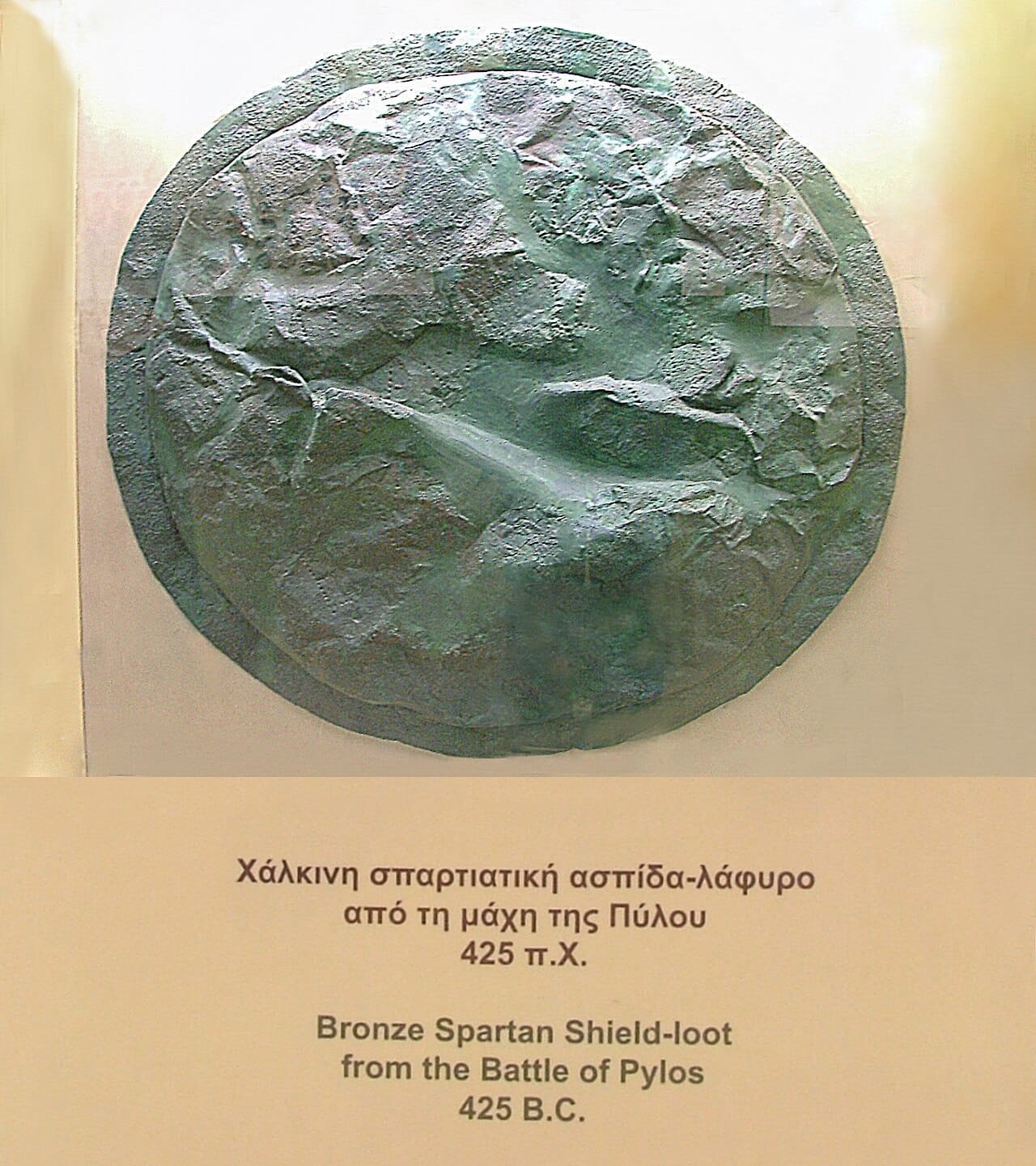
Still bearing its punched inscription, it serves as a rare, physical “receipt” of a victory mentioned by the historian Thucydides.
Excavators also found fragments of the building’s architecture, revealing that it was a pioneer in design, being the first known Athenian building to combine the sturdy Doric exterior columns with the more elegant Ionic interior style.
Visiting the site today
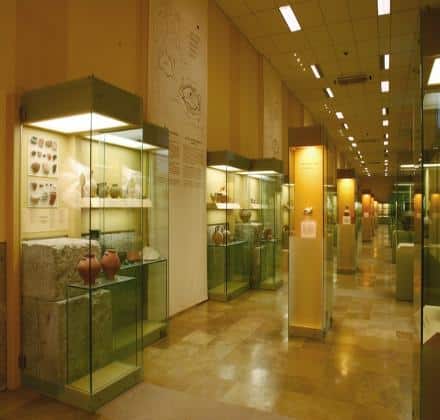
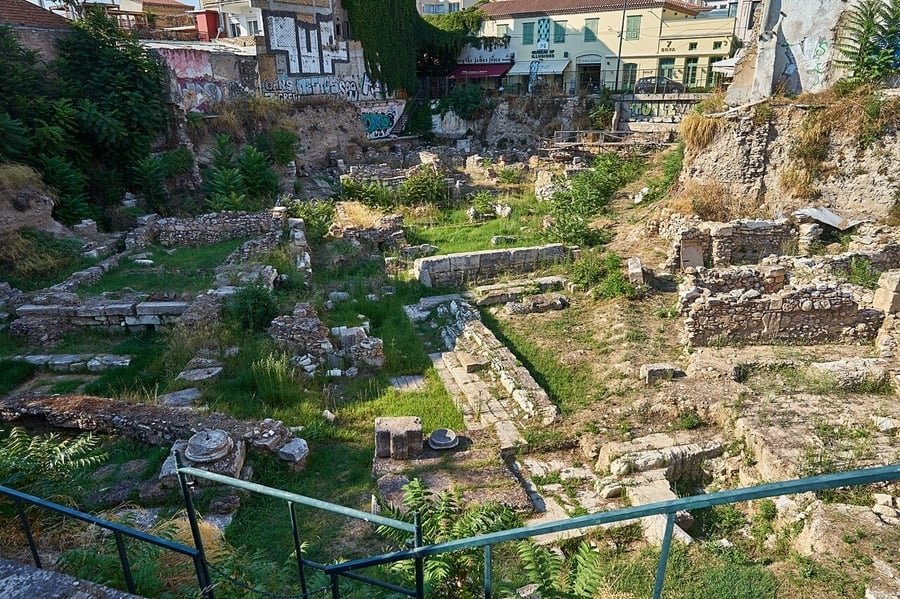
Today, the ruins of the Stoa Poikile sit behind a protective fence near the Athens metro tracks. While only the foundations and a few lower column drums remain visible, their proximity to the Stoa of Attalos (which houses the Museum of the Ancient Agora) makes it a vital stop for any history enthusiast.
Walking through the museum, you can see the original “hawksbeak” moldings with traces of red and blue paint still clinging to the stone. These fragments, along with the Spartan shield and the “ostraka” (pottery shards used for voting), bring the vanished world of the Painted Porch back to life, reminding us that this was once a place where the greatest minds and most fearsome warriors of antiquity stood side by side.