
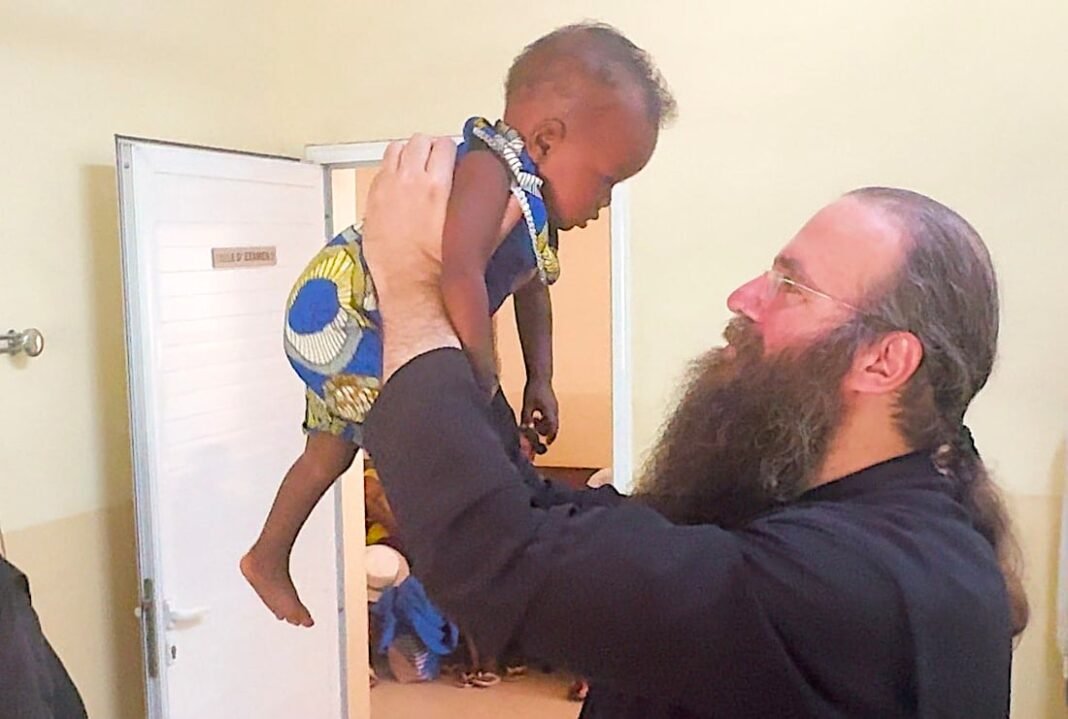

Deep in the arid, sun-scorched plains of South Madagascar, a quiet revolution of dignity and survival is unfolding, led by an Orthodox bishop from Sparta, Greece. For the past seven years, Bishop Prodromos of Toliara and South Madagascar has acted as a modern-day Good Samaritan in one of the most underdeveloped and forgotten corners of our planet. In this exclusive, on-the-scene report, Greek Reporter travels to this remote region to witness a miracle of solidarity firsthand.
He has quietly executed a titanic humanitarian mission under the jurisdiction of the Patriarchate of Alexandria. Translating faith into action and charity into infrastructure, he stated with profound humility to Greek Reporter: “I am merely a steward of your love, and I try to manage it in the best possible way.”
Bishop Prodromos’s journey to the southernmost tip of Madagascar began in the highlands of Laconia, Greece. At just 18 years old, he entered the Holy Monastery of Anargyroi Parnon as a novice, tonsured as a monk in 2005. After 13 years of monastic life, his calling to serve led him to Cameroon, where he labored alongside Metropolitan Grigorios.
“He is a man to whom I owe so much for who I am today,” Bishop Prodromos reflects. “He taught me how a mission should properly function within Africa, how the Orthodox Church ought to be present, and how we should view things.”
His return to Sparta to assume the abbacy of his home monastery proved short-lived. On November 26, 2018—the feast day of Saint Nikon the “Preacher of Repentance,” the patron saint of Sparta—a single phone call altered his destiny forever:
“My phone rang, and I heard a familiar voice announcing my election as Bishop of Toliara and South Madagascar. For me, it was completely sudden, entirely unexpected. Shortly after, I received a call from the Patriarch of Alexandria, His Beatitude Theodoros… And so, with great humility and in obedience, I came to Madagascar without knowing absolutely anything.”
With disarming candor, the Bishop recalls his first instinct:
“I thought about typing the name into Google to see exactly where this place was… But my next thought was that if I saw something I didn’t like, I would be discouraged. And if I saw something beautiful that didn’t match reality when I arrived, I would be disappointed again. So, I left everything in the hands of God.”
The shocking reality of Madagascar
He was ordained in January 2019 in Cairo, at the historic Church of Saint Nicholas—the very temple where Saint Nektarios once served. Arriving in Madagascar, the shock of reality was profound. The grueling two-day journey from the capital to the South exposed a dramatic geographic and economic divide. Unlike the lush, water-rich North, the South is arid, barren, and populated by humans and livestock visibly emaciated by hardship.
In this vast region, home to 17.5 million people, the very concept of daily survival is redefined by terms that would seem utterly unimaginable to the Western world.
Here, the average annual—not monthly—income of a human being barely reaches 200 to 250 euros. State infrastructure is virtually non-existent: there is no free public education, nor is there free healthcare. People live in traditional huts crafted from wood, grass, and mud, entirely cut off from electricity. The rhythm of life is dictated solely by daylight; once the sun sets, the nights are surrendered to an absolute, deep darkness.
However, he did not start in a vacuum. He built upon the foundations laid by the late Bishop Nektarios Kellis—the pioneer of the local Church who tragically lost his life in the 2004 Chinook helicopter crash over Mount Athos—and his successor, Metropolitan Ignatios. “We found a spiritual foundation, and for that, we are deeply grateful,” he notes.
The triad of relief: water, education, and healthcare
Recognizing that a spiritual mission cannot exist without addressing the fundamental physical needs of suffering people, Bishop Prodromos prioritized his actions. His first task was establishing a seminary to train local clergy, enabling them to bridge Orthodox teaching with local culture.
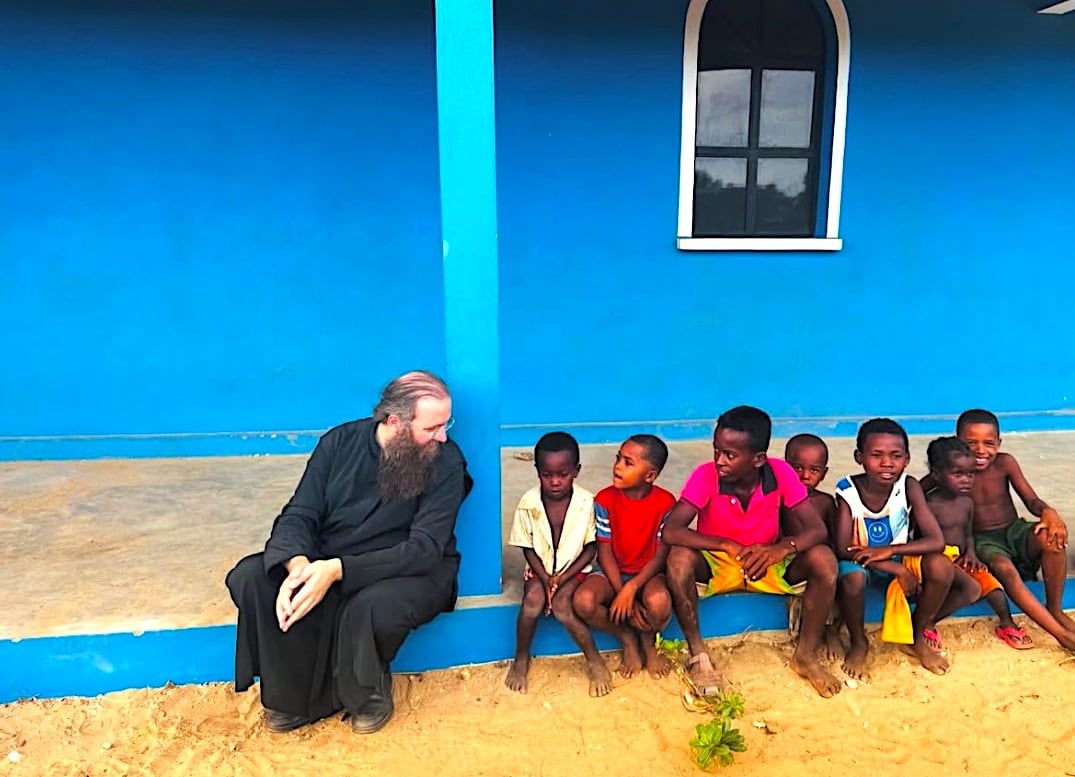
Next, he turned to education. In a region where state schools charge tuition fees—rendering education an impossible dream for large families—the Diocese has constructed 12 to 14 schools over the years, providing completely free education to 7,500 students. Concurrently, they operate a computer science school with 450 graduates and an English language school, both offering state-recognized diplomas.

“The hardest part is maintaining these schools, since there is no profit to cover the teachers’ salaries,” he explained to Greek Reporter, highlighting the constant struggle to secure funding.

Orthodox mission in Madagascar provides free health care
In healthcare, the Diocese’s achievements border on the miraculous. With the crucial financial backing of the Cyprus Health Foundation, a state-of-the-art polyclinic was established. Today, it employs a staff of 35, including 30 doctors and nurses across all medical specialties.
The clinic features a dental office, an ophthalmology ward, a hematology lab, a radiology center, and ultrasound equipment, alongside two rural clinics in remote villages. Every week, approximately 3,000 people receive free medical examinations, treatments, and medication.
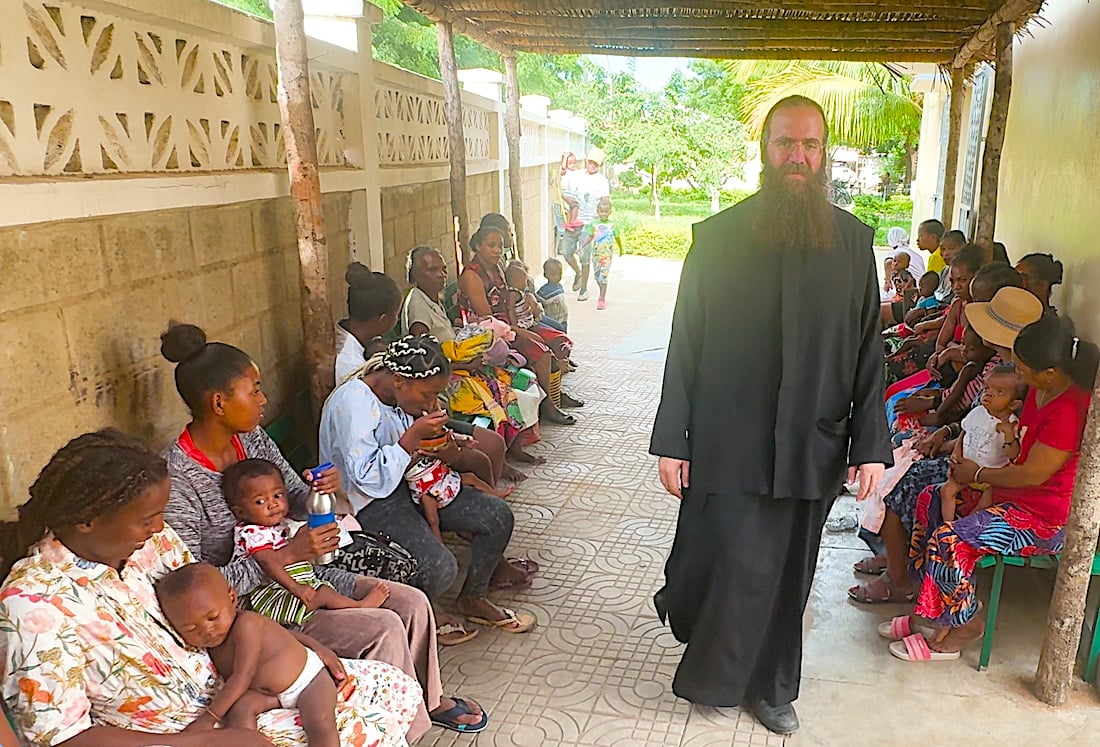
Father Anastasios, a specialized doctor in internal and tropical medicine, told Greek Reporter that many travel long distances on foot—receive consultations, laboratory analyses, X-rays, ultrasound tests, and all necessary pharmaceuticals at zero cost.
Under his supervision, a dedicated team of six medical doctors alongside nurses, pharmacists, and lab technicians manage an average of 150 patients a day. They battle severe, chronic illnesses like diabetes, hypertension, coronary artery disease, and cancer, alongside rampant tropical afflictions including malaria, schistosomiasis, and severe diarrheal diseases.
The clinic runs a vital parallel project supporting roughly 600 malnourished children—many of them orphans or from destitute families—who arrive twice a month to receive life-saving milk and Koba, a specialized multi-vitamin porridge.
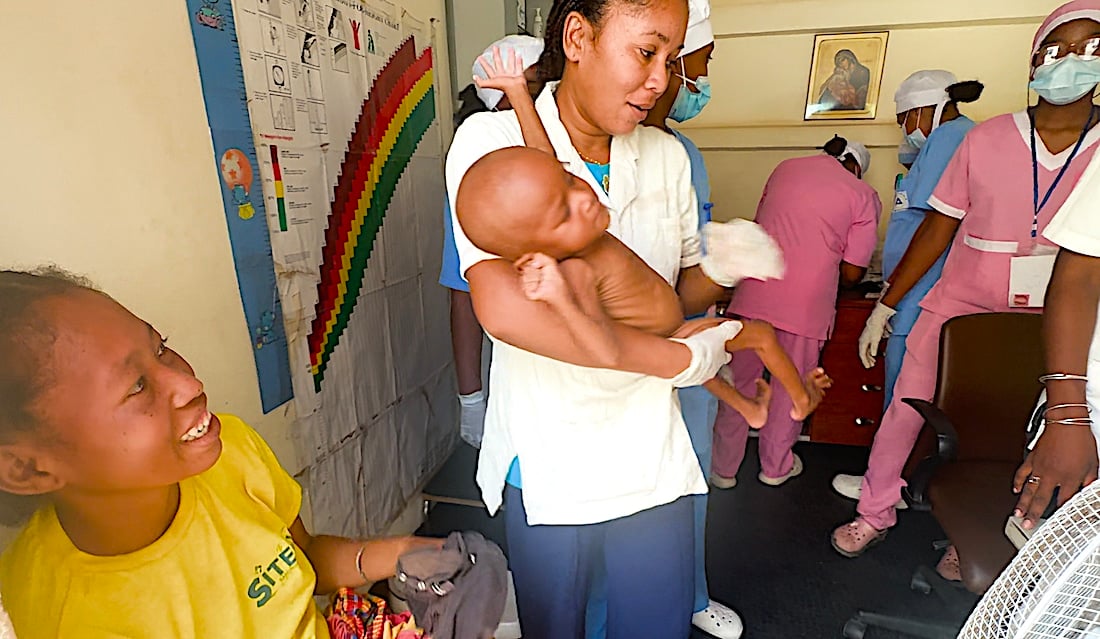
Professor Ariel, is a university professor and specialist in general practice, works alongside Father Anastasios and a team of skilled physicians. He told Greek Reporter that the clinic has become highly celebrated across the region for its exceptional care and absolute accessibility. The demand is so profound that patients frequently travel massive distances, arriving a full day early and sleeping outside overnight just to ensure they can be seen the following morning.
For critical, complex cases that cannot be treated on-site, the clinic acts as a crucial coordinator. When patients require advanced surgeries or specialized oncology care, the Father and his team regularly organize and finance transfers to the major public hospitals—including long-distance medical transfers to the capital, Antananarivo (Tana), for advanced leukemia testing and chemotherapy.
The Diocese has drilled and opened 25 wells
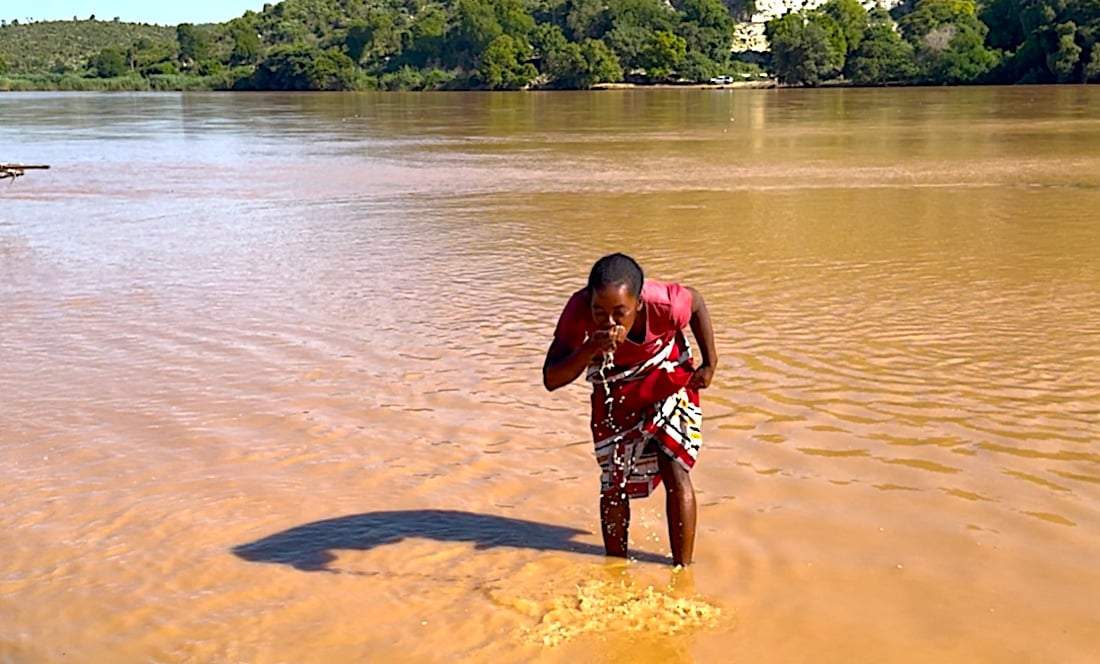
The scarcity of water remains the South’s greatest plague. Because it rains only about five times a year—and usually only during devastating cyclones—water is valued like gold.
“The water flowing through the rivers is brown; it is essentially mud-water… Yet, people drink from it, cook with it, bathe in it, and the animals drink from it too,” Father Prodromos describes vividly.
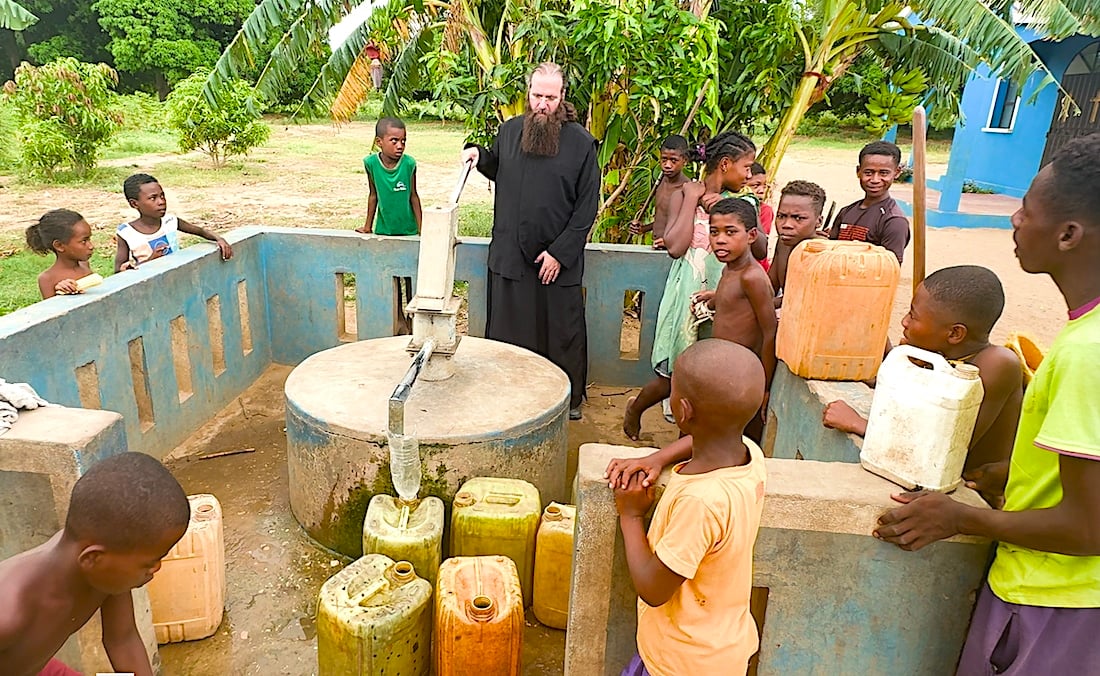
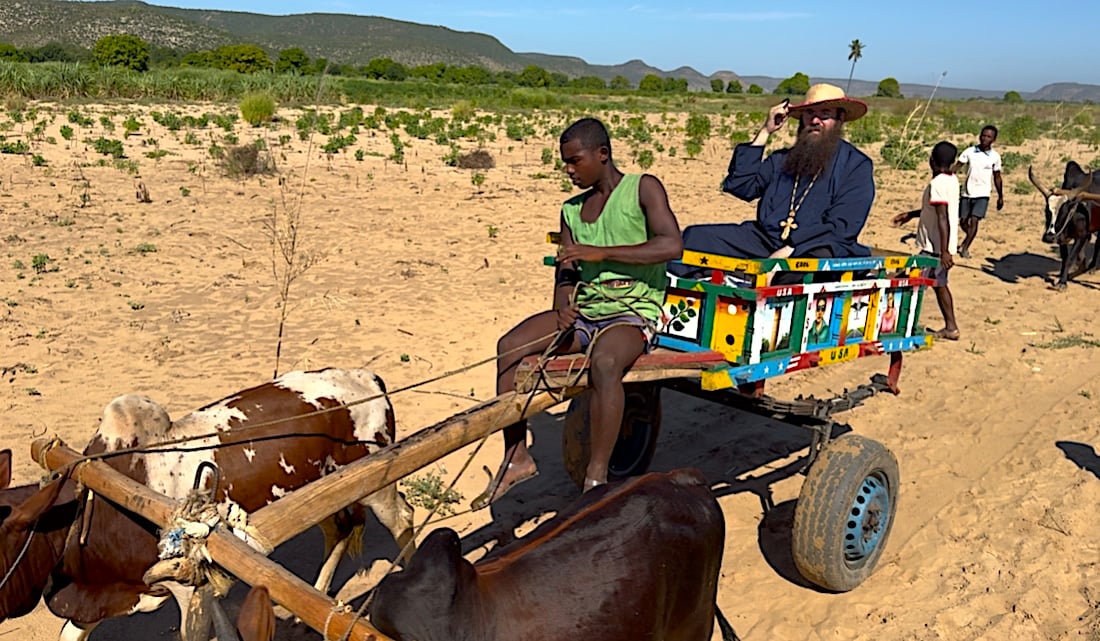
To combat this humanitarian crisis, the Diocese has drilled and opened 25 wells, bringing clean drinking water to numerous villages. Additionally, a diocesan water truck transports 12 tons of clean water daily to built-in reservoirs across 12 remote settlements. Accessing these villages is a true calvary; roads are virtually non-existent, and oxcarts are the only local transport. “A distance of 60 kilometers takes us 3 hours to drive, and 100 kilometers requires 6 hours,” the Bishop notes.
“I was in prison and you visited me”
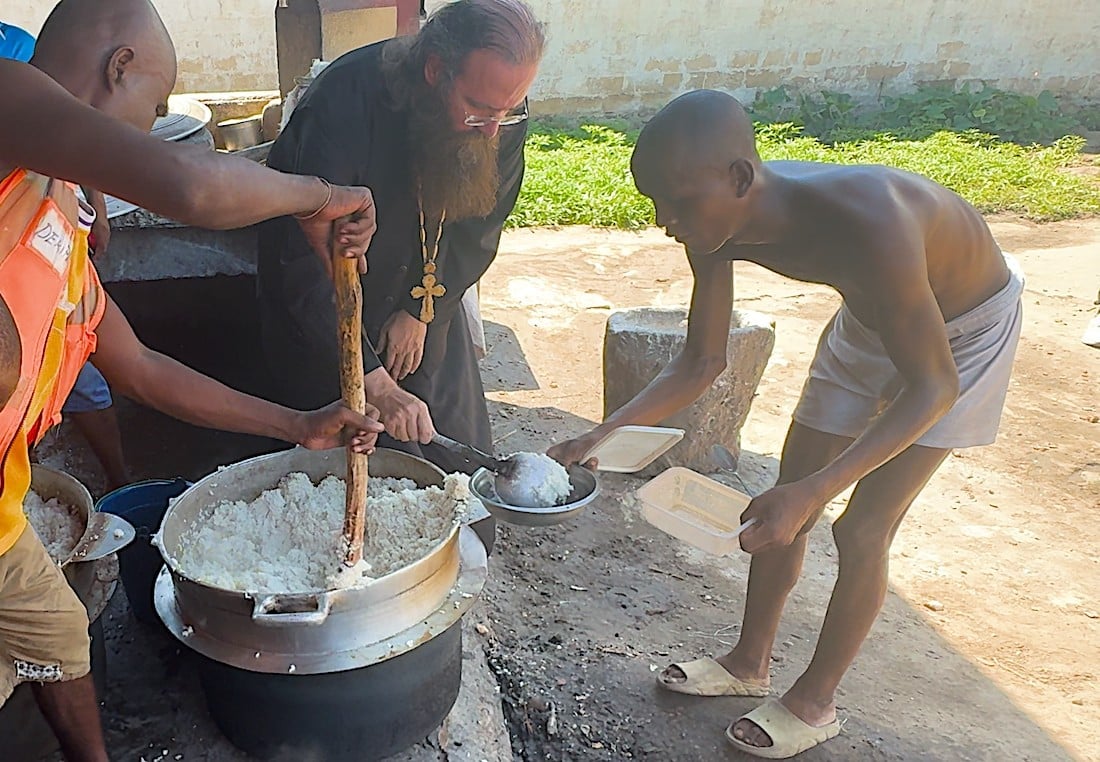
The Diocese’s philanthropic reach extends behind the bars of Toliara’s local prison, where living conditions are medieval. Five years ago, the prison director approached the Bishop in desperation. Due to a complete lack of state funding for inmate nutrition, five prisoners were dying of starvation every single week. In Madagascar, if an inmate has no relatives to bring them food or money to buy ingredients, they are essentially condemned to starve.
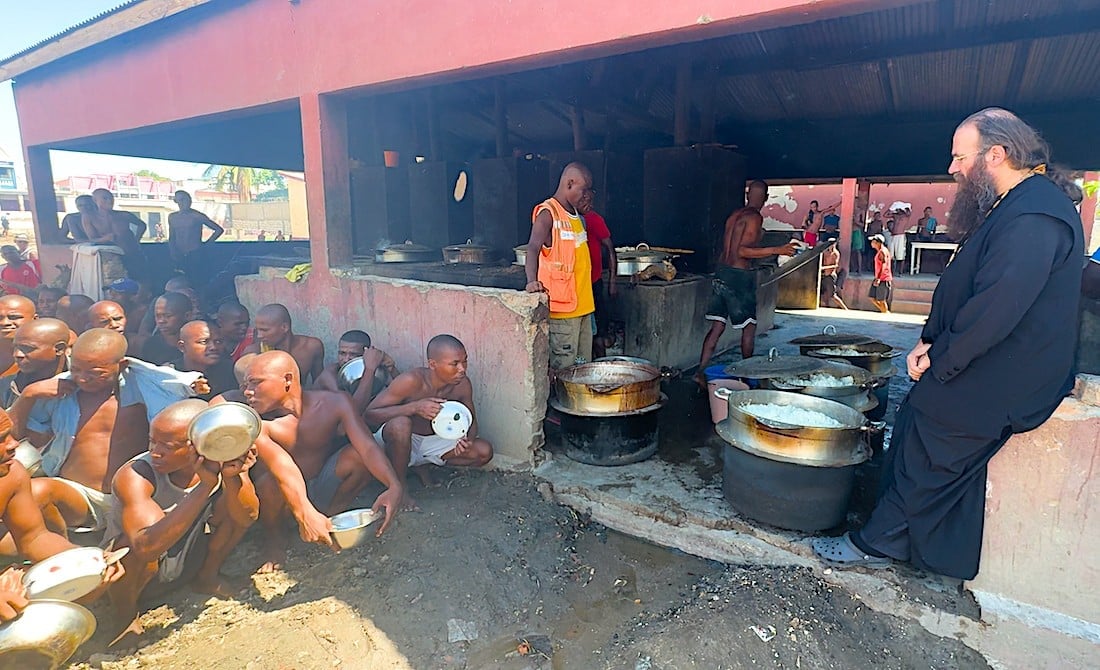
The Diocese responded immediately. It launched a consistent feeding program, providing rice and legumes three times a week to the entire inmate population. Initially feeding 950 individuals, the program currently keeps 750 to 900 inmates alive. Their living conditions remain nightmarish:
“Imagine three rooms, roughly 12×6 meters each, housing 300 people per room. They live shoulder to shoulder, packed back to back on wooden planks… Every hour at night, a designated guard claps his hands so that everyone turns to the other side simultaneously so their bodies don’t go numb. And for that entire space, there is only a single toilet available for nighttime use.”
Embodying the Gospel mandate, Father Prodromos and his volunteers have become the sole ray of hope in this living hell.
The present, the future, of the Orthodox mission in South Madagascar
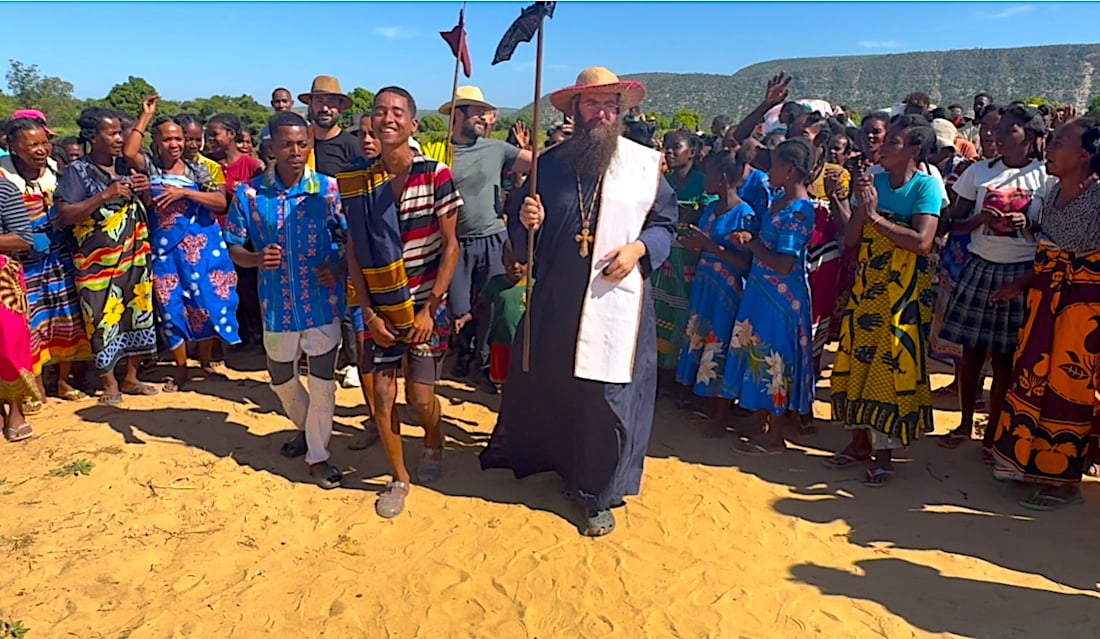
Looking toward the future, Bishop Prodromos refuses to rest. His grandest dream is to establish a boarding home in the city of Toliara to house children from remote villages who show a talent for academics but have no relatives in the city to support them through high school. Additionally, he plans to build a Technical High School to equip youth with practical trades, alongside university-level programs like a School of Nursing to staff the region’s expanding healthcare facilities.
Despite being in constant contact with systemic poverty and pain, the Bishop draws a profound lesson from the people of Madagascar—one that he offers as an antidote to the crisis of values plaguing the Western world. Unlike Western society, which is often paralyzed by the “ego,” anxiety over the future, and the illusion of individual happiness through material consumption, the people of South Madagascar remain remarkably joyful, he told Greek Reporter.
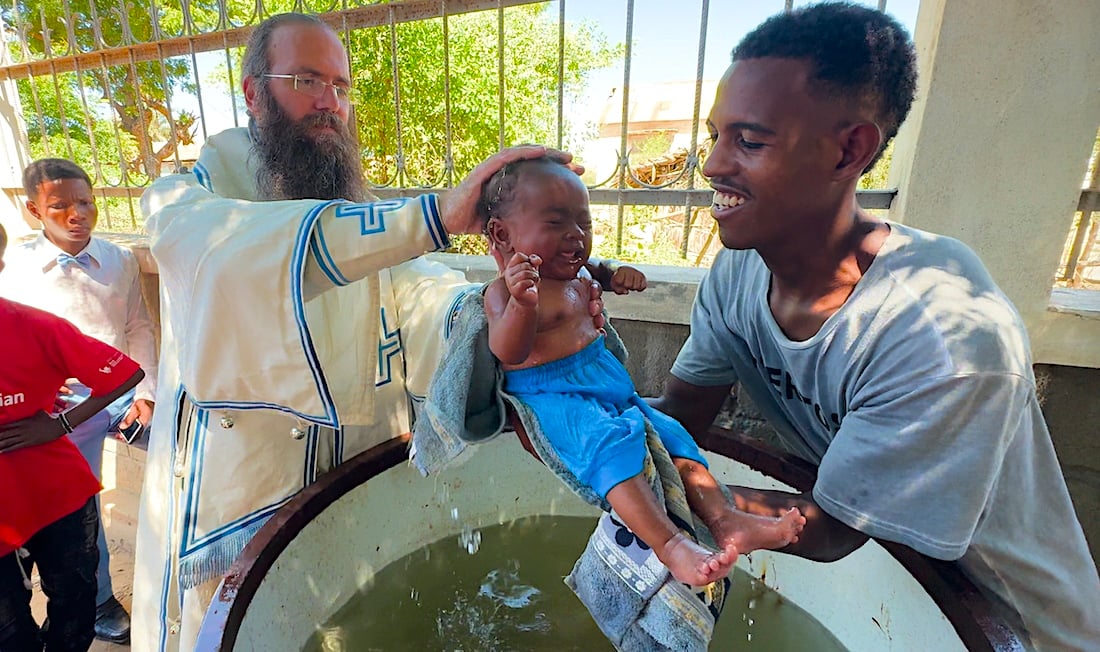
“The people here live for the moment. They live every single minute… We lose ourselves in this chase for the future, and in doing so, we lose the present,” he observes insightfully. “Aristotle beautifully noted that joy is found in giving, not receiving. The ancient philosophers never spoke of isolated, individual happiness.”
Addressing the age-old question of why a merciful God permits such suffering and inequality in the world, the missionary clarifies:
“God does not cause this. God has given mankind the greatest gift of all: freedom… He granted us free will, and His voice within us is our conscience, which we simply choose to ignore. We are unhappy in the West because we have severed the body from the soul, destroying our balance. In Africa, if you tell someone you don’t believe in God, they will think you are insane.”
The work of the Orthodox Diocese of Toliara in South Madagascar stands as living proof that even in the darkest, most forgotten corners of the earth, unconditional love—when organized with sacrifice and unwavering faith—can triumph over hunger, superstition, and death, restoring to human beings their most valuable asset: their dignity.
Visit the Diocese’s website for more details and to learn about how you can help with its mission in Madagascar.

