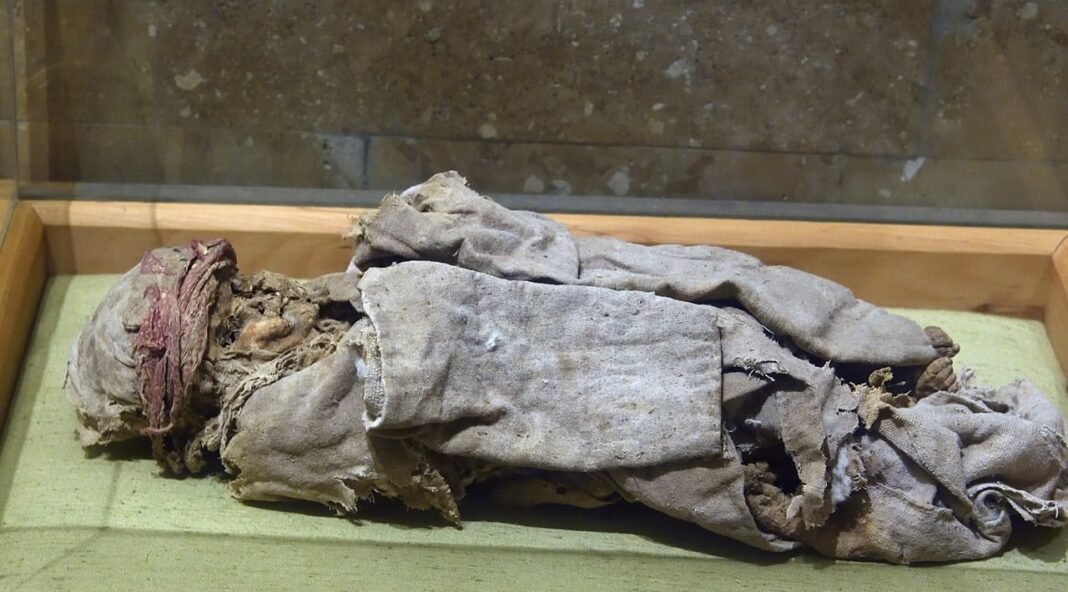
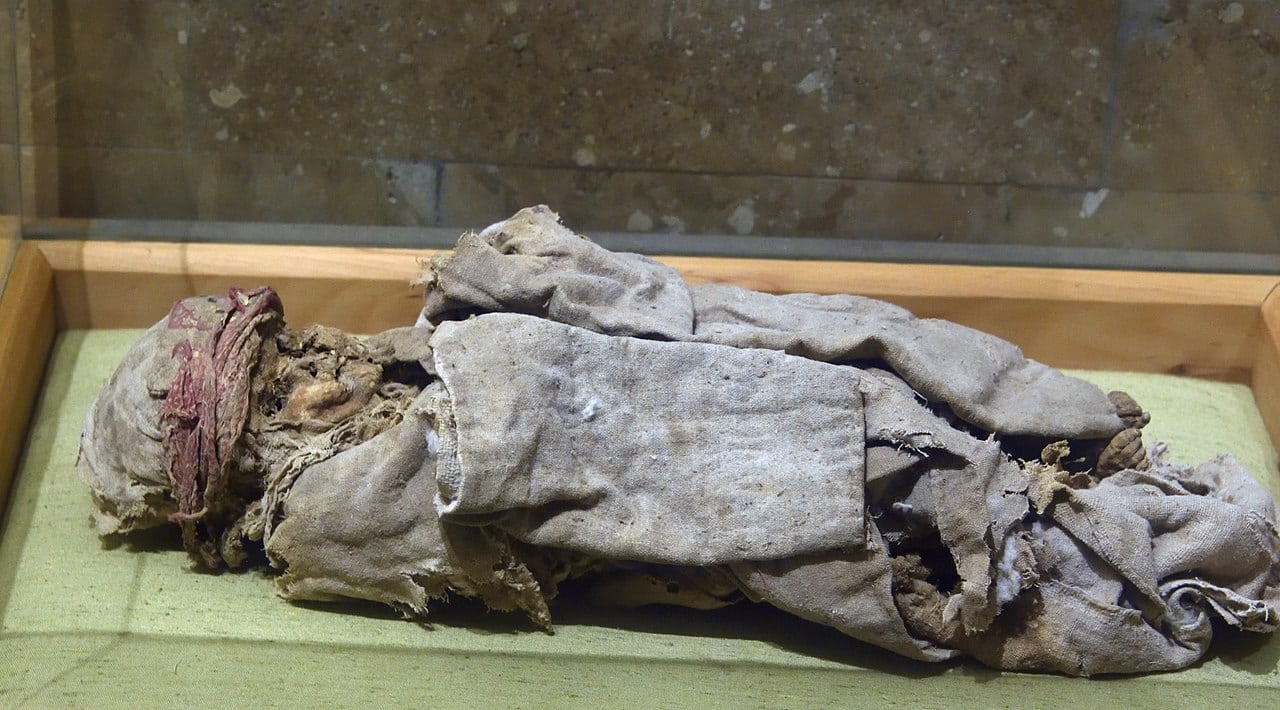
The relics of a naturally mummified young woman known as the “Blonde Nun” are one of Cappadocia’s most poignant archaeological attractions.
Discovered during archaeological excavations in the cave monasteries of Cappadocia, the relic is believed to date back approximately 1,100 years to the height of the Byzantine Era.
At the time, the Ihlara Valley, where the relics were discovered, was a thriving hub of Greek Orthodox monasticism, where thousands of monks and nuns lived in intricate, rock-cut dwellings carved directly into the canyon walls.
The Blonde Nun of Cappadocia: A life frozen in time
Scientific examinations conducted at the Niğde Archaeological Museum, where she is now housed, reveal a hauntingly clear picture of a life cut short.
The body belongs to a woman approximately 22 years old. While her cause of death remains unconfirmed, historians note that the 10th and 11th centuries were periods of significant instability in the region, marked by border raids and the harsh physical toll of ascetic life.
What sets this discovery apart is the extraordinary level of natural preservation. Unlike the chemically treated mummies of ancient Egypt, the Blonde Nun was preserved by the unique microclimate of the Cappadocian caves.
The low humidity and consistent temperatures of the volcanic stone prevented decay, leaving her eyebrows, skin, and long, light-colored hair remarkably intact. It is this striking feature that earned her the nickname “Sarışın Rahbe” (The Blonde Nun) among the local Turkish population.
Faith, science, and tourism
For many visitors, the preservation of the body transcends simple science. In the Orthodox tradition, “incorruptibility”—where a body does not return to dust—is often viewed as a sign of sacredness or sainthood.
This spiritual aura has turned the Niğde Museum into a site of pilgrimage and curiosity. Thousands of tourists now flock to the museum to catch a glimpse of a face that has remained unchanged since the days of the Byzantine Empire.
The “Blonde Nun” serves as a rare, tangible bridge to the Greek Orthodox history of the region. Standing before her glass case, the 11th century feels less like a distant chapter of a history book and more like a human reality.
She remains a silent witness to a vanished world, reminding modern spectators of the vibrant, diverse communities that once called the caves of Cappadocia home.
Related: Greeks of Cappadocia Left Indelible Mark on History