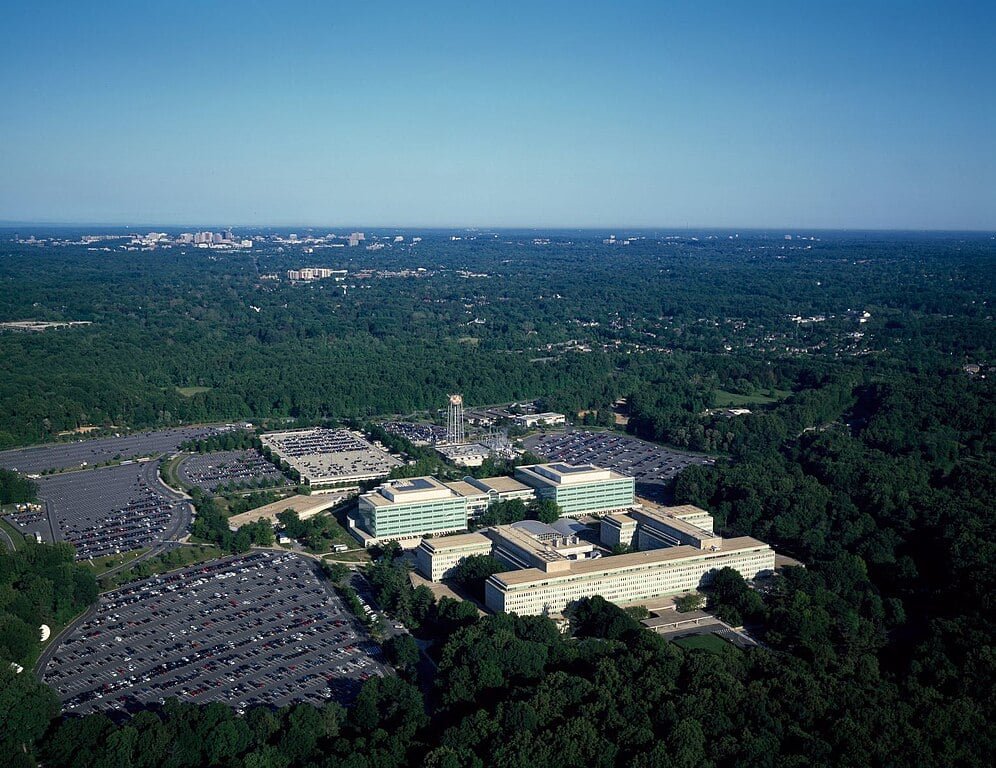
Details about the CIA’s secret role in Greece’s 1956 national elections and its parallel activities in Cyprus, including the recruitment of an associate of Archbishop Makarios III, the first President of the Republic of Cyprus, appear in Harvard Magazine’s report “The Life of a Harvard Spy.” The article profiles Richard Skeffington Welch, a senior CIA officer assassinated in Athens in December 1975.
CIA Strategist and Architect of Influence: Welch’s Quiet Mastery of Politics in Greece and Cyprus

When Welch returned to Greece in the summer of 1975, it felt less like a new posting and more like a return to familiar ground — a country he knew deeply, where politics, history, and covert power often blurred together. As the newly appointed CIA station chief in Athens, Welch stepped back into a landscape he had helped shape years earlier, when his intelligence work in Cyprus and Greece had quietly influenced political tides stretching far beyond the Aegean.
Inside the agency, Welch’s name carried quiet weight. He was not the archetypal spy with a weapon tucked beneath his jacket, but rather a strategist — a man whose mastery of persuasion and cultural nuance made him one of the CIA’s most formidable recruiters. During his earlier posting in Cyprus, he had developed a close relationship with the private secretary to Archbishop Makarios, the island’s president and spiritual leader. That connection gave Washington an extraordinary window into Cypriot politics, securing NATO’s fragile southern flank during the early Cold War. “We knew every breath Makarios took,” one of Welch’s colleagues later recalled, with both admiration and unease, according to Harvard Magazine.
But Welch’s influence extended beyond intelligence gathering. He had a subtle understanding of power — how to shape narratives, forge alliances, and tilt elections without ever appearing to do so. His work left fingerprints on the Greek elections of 1956 and Guyana’s vote in 1968, both key to US interests. By the time he returned to Athens nearly two decades later, he was no longer just an operative; he was a craftsman of clandestine politics, a quiet architect of outcomes.
A “gentleman” spy in a volatile city
Athens in 1975 was still reeling from the collapse of its military junta. Anti-American sentiment simmered in the streets, fed by suspicions that the United States had turned a blind eye to dictatorship. Into this volatile atmosphere walked Welch — bald, bespectacled, and soft-spoken, with a clipped mustache and the manner of a Harvard professor. He moved through diplomatic circles with ease, his intellect disarming even the most skeptical interlocutors.
He was, by all accounts, a spy who didn’t much like the tools of espionage. Welch had a lifelong aversion to guns and found greater satisfaction in the precision of Aristotelian logic than in cloak-and-dagger theatrics. A classics scholar who graduated magna cum laude from Harvard University in 1951, he could quote Latin poetry as fluently as he could brief a minister.
His route to the CIA was as improbable as his methods. Having lost sight in one eye as a child, he passed the agency’s medical exam by reciting from memory the opening lines of Gibbon’s The Decline and Fall of the Roman Empire — the very passage used in the vision test. That mix of erudition and ingenuity defined him for the rest of his career.
He also had a wry sense of rebellion. Once, when a bureaucrat demanded a urine sample from his infant daughter during an overseas move, Welch mischievously substituted a vial filled by his basset hound, named after his Harvard mentor, Greek scholar John H. Finley Jr. “The dog passed,” he liked to joke later, “with flying colors.”
Death in the shadows
By late 1975, however, Welch’s discreet life in Athens had turned dangerously visible. A wave of public outrage against the CIA was sweeping through Europe and the United States. Congressional investigations had laid bare years of covert actions, while activists and former agents began leaking the identities of undercover officers. Welch’s name and address were among them.
On December 23, 1975, after returning home from a Christmas party, Welch’s car pulled up outside his residence in the Athenian suburb of Psychiko. Masked gunmen emerged from the darkness and opened fire. Welch was shot and killed instantly in front of his wife — the most senior CIA officer ever assassinated in the line of duty.
His death sent shockwaves through Washington. President Gerald Ford condemned the killing as “an attack on all who serve in silence,” and the CIA seized the moment to rally support amid mounting criticism. Many inside the agency believed that Welch’s murder had helped reverse a tide of hostility, reminding Americans of the personal risks borne by their intelligence officers. As one of his colleagues admitted, “The CIA did not miss the opportunity to use Welch’s death to steady the waters.”
The legacy of a reluctant hero
Richard Welch’s funeral at Arlington National Cemetery was conducted with the full honors of a state ceremony. Hundreds of intelligence officers attended — a gathering so large that one veteran called it “the biggest congregation of spies in American history.” For the first time, the words Central Intelligence Agency were engraved on a headstone.
Welch had once written to his children that at forty-six, he felt “exactly the same as I did as a freshman at Harvard — a New England Irishman on the make.” That line captured him perfectly: witty, ambitious, and restless. A man who thrived in a world of shadows.