

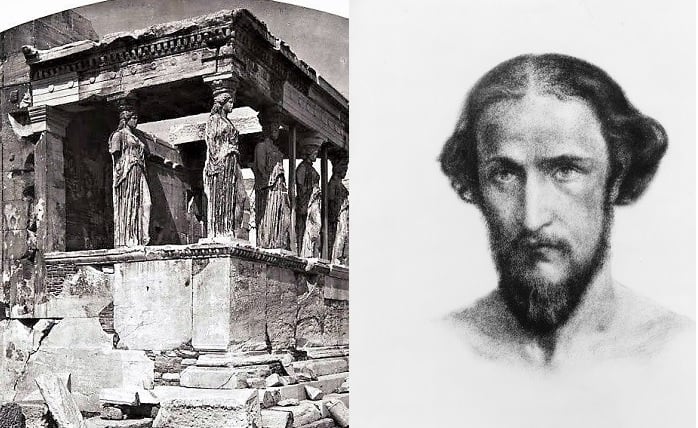
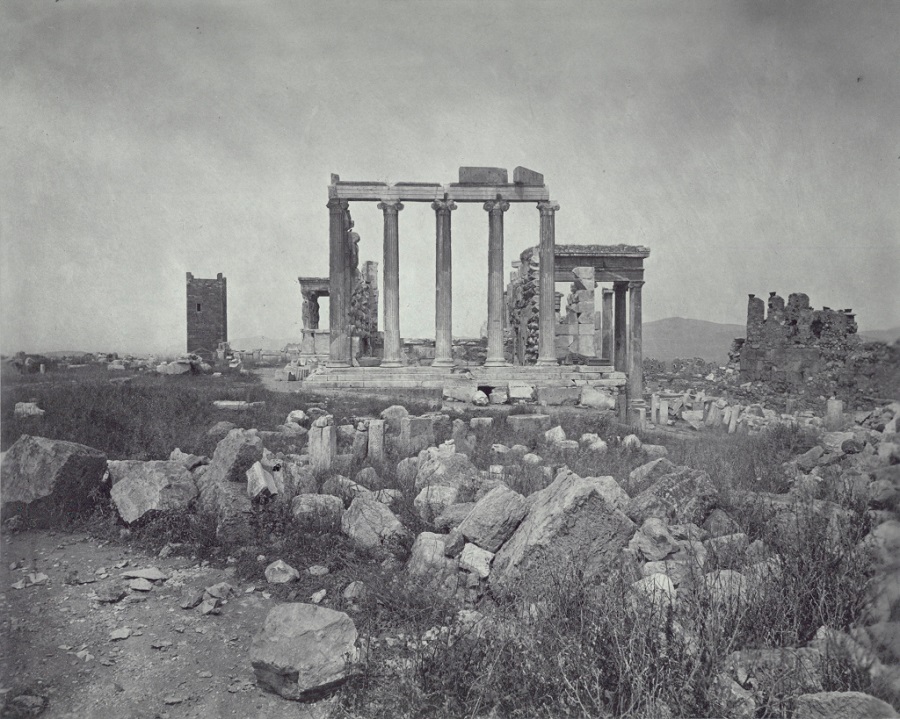
William J. Stillman, an American journalist, diplomat, author, historian, and photographer captured the magic of the Acropolis in 1870 in a series of carbon prints. He was among the first to photograph this powerful symbol of Western heritage.
Relatively unknown in Greece, Stillman was a great philhellene who served as the United States ambassador on Crete during the Cretan insurrections of the 19th century. He later married a Greek artist in London.
During his tenure on Crete, he was an avowed champion of the Christians on the island and of Cretan independence. Consequently, he was regarded with hostility both by the Muslim population and Turkish authorities.
William J. Stillman captures the Acropolis
In September 1868, Stillman resigned and went to Athens, where he attempted to capture his love for the country and its ancient civilization in print.
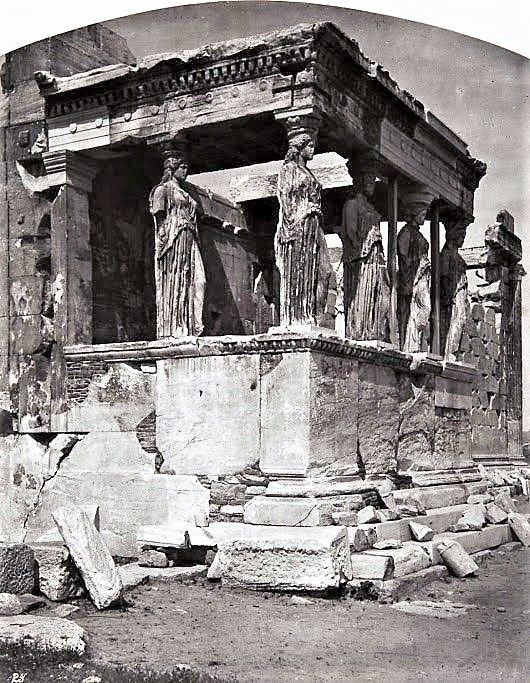
The Acropolis and the Parthenon were the ideal settings for his photography. Critics have commented that Stillman’s album of views of the Athenian Acropolis are representative of an artistic sensibility and a genius of the highest order.
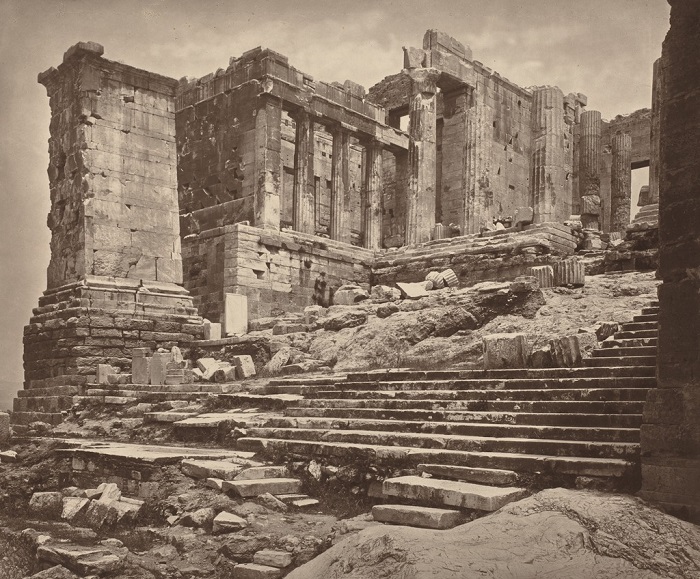
The volume, The Acropolis of Athens: Illustrated Picturesquely and Architecturally in Photography in 1870, bound in red leather and measuring 530 by 340 mm, contained 25 carbon prints on paper with simple captions on opposing pages.
Imposing in size and striking in style and execution, Stillman’s book has since been recognized as among the most important photographic publications of its period. The book is claimed as a “precursor of the twentieth-century modernist photobook” by virtue of the aesthetic properties of the photographs themselves and because of the telling effect each image, text, and blank space has in combination with all the other elements.
Stillman was not the first to capture the Acropolis. In the distant year of 1842, French photographer and draughtsman Joseph-Philibert Girault de Prangey took the first-ever photograph of the “Holy Rock.”
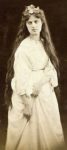
Stillman left Greece for London, where in 1871, he married artist Marie Spartali, a daughter of the Greek Consul-General to the UK Michael Spartali (1866 – 1882), although without his permission.
Spartali was a Pre-Raphaelite painter and arguably the greatest female artist of that movement. During a sixty-year career, she produced over one hundred works, regularly contributing to exhibitions in Great Britain and the United States.
Stillman’s love for Greece led him back to Athens, where he served as The Times‘ correspondent from 1877 to 1883. After his retirement, he lived in Surrey, England, where he died on July 6, 1901.
Sources:
MacManus, D., & Campbell, H. (2015). ‘Illustrated Picturesquely and Architecturally in Photography’: William J. Stillman and the Acropolis in Word and Image. Architectural Histories, 3(1), Art. 22. DOI: http://doi.org/10.5334/ah.cw
Division of Rare and Manuscript Collections, Cornell University Library


