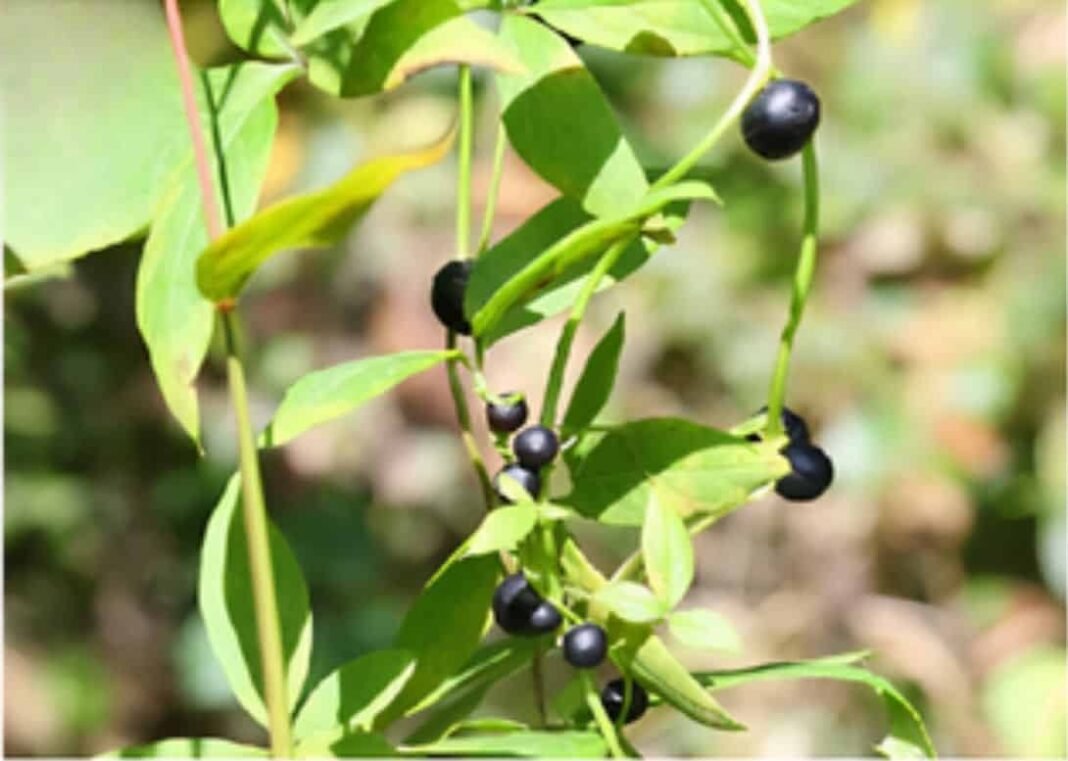
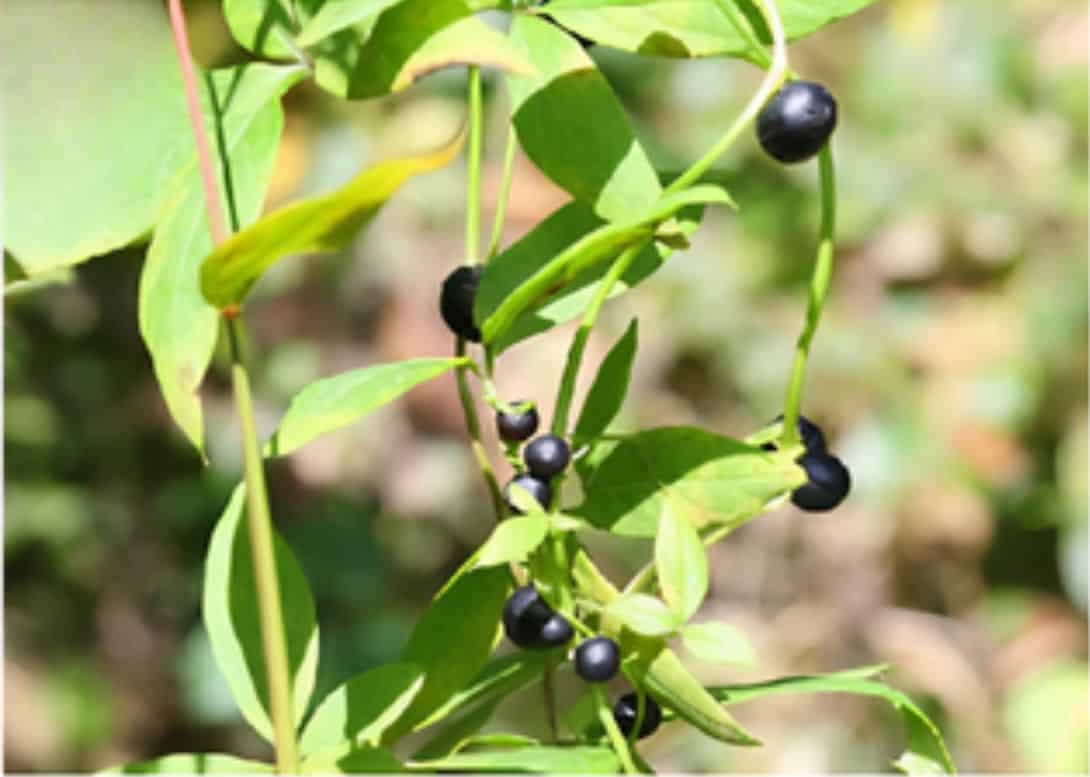
Scientists have discovered a climbing plant that tricks birds into helping it spread by producing structures that look like real berries.
The plant, Dioscorea melanophyma, creates small, dark, shiny growths that closely resemble fruit. However, these are not true berries. They are bulbils, a type of structure used for asexual reproduction.
The findings were published recently in the journal Proceedings of the National Academy of Sciences.
Fake berries used as a survival strategy
Researchers found that the plant no longer produces seeds and instead reproduces by cloning itself. Most plants that reproduce this way rely on bulbils that fall close to the parent plant.
In this case, the yam has adapted differently. Its bulbils look like real berries, which appear to attract birds that normally feed on fruit.
When birds carry or drop these structures, the plant can spread to new locations. This allows it to expand its range beyond its immediate surroundings.
Discovery began with a mistake
The discovery started during fieldwork in southwest China in 2019. Gao Chen, an ecological biologist at the Kunming Institute of Botany, and his team initially believed the structures were real berries. They collected them as part of a seed study. But when they cut one open, they found no seeds inside.
This unexpected result led researchers to examine the plant more closely. Chen later said that if the structures could mislead scientists, they could likely deceive birds as well.
Evidence shows birds are fooled
To test this idea, the research team compared the bulbils with real berries found in the same environment. They identified 15 plant species whose fruits closely matched the color and appearance of the bulbils.
Scientists have discovered a plant that tricks birds with fake berries.
The vine Dioscorea melanophyma mimics real fruit, fooling birds into spreading it across long distances—without offering any food in return. pic.twitter.com/zwoTVqhY1y— Tom Marvolo Riddle (@tom_riddle2025) April 3, 2026
Over three years, camera traps recorded 22 bird species visiting the plant. Some birds were seen eating the bulbils. Further tests focused on the brown-breasted bulbul, which was the most frequent visitor.
When real berries were available, the bird usually chose them. But during winter, when berries became scarce, it often ate the bulbils instead.
Researchers found that the bulbils pass through the bird’s digestive system without damage. In about 30 minutes, a bird can carry them more than 750 meters, helping the plant spread over a wider area.
Experts highlight unusual mimicry
Scientists say the finding expands current understanding of plant mimicry. Pedro Jordano, an ecologist at the Spanish Research Council and the University of Sevilla, noted that most known examples involve flowers or fruits.
In this case, the mimicry involves a nonreproductive structure, which makes the discovery unusual. Kenji Suetsugu of Kobe University said the plant’s strategy is a practical adaptation. By modifying its bulbils to resemble fruit, the species can spread farther and survive environmental changes.
Part of a broader pattern in nature
The idea that plants can deceive animals is not new. Charles Darwin noted that some seeds mimic fleshy fruits but provide no reward.
More recent research has found similar strategies in other plants. A study published in March 2025 in Plant Diversity reported that species such as black beans use comparable methods to attract animals for dispersal.
John Pannell of the University of Lausanne said birds are likely misled into spreading the bulbils because they resemble familiar food.
Researchers say the discovery shows how plants can evolve complex and effective ways to survive, even without offering any benefit to the animals they rely on.