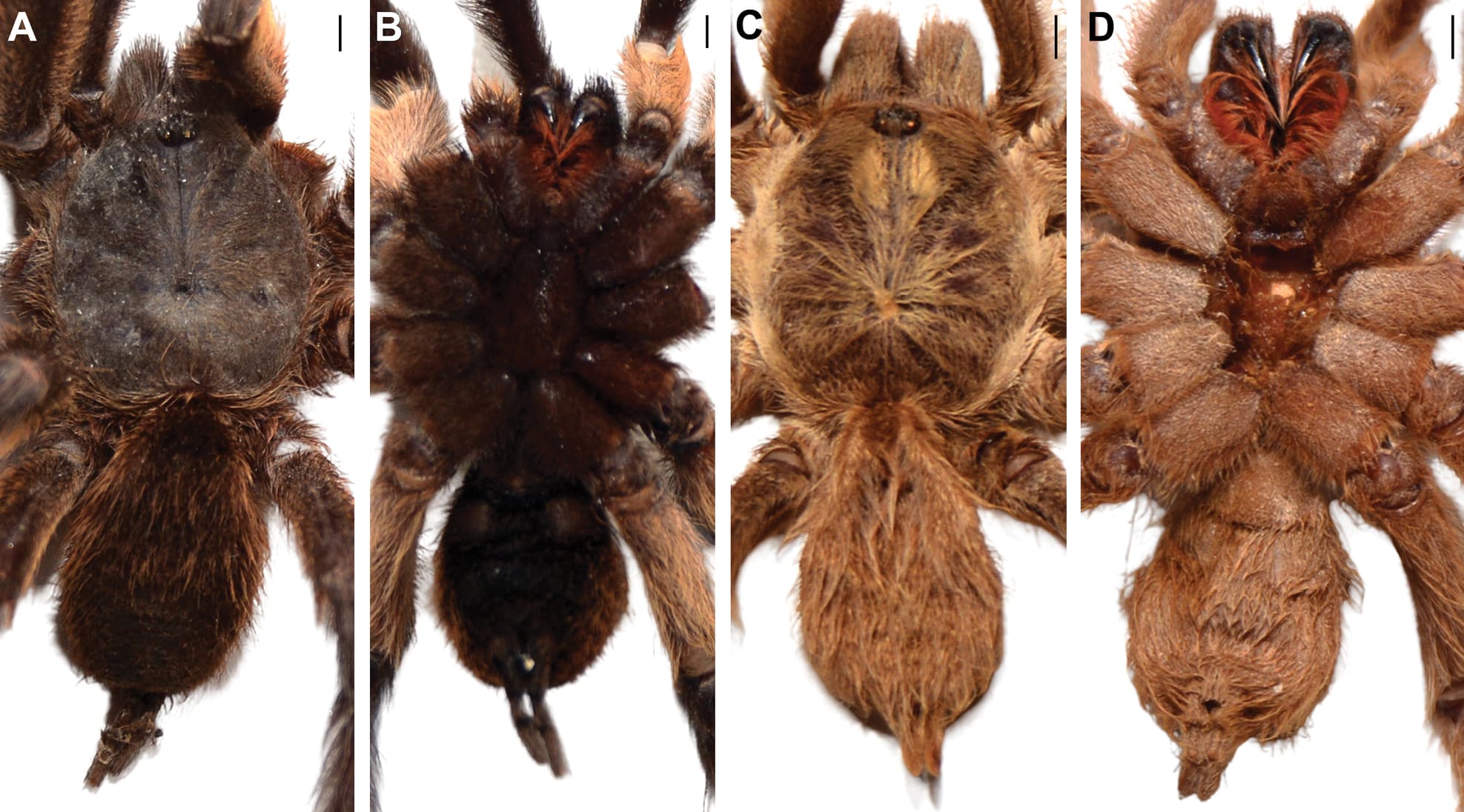
Researchers have discovered a new group of tarantulas in the Arabian Peninsula and the Horn of Africa and named them after a nature spirit from ancient Greek mythology associated with sexual indulgence.
Alireza Zamani of the University of Turku led the study. Scientists examined both the spiders’ physical features and their genetic makeup. The results showed that the species are unlike any known relatives.
Researchers said the differences were strong enough to require a new classification. They introduced a new genus, Satyrex, to group the spiders.
The name draws on the Satyr (Greek: σάτυρος), a creature in Greek mythology associated with excess and indulgence, combined with the Latin word “rex,” meaning “king.” Scientists said the name reflects the spiders’ unusual form and exaggerated features.
Researchers added that the discovery points to gaps in scientific knowledge of these regions. Large parts of the Arabian Peninsula and the Horn of Africa remain poorly studied.
Record-breaking anatomy defines the group
The newly identified tarantulas stand out for a rare physical trait. Male spiders have extremely long palps, which they use during mating. Researchers said these are the longest recorded among known tarantulas.
Scientists have discovered a new group of tarantulas named after a Greek mythological figure linked to indulgence.
These spiders have record-breaking anatomy and unique defensive behavior, reshaping what we know about tarantula evolution. pic.twitter.com/yq0HwxLXY1
— Tom Marvolo Riddle (@tom_riddle2025) April 6, 2026
The largest species, Satyrex ferox, can reach a legspan of about 14 centimeters. In males, a single palp can grow to nearly 5 centimeters. This makes it almost as long as the spider’s longest legs and far longer than the front section of the body.
Scientists said this extreme difference sets the group apart from related species. They added that the feature may influence mating behavior, although more research is needed.
Defensive behavior and survival strategy
The species name ferox, meaning “fierce,” reflects how the spider reacts to threats. Researchers said it responds quickly when disturbed.
It raises its front legs in a warning posture and produces a loud hissing sound. The sound is created by rubbing specialized hairs at the base of its front legs.
Scientists said this behavior acts as a clear warning to predators. It shows that the spiders use both movement and sound to defend themselves.
Researchers also believe the long palps may help males survive during mating. Early observations suggest that the extended reach allows males to stay at a safer distance from females.
This could reduce the risk of attack, as female tarantulas are known to be aggressive. In some cases, females may harm or consume the male after mating.
New species and revised classification
The genus includes several newly described species. Satyrex arabicus and Satyrex somalicus are named after the regions where they were found. Another species, Satyrex speciosus, is named for its striking appearance.
Researchers also reclassified an older species. Satyrex longimanus, first described in Yemen in 1903, had previously been assigned to a different genus.
Scientists found that its features match those of the new group. In its earlier classification, the length of the male palps fell within the usual range for tarantulas. However, the much longer palps seen in this group set them apart.
Researchers said this key difference led to the creation of a new genus. It shows how physical traits can reshape scientific understanding.
Underground lifestyle and publication
All species in the genus are fossorial, meaning they live underground. They build burrows at the base of shrubs or between rocks.
Researchers said this lifestyle helps them survive in harsh, dry environments. It also makes them difficult to detect, which may explain why they remained unknown for so long.
The findings were published in the scientific journal ZooKeys. Scientists said the discovery highlights the need for further research in regions that have received limited scientific attention.