

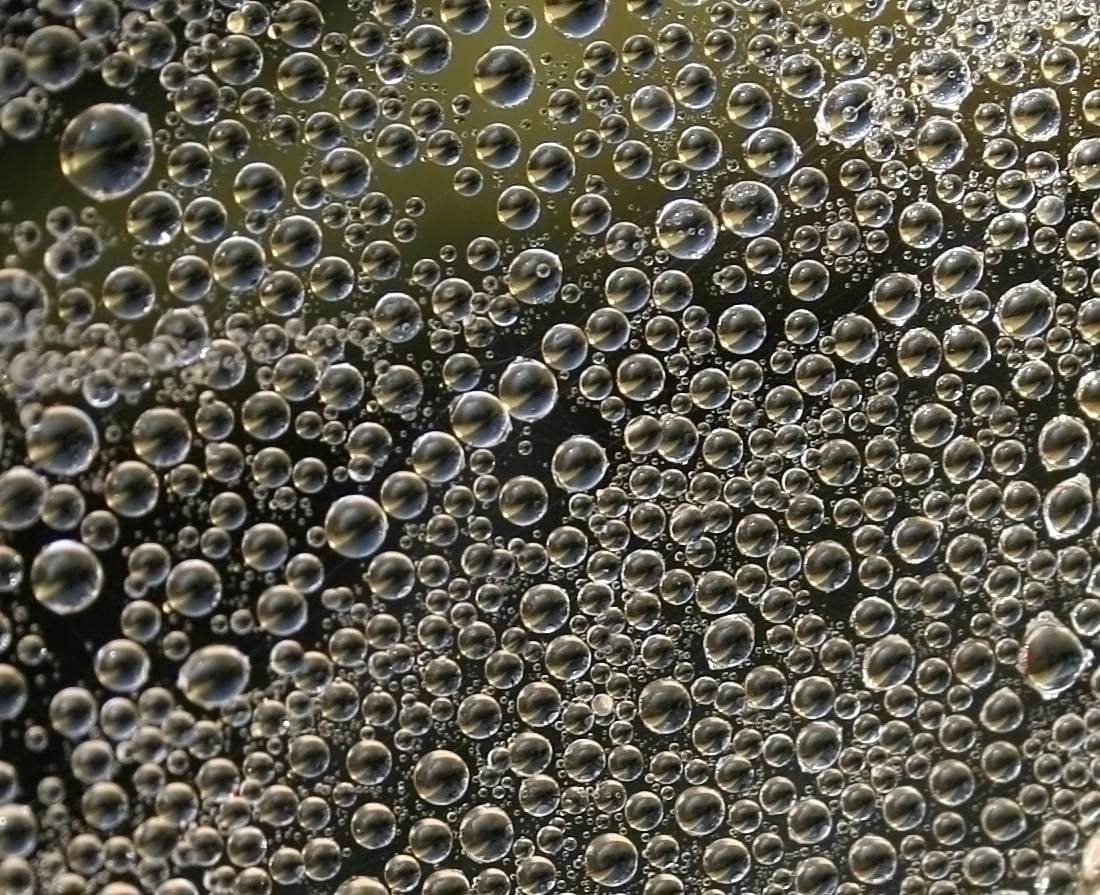
A new study has found that certain fungi can trigger water to freeze, offering fresh insight into how microscopic life influences the atmosphere.
Researchers from Virginia Tech and international institutions identified fungal proteins that act as ice nucleators. These substances help water freeze more easily. The findings were published in Science Advances.
Scientists explained that pure water can remain liquid even below freezing. However, when ice nucleators are present, water molecules arrange into ice crystals more quickly. This process plays a key role in cloud formation and precipitation.
Findings could reshape cloud seeding methods
The discovery has implications for cloud seeding, a technique used to increase rainfall. In this process, particles are released into clouds to promote ice formation. As ice crystals grow, they become heavy and fall through the atmosphere, melting into rain before reaching the ground.
Cloud seeding has long relied on silver iodide, a material known for its effectiveness but also for its toxicity. Researchers say fungal proteins could provide a safer and more environmentally friendly alternative.
Boris A. Vinatzer, a professor in plant and environmental sciences, said the challenge now is to produce these proteins at a large scale. If achieved, they could replace traditional materials used in weather modification.
Gene origin traced to ancient bacterial transfer
The study also sheds light on how fungi developed this ability. Researchers found that the gene responsible for producing the ice-nucleating protein likely came from bacteria through horizontal gene transfer.
This type of gene transfer between bacteria and fungi is uncommon. Scientists believe it occurred hundreds of thousands, or even millions, of years ago. Over time, fungi appear to have modified the gene, improving its efficiency.
Scientists discover fungi that can freeze water.
A new study shows fungal proteins can trigger ice formation in clouds—opening doors to safer cloud seeding, better climate models, and advances in food and medical science. pic.twitter.com/IvnOmGiUnO
— Tom Marvolo Riddle (@tom_riddle2025) March 20, 2026
Using advanced DNA sequencing and computational tools, researchers identified this gene in fungi from the Mortierellaceae family. Although fungi have been known to trigger ice formation since the 1990s, the exact genetic mechanism had remained unclear until now.
Potential uses extend beyond weather science
The unique properties of fungal proteins make them useful beyond atmospheric research. Unlike bacterial systems, which require whole cells, fungal proteins are released in a purified and water-soluble form. This makes them easier to handle and safer for practical use.
Researchers say these proteins could improve freezing processes in food production by offering a clean and controlled alternative. They may also support cryopreservation, where biological materials such as tissues, sperm, eggs, and embryos are preserved at low temperatures. By triggering ice formation earlier, the proteins help protect delicate cells from damage.
Study may improve climate models
Ice formation in clouds also affects how sunlight interacts with the Earth. Clouds can reflect radiation into space or allow it to pass through. The presence of ice can shift this balance, influencing climate patterns.
Scientists say identifying fungal ice-nucleating molecules could help measure their presence in the atmosphere. This, in turn, may improve the accuracy of climate models used to predict environmental change.
The research team, including Xiaofeng Wang and Vinatzer, said the findings highlight the growing role of biological processes in shaping weather and climate systems.


