

A new study suggests that the Romans used pressurized water to extract gold in the eastern Pyrenees, giving researchers the first direct evidence of Roman mining in that part of the range. The finding comes from Les Guilleteres d’All in Cerdanya, where archaeologists dated sediment from a buried water reservoir tied to the mining system.
The research was led by scholars from the Autonomous University of Barcelona and the University of A Coruña. They focused on a hydraulic structure that had long been seen as part of an ancient mining network but had been difficult to date because it held little archaeological material.
Evidence reveals Romans used water to extract gold
To solve that problem, researchers used Optically Stimulated Luminescence, or OSL, to date two sediment samples taken from the lower fill of the reservoir. The method measures when buried quartz was last exposed to light and is useful at sites with no organic matter for carbon dating.
The results place the structure in the Roman period and point to the final stage, or abandonment, of mining activity.
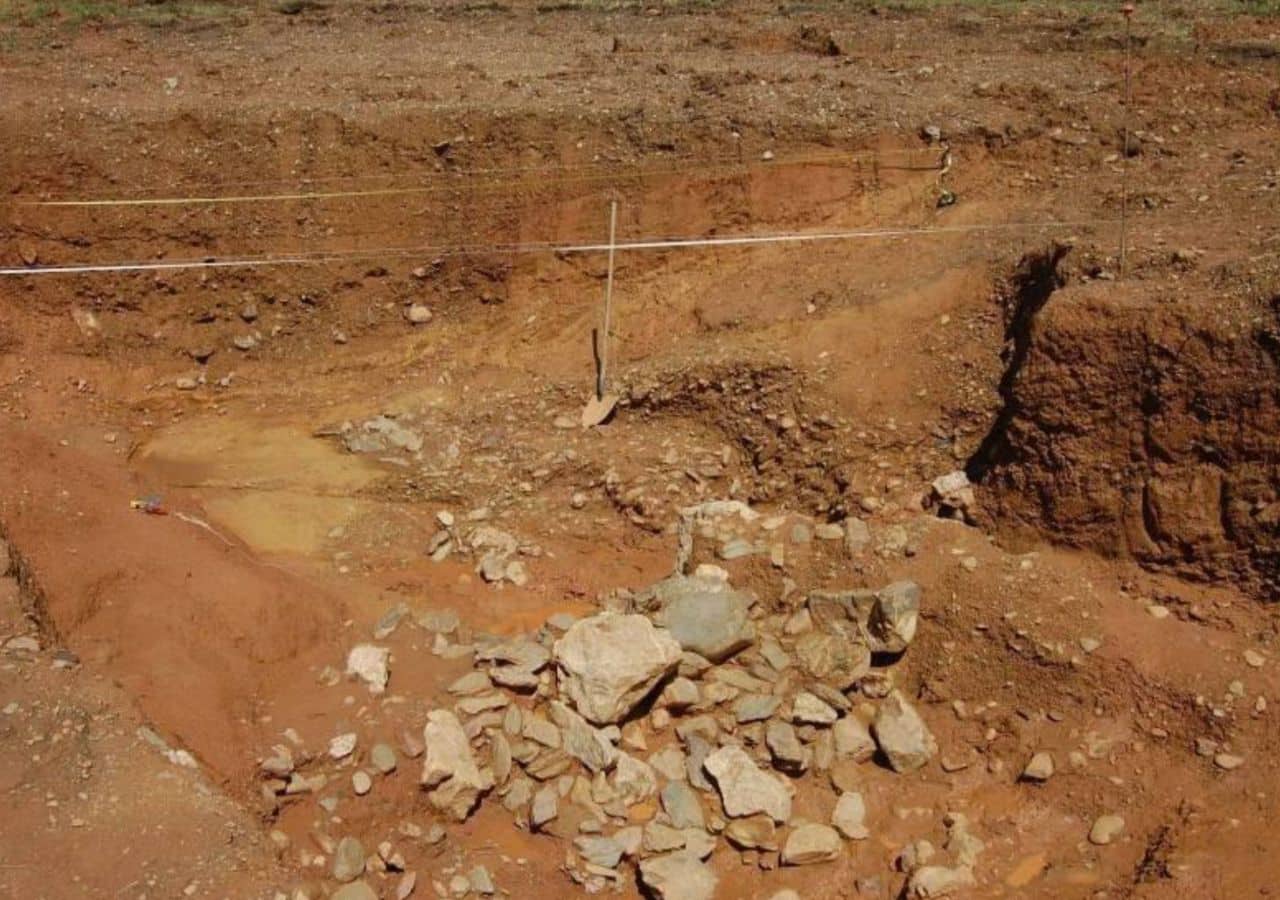
Trench opened for OSL sampling with location of the sampled layers (A) and hole of the tube of sample Cerdanya-1 (B). The arrows indicate the sampling points for OSL dating. pic.twitter.com/TzbDxjsbEH
— Tom Marvolo Riddle (@tom_riddle2025) March 9, 2026
The dates broadly fall between the 2nd and 4th centuries A.D. Researchers said that this supports the Roman origin of the reservoir and confirms that the Romans used hydraulic methods to extract gold in the region.
Hydraulic mining system at Les Guilleteres
At the site, archaeologists had already identified erosional features linked to open-cast hydraulic mining. These included chantier-ravins and chantier-cirques, both shaped by controlled water flow.
The system worked by sending water through gold-bearing sediments to erode the deposits and separate valuable particles.
Gold in the area came from alluvial deposits linked to the Segre River and its tributaries. These rivers carried gold from deposits in the axial Pyrenees and spread it along river terraces from Cerdanya toward the Lleida plain.
Historical sources had already mentioned Segre gold and its quality, but direct proof of Roman exploitation in this area had been missing.
Roman setting near Iulia Libica
Earlier digs at the reservoir found two pottery fragments in the sediment, one from the 1st or 2nd century A.D. and another from the Bronze Age. Researchers said the pottery showed the reservoir filled during historical times, but not precisely when the mining system was in use.
The study also points to the wider Roman setting of the site. Les Guilleteres lies about 10 to 12 kilometers (6 to 7.5 miles) from Iulia Libica, present-day Llívia, the only Roman city documented in the Pyrenees. Researchers said that the city likely helped organize the local extraction of resources, including gold.


