

A rare Roman cup linked to Hadrian’s Wall found in northern Spain may have been carried home by a soldier who once served on Britain’s frontier, according to a new study.
The bronze vessel, known as the Berlanga Cup, was discovered by chance in farmland near Berlanga de Duero in Spain’s Soria province. The study, led by Roberto De Pablo Martínez and published in Britannia, identifies it as one of a small group of decorated Roman vessels associated with Hadrian’s Wall.
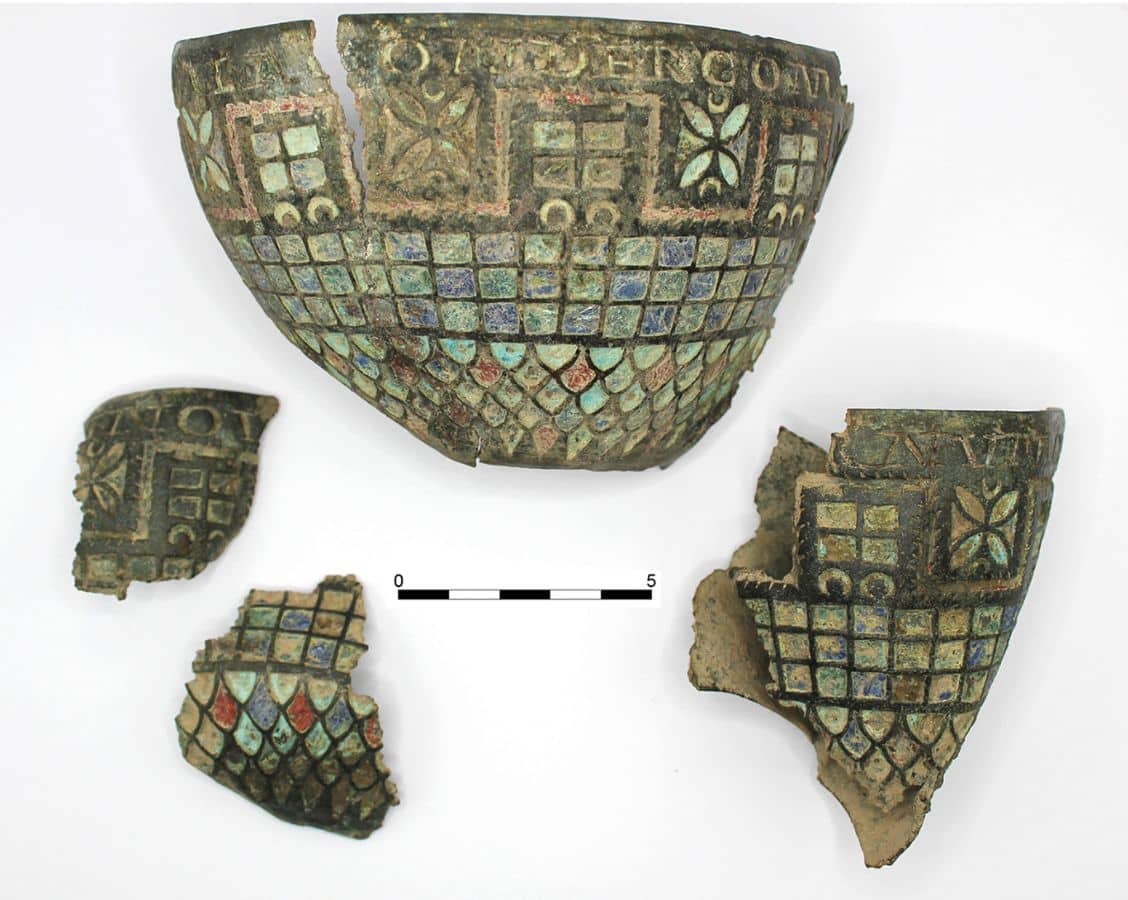
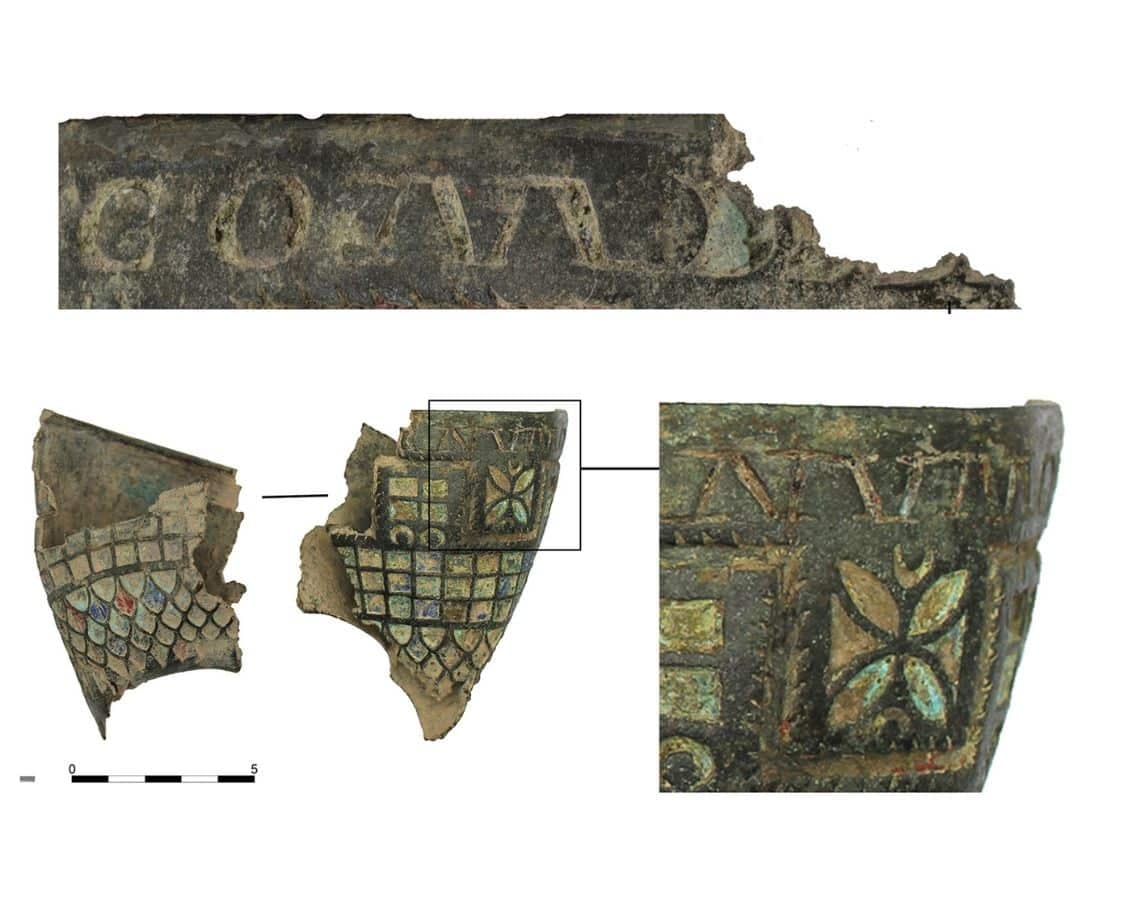
The cup is small, damaged, and incomplete. Yet researchers say it carries major historical value. Its Latin inscription names four forts from the eastern section of Hadrian’s Wall: Cilurnum, Onno, Vindobala, and Condercom. These forts stood in what is now Northumberland, England.
That makes the Berlanga Cup the first known vessel of its type to mention forts from the eastern side of the wall.
A rare Roman military object
The Berlanga Cup belongs to a group often called the Hadrian’s Wall pans. These objects include the famous Rudge Cup, the Amiens Patera, the Bath Pan, and the Ilam Pan. They are known for their enamel decoration and inscriptions naming Roman forts along Hadrian’s Wall.
Earlier examples mostly referred to forts in the western or central parts of the wall. The new find expands that picture.
Researchers say the Berlanga Cup is larger than most other known examples. It is about 11.4 centimeters (4.49 inches) wide at the mouth and almost 7.9 centimeters (3.11 inches) high. About 91% of the object survives, though it was found in fragments.
The outside of the cup carries colorful enamel decoration in red, green, turquoise, and dark blue. Its design includes geometric patterns, floral motifs, and a band of tower-like forms. Scholars have often interpreted similar designs as a simplified image of Hadrian’s Wall.
Tests point to northern Britain
Scientific testing helped researchers study where the cup may have been made. Metal analysis showed that the vessel was made from a leaded copper alloy common in Roman objects from the second century A.D.
Lead isotope analysis suggested that the lead in the cup likely came from mines in Britain, possibly northern England or Wales. Researchers said the North Pennines and Durham areas are possible sources because they were close to Hadrian’s Wall. This supports the idea that the cup was made in Britain, not Spain.
The team also created a 3D digital model of the fragments. This allowed researchers to virtually reconstruct the cup, study its shape, and better read the inscription.
A soldier’s memory of the wall
The discovery raises an important question: how did a cup linked to Hadrian’s Wall end up almost 2,000 kilometers (about 1,240 miles) away in Spain?
Researchers suggest it may have belonged to a Roman soldier or veteran from Hispania who served near the wall and later returned home. The area where the cup was found was part of ancient Celtiberia. Roman records show that military units recruited from Hispanic regions served in Britain.
One possible link is the Cohors I Celtiberorum, a Roman auxiliary unit connected to Celtiberia. Records place this unit in Britain during the second century A.D., including near Hadrian’s Wall.
The cup may have served as a personal keepsake, a retirement gift, or a mark of service. Rather than a tourist souvenir, researchers argue it likely reflected lived military experience.
Roman site found nearby
The cup was found at La Cerrada de Arroyo, near Berlanga de Duero. Archaeological survey and ground-penetrating radar showed remains of buildings at the site. Researchers identified possible rooms, floors, and other structures that may belong to a rural Roman settlement.
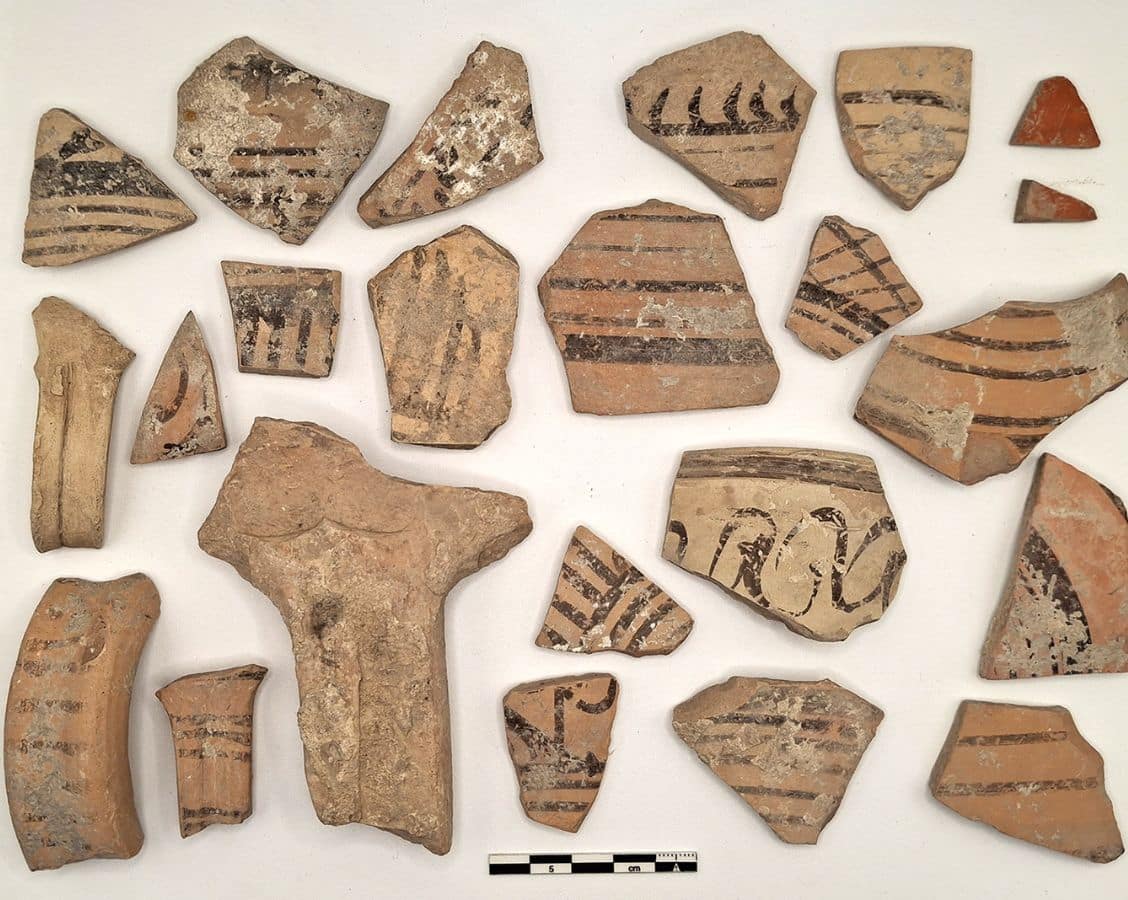
Surface finds included Roman pottery and building materials dating between the first and fourth centuries A.D. This suggests the cup was not an isolated object. It may have been part of a Roman settlement where a veteran or wealthy household lived.
Researchers date the cup broadly to the second century A.D., likely after the construction of Condercom between A.D. 124 and 130.
The Berlanga Cup offers a rare link between Britain and Spain within the Roman Empire. It shows how soldiers, objects, and memories moved across great distances. It also adds new evidence to the study of Hadrian’s Wall and the people who served there.


