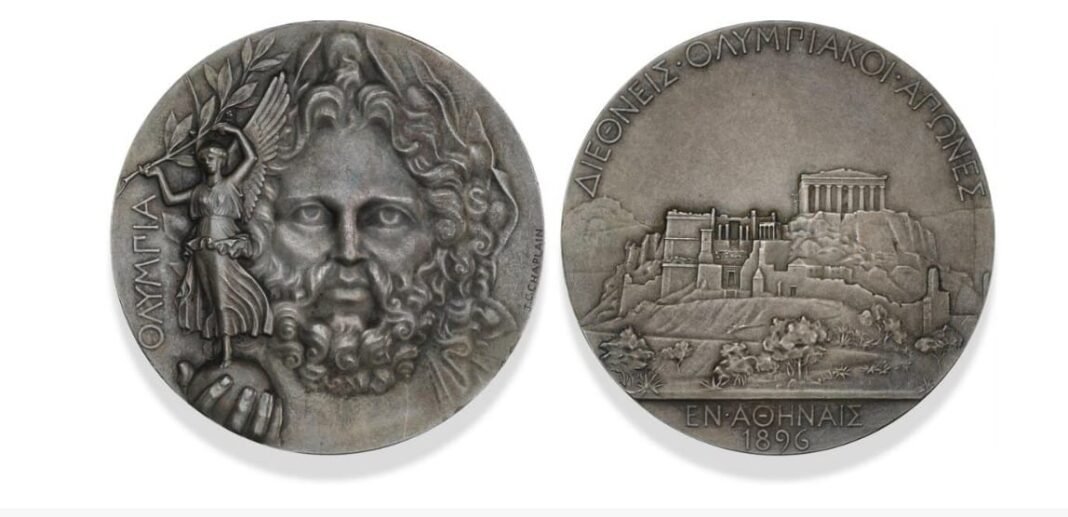
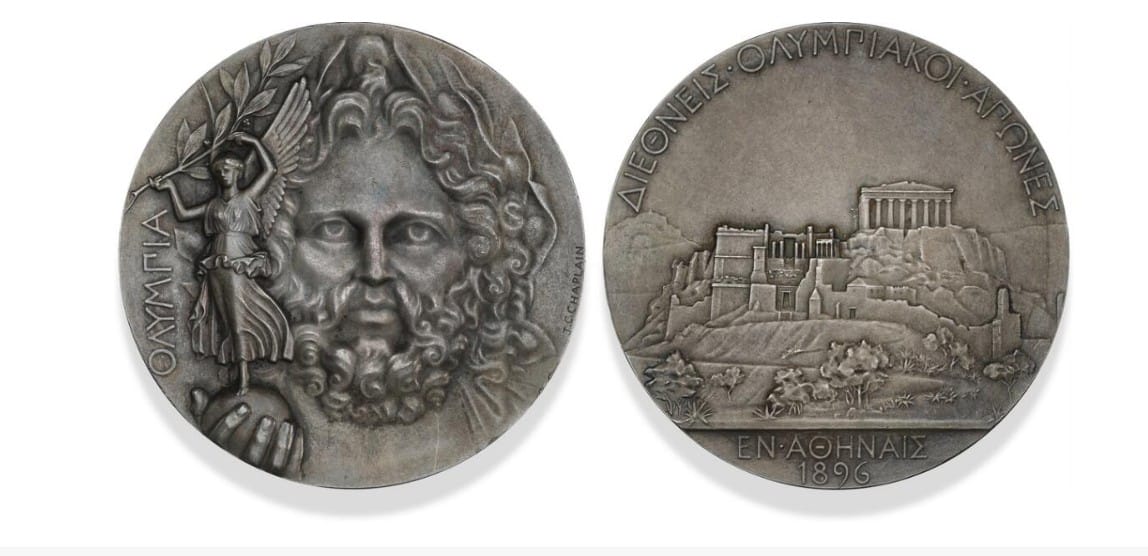
A silver medal from the 1896 first modern Olympic Games held in Athens is set to make history in the auction room. On March 1, the Danish auction house Bruun Rasmussen will offer a rare silver winner’s medal from the inaugural 1896 Athens Olympic Games, an item experts are calling the “ultimate crown jewel” for collectors.
Estimated to fetch between €26,000 and €47,800, the medal is a tangible link to the revival of the Olympic spirit. In a quirk of history that often surprises modern fans, this silver medal was actually the top prize in 1896.
At the time, gold medals had not yet been introduced; winners received silver and an olive branch, while runners-up were awarded bronze and a laurel branch.
“This is the first time we have ever offered a medal from the first modern Games,” stated Christian Grundtvig, Bruun Rasmussen’s head of medals. “Samples of this significance almost never appear on the open market.”
The medal, designed by renowned French engraver Jules-Clément Chaplain, features a striking image of Zeus holding Nike, the goddess of victory, on the obverse, with the Acropolis of Athens on the reverse.
With only 241 athletes having participated in the 1896 Games—most of them Greek—the survival and sale of such a medal represent a rare opportunity to own a foundation stone of modern sporting culture.
The Athens 1896 Olympics
The 1896 Summer Games, officially known as the Games of the I Olympiad, were the first international Olympic Games held in the modern era. Here is why they remain so iconic:
The Games were the realization of Pierre de Coubertin’s dream to revive the ancient Greek tradition. After the 1894 Congress in Paris, Athens was chosen as the host to honor the origins of the competition.
The primary site was the Panathenaic Stadium, the only stadium in the world built entirely of marble. It was refurbished specifically for the Games thanks to a massive donation from businessman George Averoff.
One of the most legendary moments was the victory of Spyros Louis, a Greek water-carrier who won the first-ever competitive Marathon. His win ignited a national celebration in Greece and cemented the Marathon as the centerpiece of the Games.
The 1896 Games featured only nine sports: athletics, cycling, fencing, gymnastics, shooting, swimming, tennis, weightlifting, and wrestling. There were no female competitors, and the “Olympic Flame” and “Olympic Rings” were traditions that would not be introduced until decades later.